Japanese Meadowsweet (Spiraea japonica)
Formerly Spiraea callosa, Spiraea bumalda, Spiraea pumila
Japanese spiraea is a deciduous shrub in the rose family that grows 4-6 ft (1.22-1.83 m) tall and spreads 4-7 ft (1.22-2.13 m) wide. Give it full sun outdoors, though it also tolerates part shade. It is a rapid grower, even an aggressive self-seeder, with pink flowers that bloom in June and July. It is hardy outdoors in USDA zones 3a through 8b, across a wide range of climates.
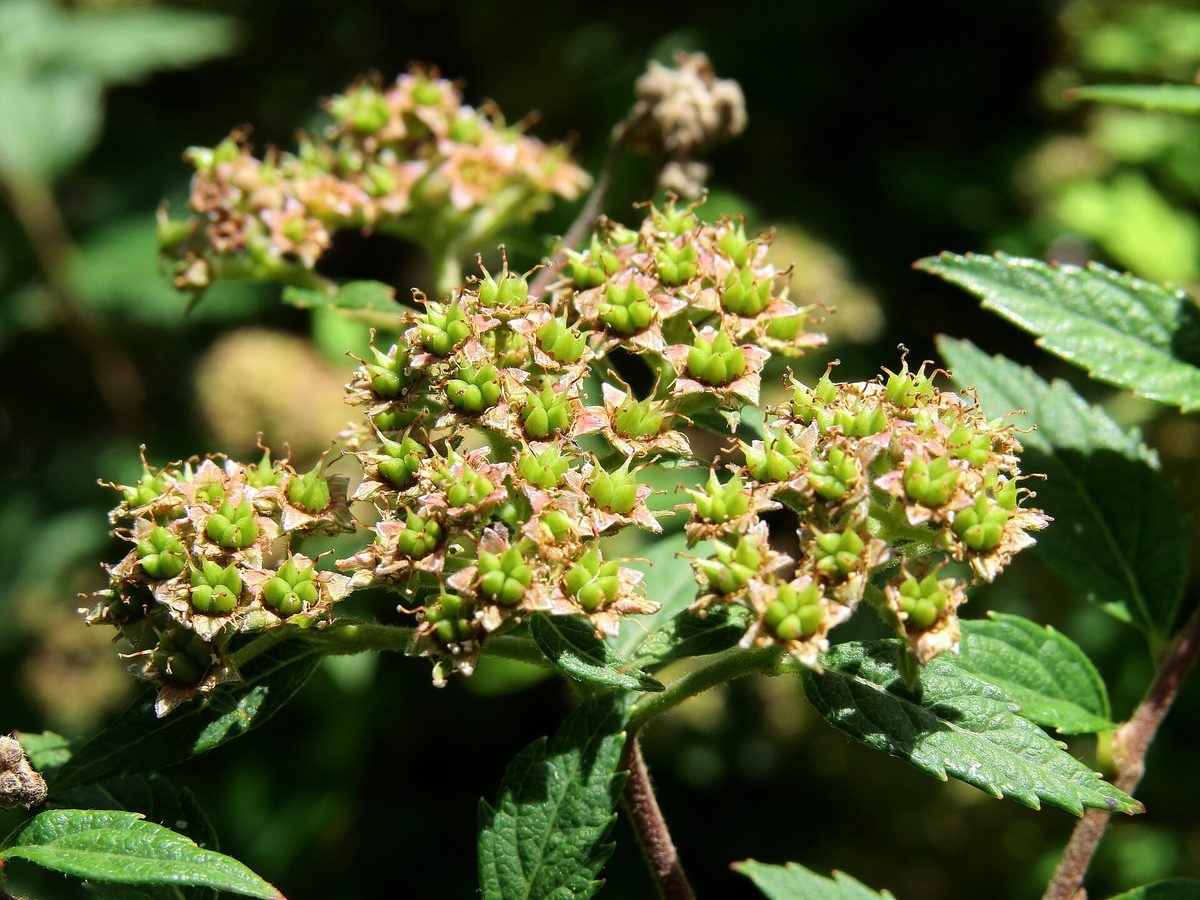
Photo: Аимаина хикари, CC BY-SA 4.0 via Wikimedia Commons

Quick facts
| Light: | Full sun and part shade (full sun preferred)11 source |
|---|---|
| Soil: | Well drained11 source |
| Hardiness: | Zones 3a–8b11 source |
| Size: | 4–6 ft (1.22–1.83 m) × 4–7 ft (1.22–2.13 m)11 source |
| Growth rate: | Rapid11 source |
| Bloom: | Jun–Jul, Pink131 source |
| Cats: | Not documented by major sources |
| Dogs: | Not documented by major sources |
| Family: | Rosaceae |
How much light does a Japanese Meadowsweet need?
Plant this shrub somewhere it gets full sun outdoors, which means at least six hours of direct sunlight every day. It also tolerates part shade, where a spot gets less direct sun than that for part of the day. Of the two exposures, full sun is the preferred choice for this particular shrub. A spot with strong, direct sunlight for most of the day suits it better than a shaded one. Still, a part-shade spot is an option if full sun is not available in your yard.
- Light: Full sun and part shade (full sun preferred)1
Best soil for a Japanese Meadowsweet
Soil for this shrub needs reliably good drainage rather than ground that stays wet for long stretches of time. A boggy or waterlogged garden spot does not suit it at all. Choose well-drained soil over a heavy, poorly drained one whenever you have the choice. Good drainage is one of the basic soil conditions documented for this shrub. This drainage requirement applies wherever in the yard you decide to plant it. Soil that drains quickly after rain is a better match for it than soil that holds water.
- Soil drainage: Well drained1
Hardiness and temperature
Outdoors, this shrub is hardy across USDA zones 3a through 8b. That span runs from cold northern climates up to warmer southern ones. Gardeners anywhere within that zone range can expect this shrub to survive outdoors through the winter months. Zone 3a marks its coldest limit, and zone 8b its warmest. Its hardiness holds across that entire span of zones, from the coldest to the warmest end. This shrub's hardiness range covers most of the continental United States, from its coldest regions to its milder ones.
- Hardiness: Zones 3a–8b1
Pruning a Japanese Meadowsweet
Two kinds of pruning suit this shrub: deadheading and hard renewal cuts. Removing its spent flowers, called deadheading, can encourage a second flush of blooms after its June and July flowering. Hard renewal pruning, also called rejuvenation pruning, is the other technique this shrub can handle. Both of these pruning approaches suit this particular shrub. Deadheading and hard renewal pruning are the two techniques documented for this shrub, rather than any other method.
How to plant a Japanese Meadowsweet
USDA zones 3a through 8b are where this shrub grows well outdoors. At maturity, it reaches 4-6 ft (1.22-1.83 m) tall and spreads 4-7 ft (1.22-2.13 m) wide. Give it room to fill out when you choose a planting spot. Pick a site with full sun, since that is this shrub's preferred exposure outdoors, though it also tolerates part shade. The soil at that site should drain well, since this shrub does not suit a boggy or waterlogged spot. Gardeners within USDA zones 3a through 8b can plant this shrub outdoors and expect it to survive the winter there. Choose a spot that meets both its light and drainage needs before you plant it. This range of zones covers most of the continental United States for planting purposes.
- Hardiness: Zones 3a–8b1
Winter care
Winter hardiness for this shrub spans USDA zones 3a through 8b. Within that range, it survives outdoors through winter without extra protection. Zone 3a represents its coldest hardiness limit on record, and zone 8b its warmest. This shrub is deciduous. That span covers a wide range of winter climates across its hardiness zones. Gardeners from its coldest zone to its warmest one can leave it outdoors through winter without covering it. Its hardiness rating of zones 3a through 8b covers cold-winter regions as well as milder ones.
- Hardiness: Zones 3a–8b1
How to propagate a Japanese Meadowsweet
You can propagate this shrub from seed or from stem cuttings, the two documented methods for it. Collecting and sowing its seed is one way to start new plants. Taking stem cuttings is the other documented method for this shrub. This shrub is also a rapid grower and an aggressive self-seeder. Either seed or stem cuttings will give you a new plant of this shrub. Of the two, both are suited to producing a new plant from an existing one.
- Propagation: Seed and stem cuttings1
Common problems
Aphids, leaf roller and scale are the pests recorded for this shrub. It is also susceptible to leaf spot, fire blight, powdery mildew and root rot, the diseases recorded for it. These are the same pests and diseases that affect many other members of the rose family.
| Problem | Kind |
|---|---|
| Aphids | Pest |
| Leaf roller | Pest |
| Scale insects | Pest |
| Leaf spot | Disease |
| Fire blight | Disease |
| Powdery mildew | Disease |
| Root rot | Disease |
Is Japanese Meadowsweet toxic to cats and dogs?
Recommended supplies
- Soil: a free-draining mix, and a pot with a drainage hole.
Questions and answers
- What light does Japanese spiraea need?
- Give this shrub full sun outdoors, meaning six or more hours of direct sunlight a day. It also tolerates part shade, where it gets less direct sun for part of the day. Between the two, full sun is the exposure this shrub prefers. This preference applies wherever you plant it outdoors.
- What USDA hardiness zones suit Japanese spiraea?
- Japanese spiraea is hardy outdoors in USDA zones 3a through 8b. That range runs from cold northern climates to warmer southern ones, and this shrub survives outdoors through winter within it. Zone 3a marks its coldest limit, and zone 8b marks its warmest.
- What pests and diseases affect Japanese spiraea?
- This shrub can attract aphids, leaf roller and scale. It is also susceptible to leaf spot, fire blight, powdery mildew and root rot. These same pests and diseases affect many other members of the rose family. Both its pests and its diseases are documented for this shrub specifically.
Sources
- NC State Extension Gardener Plant Toolbox. https://plants.ces.ncsu.edu/plants/spiraea-japonica/. Accessed 15 November 2026.
- University of Wisconsin-Madison Division of Extension (Wisconsin Horticulture). https://hort.extension.wisc.edu/articles/pruning-deciduous-shrubs/. Accessed 16 November 2026.
- Chicago Botanic Garden. https://www.chicagobotanic.org/plant-information/plant-finder/spiraea-japonica-japanese-spirea. Accessed 15 November 2026.
How this page was made
- Written with AI assistance from the sources listed on this page. AI is never the source of a fact.