Black Cherry (Prunus serotina)
Formerly Padus serotina, Cerasus serotina, Prunus capuli
Black cherry (Prunus serotina) is a tree that grows in full sun with a medium water need. The ASPCA lists it as toxic to both cats and dogs. It is deciduous, grows at a rapid rate and reaches 25–110 ft (7.62–33.53 m). It is native to the lower 48 US states.
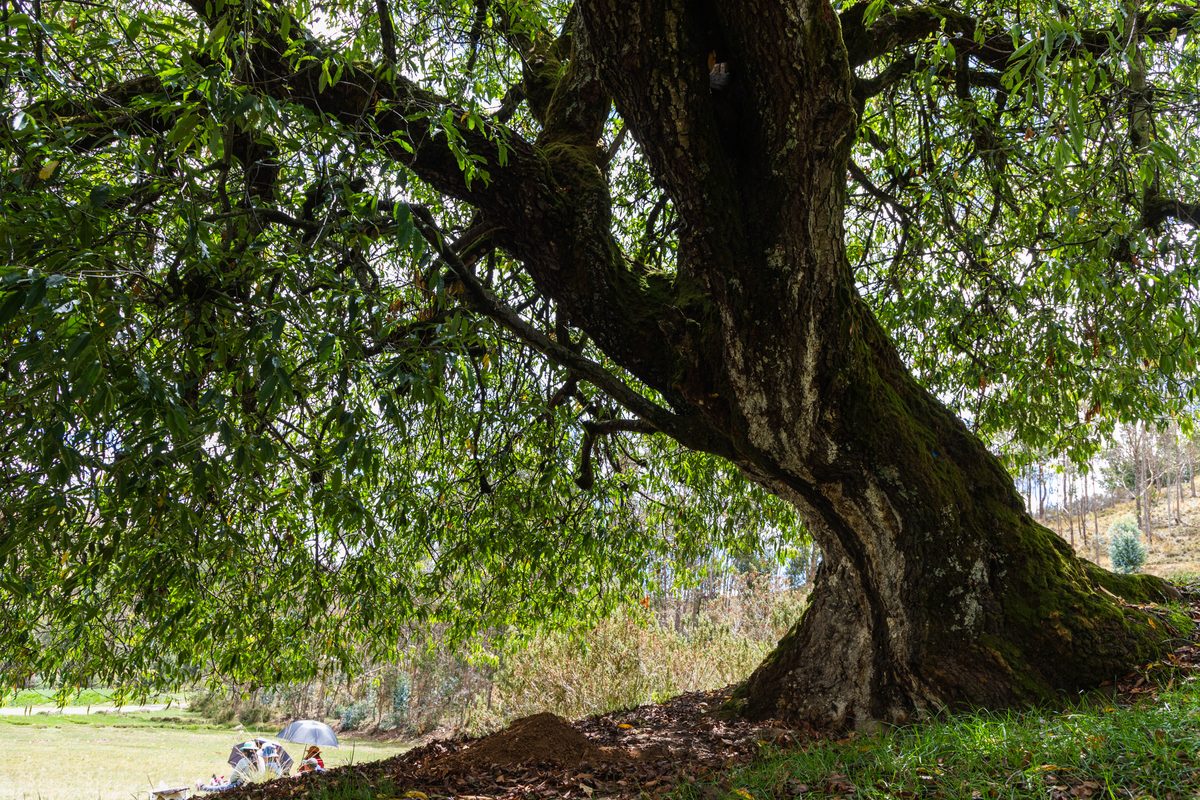
Photo: Guillermo Carlos Gómez, CC BY-SA 4.0 via Wikimedia Commons

Quick facts
| Light: | Full sun, part shade and full shade (full sun preferred)1234 |
|---|---|
| Water: | Medium21 |
| Soil: | Well drained, moist and occasionally dry; pH 5–7.4324 |
| Hardiness: | Zones 2a–8b51 source |
| Size: | 25–110 ft (7.62–33.53 m) × 30–60 ft (9.14–18.29 m)1031 source |
| Growth rate: | Rapid32363 |
| Bloom: | Mar–Jun, White131 source |
| Cats: | Toxic to cats 789 |
| Dogs: | Toxic to dogs 789 |
| Native range: | ALA, ARI, ARK, BRC, CNT, COL, DEL, ELS, FLA, GEO, GUA, HON, ILL, INI, IOW, KAN, KTY, LOU, MAI, MAS, MIC, MIN, MRY, MSI, MSO, MXC, MXE, MXG, MXI, MXN, MXS, MXT, NBR, NCA, NEB, NSC, NWH, NWJ, NWM, NWY, OHI, OKL, ONT, PAN, PEN, QUE, RHO, SCA, TEN, TEX, VER, VRG, WAS, WDC, WIS, WVA11 |
| Family: | Rosaceae |
How much light does a Black Cherry need?
Outdoors, black cherry is listed for full sun, part shade and full shade, with full sun preferred. It requires full sun, and part shade is also listed. The indoor light listing is direct sun, with medium light tolerated. Of the three outdoor light levels, full sun is the one marked as preferred.
How often to water a Black Cherry
Black cherry has a medium water need. Its soil drainage is listed as well drained, moist and occasionally dry. Good drainage is also required, along with full sun and soil high in organic matter. The medium water need is listed for a tree that prefers full sun outdoors.
Best soil for a Black Cherry
Black cherry tolerates acid to neutral soil, with a pH between 5 and 7.4. That pH range spans acid soils through neutral ones. The pH figures are 5 at the low end and 7.4 at the high end. Its soil drainage is listed as well drained, moist and occasionally dry. Moist soil and occasionally dry soil are both on the drainage list. It requires soil high in organic matter and good drainage.
Hardiness and temperature
Black cherry is listed for USDA hardiness zones 2a to 8b. The coldest listed zone is 2a and the warmest is 8b. It is hardy in USDA zones 2 to 8 and prefers full sun. It is native to the lower 48 US states.
- Hardiness: Zones 2a–8b5
Pruning a Black Cherry
Light shaping is the pruning type listed for black cherry. The pruning requirement is recorded as little required. Growth is rapid, and mature height runs from 25 to 110 ft (7.62 to 33.53 m). Mature spread is 30 to 60 ft (9.14 to 18.29 m).
- Pruning: Light shaping6
How to plant a Black Cherry
Black cherry suits planting in USDA zones 2 to 8, in full sun. Plan for a mature height of 25–110 ft (7.62–33.53 m) and a spread of 30–60 ft (9.14–18.29 m). It is a tree that grows at a rapid rate. It requires good drainage and soil high in organic matter. Its white flowers open in the Mar–Jun bloom window.
- Hardiness: Zones 2a–8b5
Winter care
Black cherry is a deciduous tree, and its listed hardiness runs from zone 2a to zone 8b. Zone 2a marks the cold end of that range, and zone 8b marks the warm end. A shorter form of the range reads USDA zones 2 to 8. The record describes a rapid growth rate and a tree habit.
- Hardiness: Zones 2a–8b5
How to propagate a Black Cherry
Seed, stem cuttings and root cuttings are the propagation methods listed for black cherry. The plant's description says to propagate it by seed or stem cutting. Root cuttings are listed as a third method. The mature tree reaches 25–110 ft (7.62–33.53 m), with a spread of 30–60 ft (9.14–18.29 m). Its growth rate is rapid.
- Propagation: Seed, stem cuttings and root cuttings3
Common problems
Insects listed for black cherry include cherry lace bug, aphids, scale, borers and leafhoppers. Potential diseases include leaf spot, dieback, leaf curl, powdery mildew, root rot and fireblight. Both lists are described as potential problems. Borers and scale appear on the insect list, next to aphids and leafhoppers.
| Problem | Kind |
|---|---|
| Cherry lace bug | Pest |
| Aphids | Pest |
| Scale insects | Pest |
| Borers | Pest |
| Leafhoppers | Pest |
| Leaf spot | Disease |
| Dieback | Disease |
| Curling leaves | Symptom |
| Powdery mildew | Disease |
| Root rot | Disease |
| Fireblight | Disease |
Is Black Cherry toxic to cats and dogs?
The ASPCA lists black cherry as toxic to cats. It also lists black cherry as toxic to dogs. NC State Extension says that if the tree is ingested, it is likely to cause death in pets. The signs it names include struggling for breath, weakness, overexcitement, wide pupils, muscle spasms, seizures, coma and failure of breathing. The entries for cats and dogs are separate, and each one reads toxic.
Pet-safe alternatives
Recommended supplies
- Soil: a free-draining mix, and a pot with a drainage hole.
Questions and answers
- Is black cherry toxic to cats and dogs?
- The ASPCA lists black cherry as toxic to both cats and dogs. NC State Extension says that if the tree is ingested, it is likely to cause death in pets.
- How big does black cherry get?
- Mature height runs from 25 to 110 ft (7.62 to 33.53 m). Mature spread is 30 to 60 ft (9.14 to 18.29 m), and the growth rate is rapid.
- What zones can black cherry grow in?
- Black cherry is listed for USDA zones 2a to 8b. It is a deciduous tree that is native to the lower 48 US states. Full sun is the preferred light outdoors.
Sources
- Lady Bird Johnson Wildflower Center. https://www.wildflower.org/plants/result.php?id_plant=prse2. Accessed 12 October 2026.
- University of Florida IFAS Extension. https://ask.ifas.ufl.edu/publication/st516. Accessed 12 October 2026.
- NC State Extension Gardener Plant Toolbox. https://plants.ces.ncsu.edu/plants/prunus-serotina/. Accessed 12 October 2026.
- Cornell University CALS Woody Plants Database. https://woodyplants.cals.cornell.edu/plant/193. Accessed 12 October 2026.
- Penn State Extension. https://extension.psu.edu/early-spring-blooming-native-trees-a-delight-to-us-and-to-pollinators. Accessed 12 October 2026.
- University of Florida IFAS Extension (EDIS). https://ask.ifas.ufl.edu/publication/ST516. Accessed 12 October 2026.
- ASPCA Animal Poison Control Center. https://www.aspca.org/pet-care/aspca-poison-control/toxic-and-non-toxic-plants/black-cherry. Accessed 24 September 2026.
- NC State Extension Gardener Plant Toolbox. https://plants.ces.ncsu.edu/plants/prunus-serotina/common-name/wild-cherry/. Accessed 24 September 2026.
- Pet Poison Helpline. https://www.petpoisonhelpline.com/poison/cherry/. Accessed 24 September 2026.
- Lady Bird Johnson Wildflower Center (Native Plant Database). https://www.wildflower.org/plants/result.php?id_plant=PRSE2. Accessed 31 October 2026.
- Royal Botanic Gardens, Kew (World Checklist of Vascular Plants). https://sftp.kew.org/pub/data-repositories/WCVP/wcvp.zip. Accessed 4 June 2026.
How this page was made
- Written with AI assistance from the sources listed on this page. AI is never the source of a fact.