Common Hackberry (Celtis occidentalis)
Formerly Celtis crassifolia, Celtis audibertiana, Celtis pumila
Common hackberry prefers full sun to part shade. Established trees tolerate dry to medium soil moisture. This tree grows fast into a tall shade tree. Soil can run from occasionally dry to moist and drains well. Outdoors, it grows across USDA zones 3a through 9b. It makes a hardy shade tree for yards. No cited source lists this tree as toxic to cats or dogs.
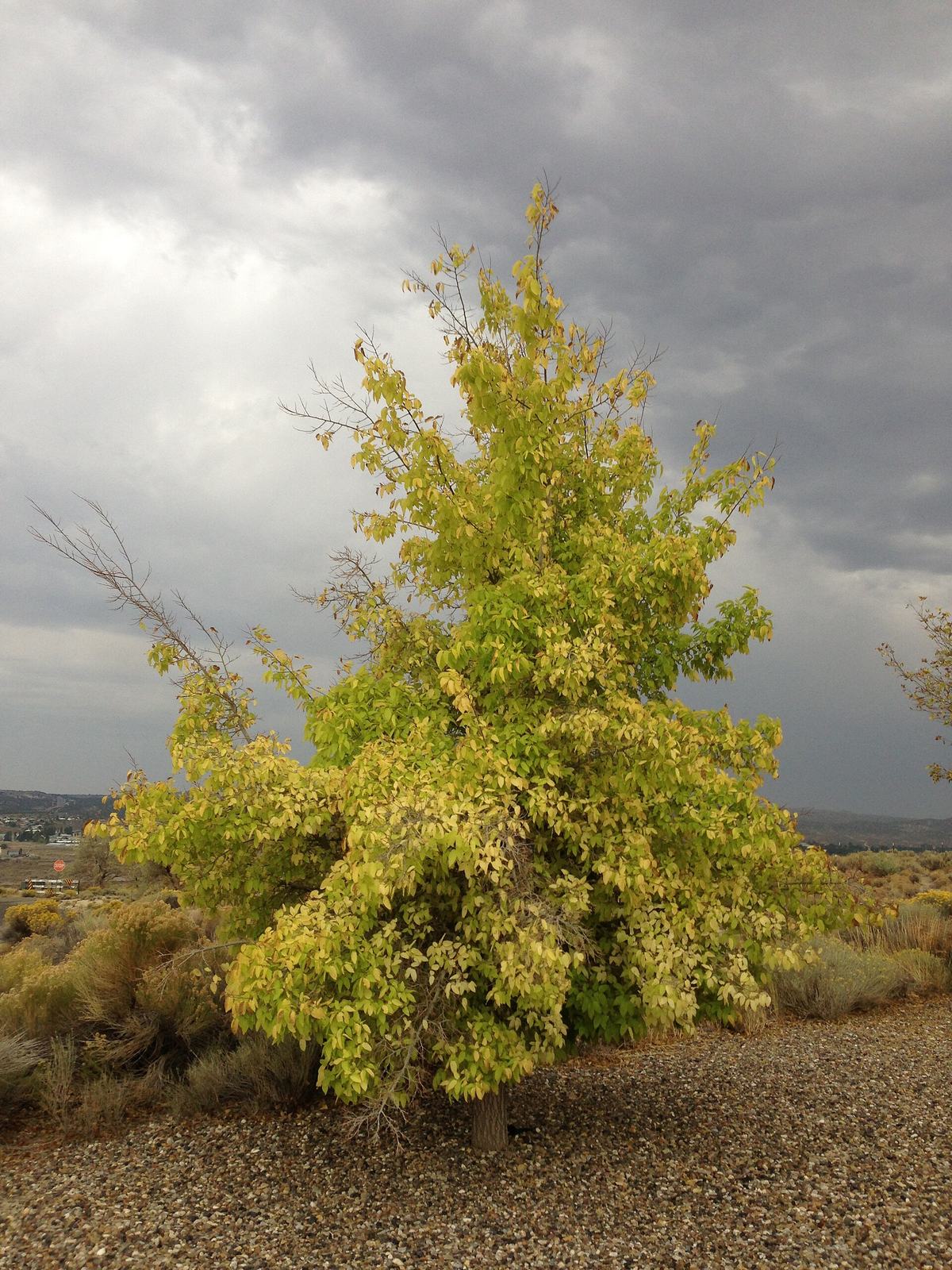
Photo: Famartin, CC BY-SA 4.0 via Wikimedia Commons

Quick facts
| Light: | Full sun, part shade and full shade (full sun preferred)12 |
|---|---|
| Water: | Dry to medium21 |
| Soil: | Well drained, moist and occasionally dry; pH 5–8134 |
| Hardiness: | Zones 3a–9b15 |
| Size: | 40–80 ft (12.19–24.38 m) × 40–50 ft (12.19–15.24 m)5436 |
| Growth rate: | Rapid15 |
| Bloom: | Green and brown271 source |
| Cats: | Not documented by major sources |
| Dogs: | Not documented by major sources |
| Native range: | ALA, ARK, CNT, COL, DEL, GEO, ILL, INI, IOW, KAN, KTY, MAI, MAN, MAS, MIC, MIN, MRY, MSI, MSO, NCA, NDA, NEB, NWH, NWJ, NWM, NWY, OHI, OKL, ONT, PEN, QUE, RHO, SCA, SDA, TEN, TEX, VER, VRG, WDC, WIS, WVA, WYO8 |
| Family: | Cannabaceae |
How much light does a Common Hackberry need?
Full sun outdoors brings out the strongest growth in common hackberry. A spot with plenty of direct sun through the day supports its fullest canopy. Part shade also works well, and the tree still grows steadily with some shade during part of the day. Even full shade is tolerated, though growth slows and the canopy can thin out in low light. If you're choosing a site, a sunnier spot gives a young tree the best start. As the tree matures, it keeps growing even if nearby buildings or trees add more shade over time.
How often to water a Common Hackberry
Soil moisture needs for common hackberry swing from dry to medium. Once the tree is established, you don't need to stick to a strict watering schedule. Check the top few inches of soil, and water when it feels on the dry side. Young trees need more frequent checks, since a smaller root system dries out faster than a mature one. A mature hackberry handles short dry spells well and doesn't need constant moisture to stay healthy. Avoid soil that stays wet for long stretches. This tree does best with moisture that swings between dry and medium rather than staying soggy. Container-grown or newly planted trees may need water more often during their first growing season.
Best soil for a Common Hackberry
Well-drained soil suits common hackberry best, though it also tolerates soil that is occasionally dry or consistently moist. A wide pH range works for this tree, from about 5 to 8, covering acidic to alkaline ground. This flexibility makes it a forgiving choice for many yards, as long as water doesn't pool around the roots. Soil that drains poorly and stays soggy raises the risk of root rot in this tree. Compacted clay soils work best when they're amended to improve drainage before planting.
Hardiness and temperature
USDA zones 3a through 9b mark where common hackberry grows outdoors. That span covers cold northern winters and hot, humid southern summers. Within that range, the tree handles a wide swing in temperature over the year. Gardeners outside zones 3a to 9b should expect more winter dieback or heat stress. No cited source gives an exact minimum temperature this tree can survive. Zone 3a is the coldest zone where it's reported to grow reliably outdoors. Zone 9b marks the warm edge where summer heat is still manageable for this tree.
How to plant a Common Hackberry
Plant common hackberry outdoors in USDA zones 3a through 9b. In the coldest zones, such as 3a, plant once the risk of frost has passed, so roots have time to settle in before winter. Choose a site with room to grow, since a mature tree can reach 40-80 ft (12-24 m) tall and 40-50 ft (12-15 m) wide. Keep it well away from power lines, sidewalks, and foundations, since it needs that much space at full size. In the warmest zones, such as 9b, plant once summer heat has eased so new roots aren't stressed by high heat. Water newly planted trees well at planting time to help roots settle into the surrounding soil.
Winter care
Winter hardiness for common hackberry spans USDA zones 3a through 9b. That range spans cold northern winters and much milder southern ones. No cited source lists an exact minimum temperature for this tree. Zone 3a marks the coldest edge where it's reported to grow outdoors. Gardeners in colder zones than 3a should expect more winter dieback. Zone 9b marks the warm edge of its outdoor range. The zone range shows how far north and south this tree can overwinter outdoors without extra protection.
How to propagate a Common Hackberry
Seed, stem cuttings, and division all work for propagating this tree. Seed is the most common method, and seeds often need a period of cold before they sprout. Stem cuttings let you grow a new tree from a piece of an existing one. Division works for younger plants that have produced more than one stem at the base. Whichever method you pick, keep the young plant's roots consistently moist while it becomes established.
Common problems
Several pests may visit common hackberry, including hackberry nipple gall, woolly aphid, lace bugs, scale insects, and hackberry leafslug. These pests rarely kill a healthy tree, though heavy numbers can make leaves look rough or curled. Diseases to watch for include powdery mildew, leaf spot, witches' broom, and root rot. Good airflow and soil that drains well help keep these problems in check.
| Problem | Kind |
|---|---|
| Hackberry nipple gall | Pest |
| Woolly aphid | Pest |
| Lace bugs | Pest |
| Scale insects | Pest |
| Hackberry leafslug | Pest |
| Powdery mildew | Disease |
| Leaf spot | Disease |
| Witches broom | Disease |
| Root rot | Disease |
Is Common Hackberry toxic to cats and dogs?
Recommended supplies
- Soil: a free-draining mix, and a pot with a drainage hole.
Questions and answers
- What USDA zones can common hackberry grow in outdoors?
- Common hackberry grows outdoors in USDA zones 3a through 9b. That range covers cold northern winters and much warmer, more humid southern summers. Outside that range, it may need extra winter protection or won't thrive in summer heat. Gardeners near the edges of that range should watch for stress during extreme summer heat or hard winter cold.
- How fast does common hackberry grow?
- Common hackberry grows at a rapid pace, putting on height quickly once it's established outdoors. This fast growth makes it a good choice when you want shade sooner rather than later. That pace also means the trunk and canopy fill in within a relatively short time.
- What pests and diseases affect common hackberry?
- Common hackberry can attract pests such as hackberry nipple gall, woolly aphid, lace bugs, scale insects, and hackberry leafslug. It can also develop powdery mildew, leaf spot, witches' broom, or root rot. Good airflow and soil that drains well help keep both pests and diseases in check.
Sources
- NC State Extension Gardener Plant Toolbox. https://plants.ces.ncsu.edu/plants/celtis-occidentalis/. Accessed 12 October 2026.
- Lady Bird Johnson Wildflower Center. https://www.wildflower.org/plants/result.php?id_plant=ceoc. Accessed 12 October 2026.
- University of Minnesota Extension. https://extension.umn.edu/garden-and-home/yard-and-garden/lawns-and-landscapes-in-minnesota/trees-and-shrubs/common-hackberry. Accessed 12 October 2026.
- Cornell University CALS Woody Plants Database. https://woodyplants.cals.cornell.edu/plant/50. Accessed 12 October 2026.
- University of Florida IFAS Extension (EDIS). https://ask.ifas.ufl.edu/publication/ST140. Accessed 12 October 2026.
- Chicago Botanic Garden. https://www.chicagobotanic.org/plant-information/plant-finder/celtis-occidentalis-common-hackberry. Accessed 12 October 2026.
- Lady Bird Johnson Wildflower Center. https://www.wildflower.org/plants/result.php?id_plant=CEOC. Accessed 12 October 2026.
- Royal Botanic Gardens, Kew (World Checklist of Vascular Plants). https://sftp.kew.org/pub/data-repositories/WCVP/wcvp.zip. Accessed 4 June 2026.
How this page was made
- Written with AI assistance from the sources listed on this page. AI is never the source of a fact.