Indian Strawberry (Potentilla indica)
Formerly Duchesnea indica, Fragaria indica, Duchesnea major
Indian strawberry grows best in full sun, accepts part shade, and needs medium water, though no toxicity position for cats or dogs is documented. This spreading, trailing perennial is listed for USDA zones 5a to 9b. It reaches 3 to 8 in (0.08 to 0.2 m) tall and bears yellow flowers.
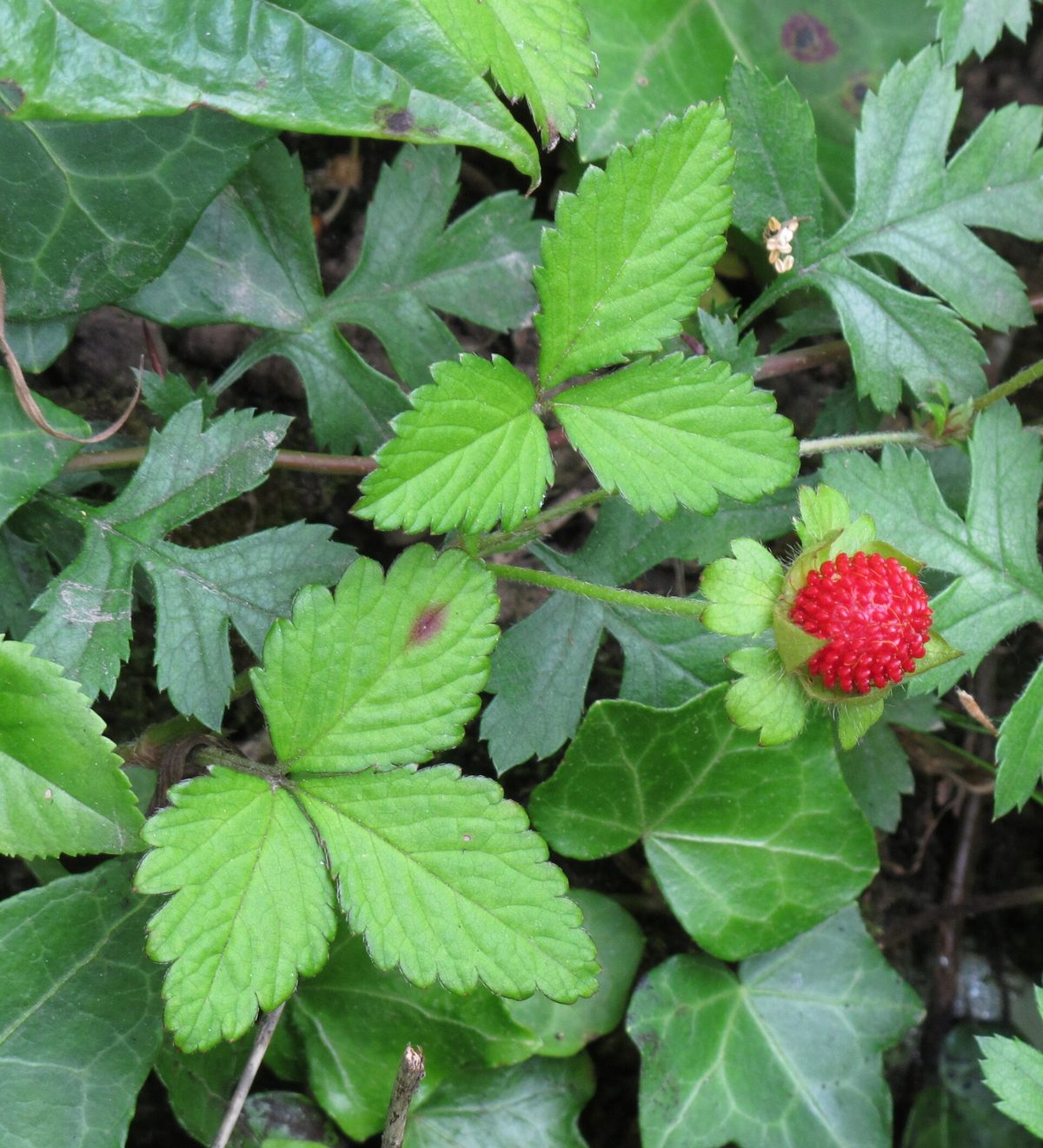
Photo: Robert Flogaus-Faust, CC BY 4.0 via Wikimedia Commons

Quick facts
| Light: | Full sun and part shade (full sun preferred)11 source |
|---|---|
| Water: | Medium11 source |
| Soil: | Well drained and moist11 source |
| Hardiness: | Zones 5a–9b11 source |
| Size: | 0.2–0.7 ft (0.08–0.2 m) × 1–2 ft (0.3–0.61 m)11 source |
| Growth rate: | Moderate11 source |
| Bloom: | May–Jul, Yellow131 source |
| Cats: | Not documented by major sources |
| Dogs: | Not documented by major sources |
| Native range: | AFG, ASS, CHC, CHH, CHM, CHN, CHS, CHT, EHM, IND, JAP, JAW, KOR, LAO, LSI, MYA, NEP, PAK, PHI, PRM, SRL, TAI, THA, VIE, WHM4 |
| Family: | Rosaceae |
How much light does an Indian Strawberry need?
Full sun is the preferred setting for Indian strawberry, and the source defines it as six or more hours of direct sunlight a day. The plant also accepts part shade, which means direct sun for only part of the day, between 2 and 6 hours. Two hours of direct sun a day is the minimum listed. Full sun and part shade are the two light conditions on record for it.
How often to water an Indian Strawberry
Indian strawberry needs medium water. It does well in moist, well drained soil, whether the soil is sandy, loamy or clay. It grows in full sun or semi-shade under those conditions. The facts on file give no watering schedule in days, so this page offers none.
- Water: Medium1
Best soil for an Indian Strawberry
Indian strawberry does well in most moist, well drained soil types. Sandy, loamy and clay soils are all named as suitable. The same listing places the plant in full sun or semi-shade on these soils. Moist and well drained are the two drainage conditions recorded together for it. The medium water need goes with that moist, well drained description. No soil pH range is documented, so this page gives no pH figure.
- Soil drainage: Well drained and moist1
Hardiness and temperature
Indian strawberry is listed for USDA hardiness zones 5a through 9b. The list runs through every half-zone in between: 5a, 5b, 6a, 6b, 7a, 7b, 8a, 8b, 9a and 9b. No minimum temperature is documented, so this page gives no cold limit in degrees, only the zone range. Humidity is not documented either, so the zones are the only climate guide on this page.
- Hardiness: Zones 5a–9b1
How to plant an Indian Strawberry
Plant Indian strawberry in USDA zones 5a to 9b. Allow 1 to 2 ft (0.3 to 0.61 m) of width for each plant. It stays low, at 3 to 8 in (0.08 to 0.2 m) tall, and its growth rate is moderate. Choose a spot with full sun or part shade and moist, well drained soil. The plant is a herbaceous perennial, and in the lower 48 US states it is listed as introduced.
- Hardiness: Zones 5a–9b1
Winter care
Indian strawberry is a herbaceous perennial listed for zones 5a to 9b. Zone 5a is the coldest zone in that list, and 9b is the warmest. No minimum temperature is documented, so this page cannot give a freezing limit in degrees. No winter mulching or cutback is documented either, and the listing gives no guidance outside zones 5a to 9b.
- Hardiness: Zones 5a–9b1
How to propagate an Indian Strawberry
Layering is the propagation method on file for Indian strawberry. The source says the plant spreads horizontally and forms new roots at each node. Its listed habit is spreading and trailing, and its growth rate is moderate. Seed and division are not documented as methods here, so this page describes layering only.
- Propagation: Layering2
Common problems
Indian strawberry has no known diseases or insect pests on record. The pest list is empty, and so is the disease list. The only insects the facts name are small bees and flies that visit the flowers. If you notice a problem anyway, this page has no documented pest or disease to match it against.
Is Indian Strawberry toxic to cats and dogs?
Recommended supplies
- Soil: a free-draining mix, and a pot with a drainage hole.
Questions and answers
- How much sun does Indian strawberry need?
- Full sun is preferred, which means six or more hours of direct sunlight a day. It also accepts part shade, with 2 to 6 hours of direct sun. Two hours a day is the minimum listed.
- How big does Indian strawberry get?
- It grows 3 to 8 in (0.08 to 0.2 m) tall and spreads 1 to 2 ft (0.3 to 0.61 m) wide. Its growth rate is moderate, and its habit is spreading and trailing.
- What color are the flowers, and when do they bloom?
- The flowers are yellow, with five petals, five green sepals and many central stamens. Bloom runs from late spring to mid-summer and lasts about a month.
Sources
- NC State Extension. https://plants.ces.ncsu.edu/plants/potentilla-indica/. Accessed 21 October 2026.
- University of Minnesota Extension. https://extension.umn.edu/identify-invasive-species/mock-strawberry. Accessed 21 October 2026.
- University of Minnesota Extension. https://extension.umn.edu/natural-resources/forestry-and-wildlife/invasive-species/mock-strawberry. Accessed 28 October 2026.
- Royal Botanic Gardens, Kew (World Checklist of Vascular Plants). https://sftp.kew.org/pub/data-repositories/WCVP/wcvp.zip. Accessed 4 June 2026.
How this page was made
- Written with AI assistance from the sources listed on this page. AI is never the source of a fact.