Myrtle (Myrtus communis)
Formerly Myrtus italica, Myrtus baetica, Myrtus baui
Give myrtle full sun, with part shade as the alternative. Grow it in USDA zones 8a to 9b. Use soil that is well drained and moist. Watch for scale, spider mites and thrips. Root rot and myrtle rust are the listed diseases. Its flowers are white. Watering needs and toxicity for cats and dogs are not documented here.
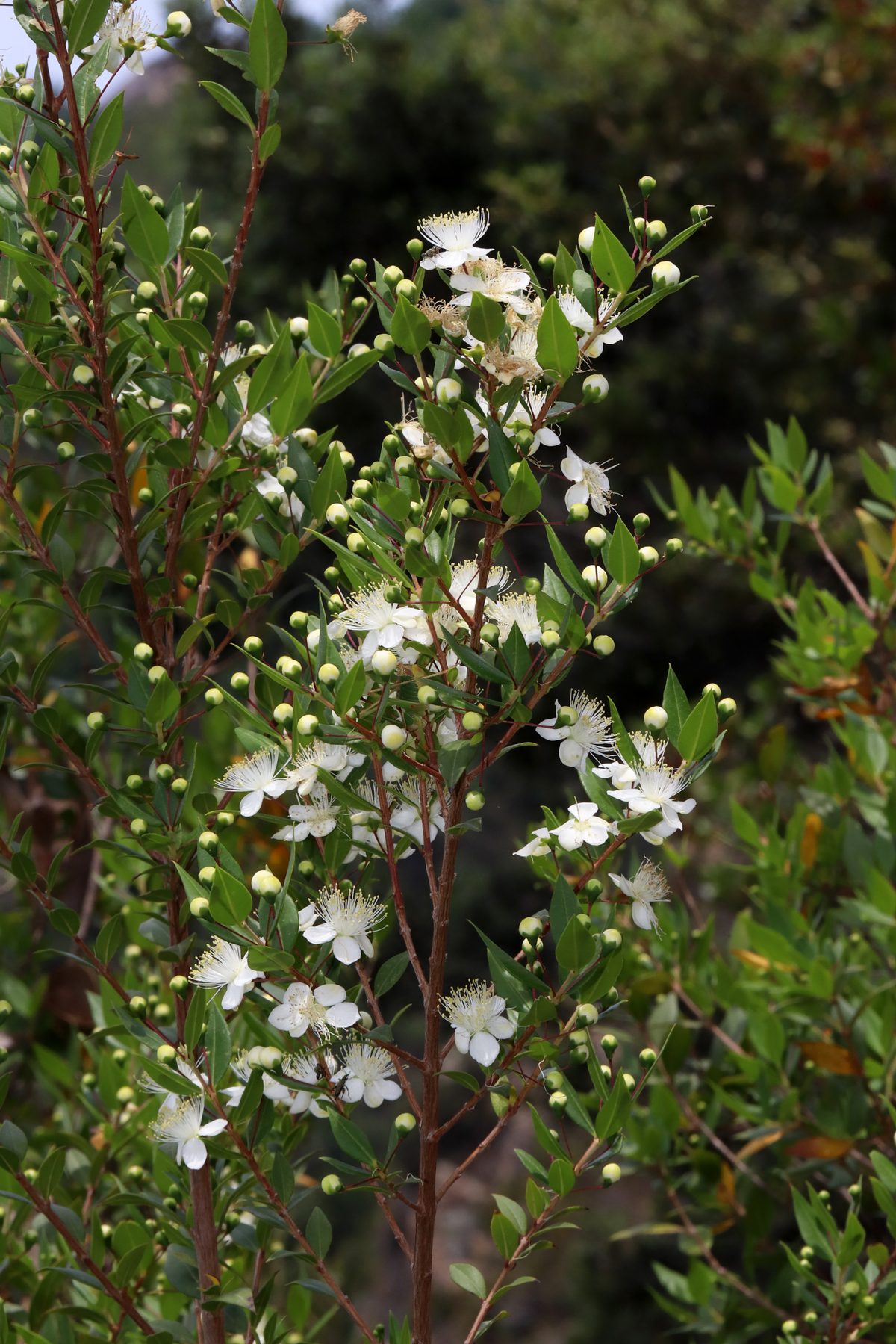
Photo: LIGURIAN VASCULAR FLORA, CC BY 2.0 via Wikimedia Commons

Quick facts
| Light: | Full sun and part shade (full sun preferred)11 source |
|---|---|
| Soil: | Well drained and moist11 source |
| Hardiness: | Zones 8a–9b11 source |
| Size: | 8–12 ft (2.44–3.66 m) × 8–12 ft (2.44–3.66 m)11 source |
| Growth rate: | Moderate111 source |
| Bloom: | White11 source |
| Cats: | Not documented by major sources |
| Dogs: | Not documented by major sources |
| Native range: | AFG, ALB, ALG, AZO, BAL, CNY, COR, CYP, EAI, ERI, ETH, FRA, GRC, IRN, IRQ, ITA, KRI, LBS, LBY, MDR, MOR, PAK, PAL, POR, SAR, SAU, SIC, SPA, TUN, TUR, YEM, YUG2 |
| Family: | Myrtaceae |
How much light does a Myrtle need?
Full sun is the preferred light for myrtle. The listing defines full sun as 6 or more hours of direct sunlight a day. Part shade is also listed as acceptable. Plant it where it gets those hours of sun if you can. Full sun and part shade are the two light conditions listed.
- Light: Full sun and part shade (full sun preferred)1
Best soil for a Myrtle
Myrtle is listed for soil that is well drained and moist. The plant listing names good drainage as a soil need. Proper drainage helps prevent root rot. Root rot is among the diseases recorded for myrtle. Make sure the planting spot drains well before you plant. Moist soil is also part of the listed range. No soil pH range is documented for this page.
- Soil drainage: Well drained and moist1
Hardiness and temperature
Myrtle is listed for USDA hardiness zones 8a to 9b. That range covers zones 8a, 8b, 9a and 9b. Zone 8a is the coldest zone in the listed range. Zone 9b is the warmest zone in the listed range. Look up your own zone to see whether it falls inside this range. Zones 8a and 8b are the two cooler zones in that range. The listing does not give a minimum temperature or a humidity need.
- Hardiness: Zones 8a–9b1
How to plant a Myrtle
Plant myrtle in USDA zones 8a to 9b. Pick a spot with room for a plant 8 to 12 ft (2.44 to 3.66 m) wide. It reaches 8 to 12 ft (2.44 to 3.66 m) tall at maturity. Choose a site with full sun, with part shade as an alternative. Look for well drained soil.
- Hardiness: Zones 8a–9b1
Winter care
The listed range for myrtle is USDA zones 8a to 9b. Zone 8a sits at the cold end of that range. Zone 9b sits at the warm end of it. Myrtle is described as an evergreen shrub. Check your zone against the listed range before you plan for winter. Zones outside 8a to 9b are not covered by the listing. No cited source records a minimum temperature or a winter protection method for it.
- Hardiness: Zones 8a–9b1
Common problems
Scale, spider mites and thrips can damage myrtle during hot, dry weather. Mealybugs and whiteflies are also listed as common pests. Check the plant for these pests in hot, dry weather. Root rot and myrtle rust are the common diseases listed. Proper drainage helps prevent root rot.
| Problem | Kind |
|---|---|
| Scale insects | Pest |
| Spider mites | Pest |
| Thrips | Pest |
| Mealybugs | Pest |
| Whiteflies | Pest |
| Root rot | Disease |
| Myrtle rust | Disease |
Is Myrtle toxic to cats and dogs?
Recommended supplies
- Soil: a free-draining mix, and a pot with a drainage hole.
Questions and answers
- How much sun does myrtle need?
- Myrtle prefers full sun, which the listing defines as 6 or more hours of direct sunlight a day. It also lists part shade as acceptable. Full sun and part shade are the only two light conditions listed.
- What zones can myrtle grow in?
- Myrtle is listed for USDA hardiness zones 8a to 9b. That covers zones 8a, 8b, 9a and 9b. It is described as an evergreen shrub. It grows 8 to 12 ft (2.44 to 3.66 m) tall. Its growth rate is moderate.
- What problems affect myrtle?
- Scale, spider mites and thrips can damage it during hot, dry weather. Mealybugs and whiteflies are also listed as common pests. Root rot and myrtle rust are the diseases listed. Proper drainage helps prevent root rot.
Sources
- NC State Extension Gardener Plant Toolbox. https://plants.ces.ncsu.edu/plants/myrtus-communis/. Accessed 14 October 2026.
- Royal Botanic Gardens, Kew (World Checklist of Vascular Plants). https://sftp.kew.org/pub/data-repositories/WCVP/wcvp.zip. Accessed 4 June 2026.
How this page was made
- Written with AI assistance from the sources listed on this page. AI is never the source of a fact.