Sweet Osmanthus (Osmanthus fragrans)
Formerly Olea fragrans, Osmanthus aurantiacus, Olea acuminata
Grow sweet osmanthus in full sun to part shade outdoors. It does best with six or more hours of direct light a day. It tolerates dry spells once established. Even so, water it during hot, dry months. It grows best in soil that drains well. This shrub is hardy from USDA zone 8a to 11b. No cited source lists a toxicity rating for cats or dogs.
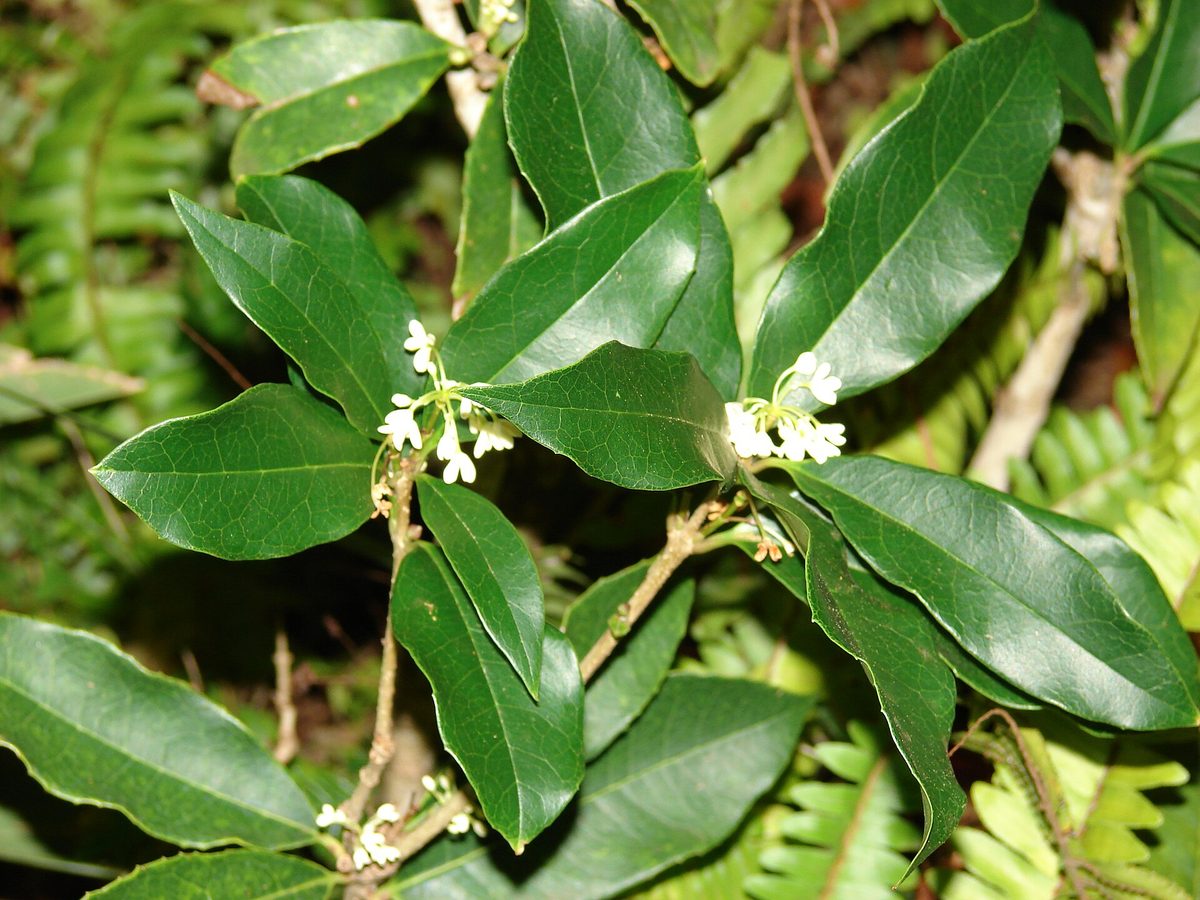
Photo: Forest & Kim Starr, CC BY 3.0 via Wikimedia Commons

Quick facts
| Light: | Full sun and part shade (full sun preferred)12 |
|---|---|
| Water: | Dry to medium11 source |
| Soil: | Well drained12 |
| Hardiness: | Zones 8a–11b11 source |
| Size: | 10–12 ft (3.05–3.66 m) × 8 ft (2.44 m)21 source |
| Growth rate: | Moderate111 source |
| Bloom: | White12 |
| Cats: | Not documented by major sources |
| Dogs: | Not documented by major sources |
| Native range: | ASS, CBD, CHC, CHH, CHN, CHS, EHM, JAP, MYA, NEP, TAI, THA, VIE, WHM4 |
| Family: | Oleaceae |
How much light does a Sweet Osmanthus need?
Plant sweet osmanthus where it gets full sun outdoors, meaning six or more hours of direct light each day. It also grows well in part shade, tolerating conditions anywhere from full sun down to medium shade. Full sun is this plant's preferred light level, and part shade is also acceptable. Good drainage matters wherever you place it, whether that spot gets full sun or part shade. Once it settles into a sunny or partly shaded spot, it tolerates dry periods fairly well. Even so, water it during hot, dry months no matter how much sun the site gets. At maturity it typically reaches 10 to 12 ft (3.0 to 3.7 m) tall.
How often to water a Sweet Osmanthus
Sweet osmanthus needs water ranging from fairly dry to medium, depending on conditions. Once it is established in the ground, it tolerates drought reasonably well. Even so, give it supplemental water during hot, dry months. It also grows best in soil that drains well. One source describes its preferred soil as fertile, moist, well-drained, and acidic. This plant is hardy outdoors from USDA zone 8a through zone 11b. It keeps a medium growth rate across that range. Its flowers are white. It is native to parts of Asia, including China, Japan, Vietnam, and the Himalayas. At maturity it typically reaches 10 to 12 ft (3.0 to 3.7 m) tall and about 8 ft (2.4 m) wide.
- Water: Dry to medium1
Best soil for a Sweet Osmanthus
Sweet osmanthus grows best in soil that drains well. One cited source describes its ideal soil as fertile, moist, well-drained, and acidic. No cited source gives an exact pH range for this plant, so that detail stays not documented. This shrub is native to parts of Asia, including China, Japan, Vietnam, and the Himalayas. It is also hardy outdoors from USDA zone 8a to zone 11b. Its growth rate is medium, neither fast nor slow. Its flowers are white. Once established, it also tolerates fairly dry conditions in that soil.
Hardiness and temperature
Sweet osmanthus grows outdoors in USDA hardiness zones 8a through 11b. That range covers zones 8a, 8b, 9a, 9b, 10a, 10b, 11a, and 11b. No cited source gives an exact minimum temperature for this plant, so that number stays not documented. The plant is native to parts of Asia, including China, Japan, Vietnam, Thailand, and Myanmar. It also tolerates part shade as well as full sun outdoors. Once established, it handles dry spells, though hot months call for extra water. Its growth rate stays medium across that hardiness range. Its flowers are white.
- Hardiness: Zones 8a–11b1
Pruning a Sweet Osmanthus
Prune sweet osmanthus lightly to shape it, rather than cutting it back hard. Most tea olives are pruned before new growth starts in spring. This timing works because the plant flowers on the current season's new growth. This shrub also keeps a medium growth rate. Its flowers are white, and they appear on that new growth. This species is hardy outdoors from USDA zone 8a to zone 11b.
- Pruning: Light shaping2
How to plant a Sweet Osmanthus
This shrub can be planted outdoors anywhere from USDA zone 8a to zone 11b. That span includes zones 8a, 8b, 9a, 9b, 10a, 10b, 11a, and 11b. At maturity, it commonly reaches 10 to 12 ft (3.0 to 3.7 m) tall. It spreads to about 8 ft (2.4 m) wide. Choose a planting site that gets full sun to part shade. The soil in that spot should also drain well. This shrub keeps a medium growth rate. Its flowers are white. It is native to parts of Asia, including China, Japan, Vietnam, and the Himalayas. Once planted, prune it before new growth starts in spring, since it flowers on that season's growth.
- Hardiness: Zones 8a–11b1
Winter care
This shrub survives winters outdoors in USDA zones 8a through 11b. That range spans zones 8a, 8b, 9a, 9b, 10a, 10b, 11a, and 11b. No cited source states an exact minimum temperature for this plant, so that number stays not documented. Prune it before new growth starts in spring, since it flowers on that season's growth. Once established, it tolerates dry spells, though hot months call for extra water. It grows best in soil that drains well. Its growth rate stays medium year-round.
- Hardiness: Zones 8a–11b1
Common problems
Several insect pests are documented on sweet osmanthus, including Pseudaulacaspis pentagona and six other species. One disease, Phytophthora ramorum, is also recorded on this plant. This species is hardy outdoors from USDA zone 8a to 11b. It also prefers soil that drains well. This shrub also keeps a medium growth rate. Its flowers are white. It is also native to parts of Asia, including China, Japan, Vietnam, and the Himalayas.
| Problem | Kind |
|---|---|
| Pseudaulacaspis pentagona | Pest |
| Fiorinia phantasma | Pest |
| Thrips hawaiiensis | Pest |
| Cnestus mutilatus | Pest |
| Euwallacea fornicatus | Pest |
| Aleuroclava aucubae | Pest |
| Pochazia shantungensis | Pest |
| Phytophthora ramorum | Disease |
Is Sweet Osmanthus toxic to cats and dogs?
Recommended supplies
- Soil: a free-draining mix, and a pot with a drainage hole.
Questions and answers
- Does sweet osmanthus need full sun?
- It grows best in full sun, meaning six or more hours of direct light a day, but it also tolerates part shade outdoors too.
- How often should I water sweet osmanthus?
- Water need falls between fairly dry and medium; once established, the plant tolerates dry spells but still benefits from extra water in hot, dry months.
- What pests or diseases affect sweet osmanthus?
- Several insect pests are documented on this plant, including Pseudaulacaspis pentagona and six other species. One disease, Phytophthora ramorum, is also recorded on it.
Sources
- NC State Extension. https://plants.ces.ncsu.edu/plants/osmanthus-fragrans/. Accessed 14 October 2026.
- Clemson Cooperative Extension Home & Garden Information Center. https://hgic.clemson.edu/factsheet/tea-olive/. Accessed 14 October 2026.
- EPPO Global Database. https://gd.eppo.int/taxon/OSUFR/pests. Accessed 14 October 2026.
- Royal Botanic Gardens, Kew (World Checklist of Vascular Plants). https://sftp.kew.org/pub/data-repositories/WCVP/wcvp.zip. Accessed 4 June 2026.
How this page was made
- Written with AI assistance from the sources listed on this page. AI is never the source of a fact.