Purple Loosestrife (Lythrum salicaria)
Formerly Lythrum argyi, Lythrum anceps, Lythrum dubium
Give purple loosestrife full sun, with at least 6 hours of direct light a day. It is recorded as an erect plant with a rapid growth rate. No cited source documents its watering needs. Pet toxicity for cats and dogs is not documented on this page either.
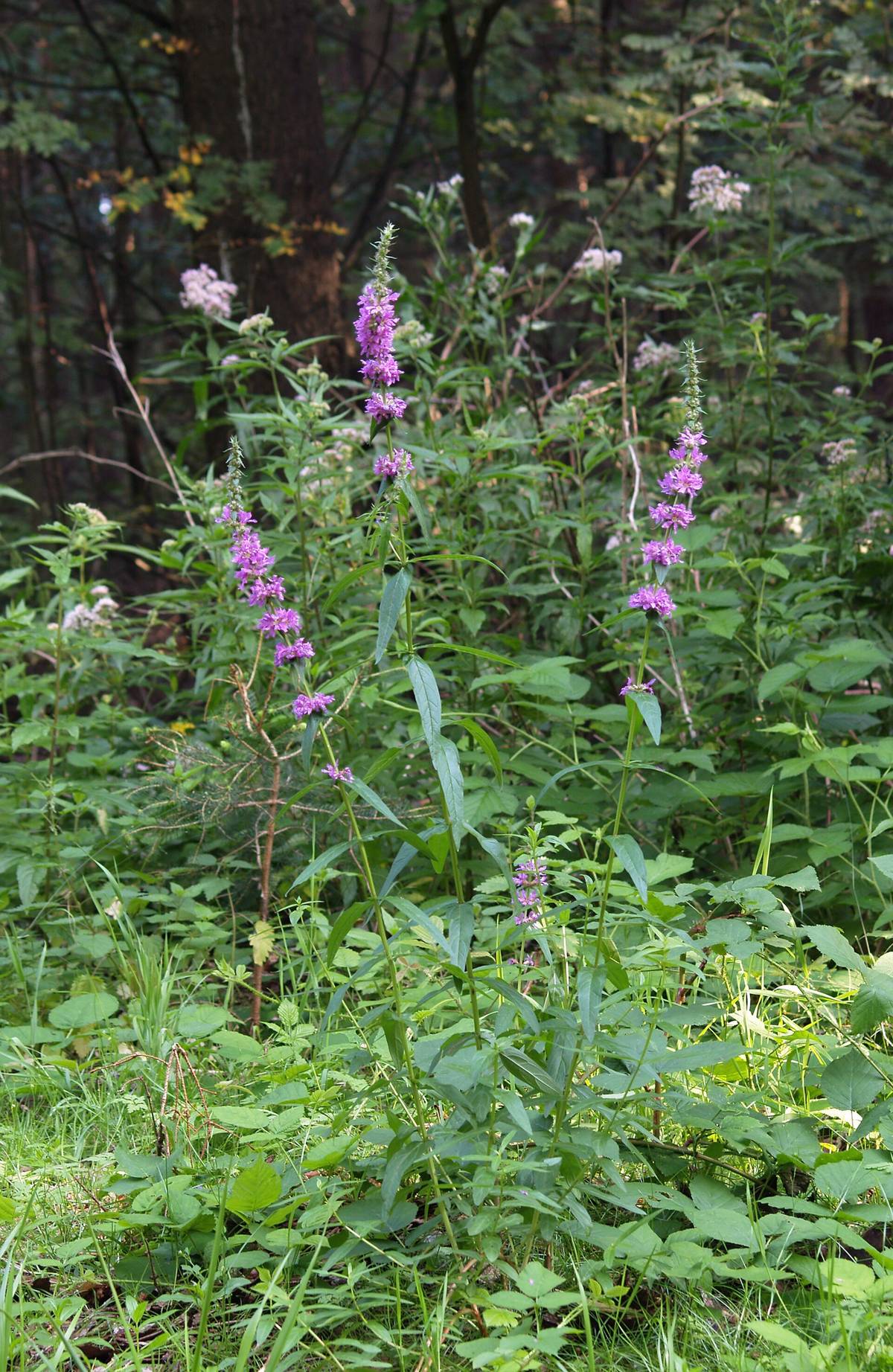
Photo: Jörg Hempel, CC BY-SA 3.0 via Wikimedia Commons

Quick facts
| Light: | Full sun11 source |
|---|---|
| Soil: | Well drained and occasionally wet11 source |
| Hardiness: | Zones 3a–9b11 source |
| Size: | 3–7 ft (0.91–2.13 m) × 2–4 ft (0.61–1.22 m)231 |
| Growth rate: | Rapid11 source |
| Bloom: | Jul–Sep, Purple and pink121 source |
| Cats: | Not documented by major sources |
| Dogs: | Not documented by major sources |
| Native range: | AFG, ALB, ALG, ALT, AMU, AUT, BGM, BLR, BLT, BUL, CHC, CHI, CHM, CHN, CHQ, CHT, CHX, COR, CZE, DEN, ETH, FIN, FRA, GER, GRB, GRC, HUN, IRE, IRK, IRN, IRQ, ITA, JAP, KAZ, KGZ, KHA, KOR, KRY, KUR, LBS, MON, MOR, NCS, NET, NOR, NSW, PAK, PAL, POL, POR, PRM, QLD, ROM, RUC, RUE, RUN, RUS, RUW, SAK, SAR, SIC, SOA, SPA, SWE, SWI, TAS, TCS, TKM, TUE, TUN, TUR, TZK, UKR, UZB, VIC, WHM, WSB, YUG4 |
| Family: | Lythraceae |
How much light does a Purple Loosestrife need?
Purple loosestrife prefers full sun. The source describes that as 6 or more hours of direct sunlight a day. The recorded minimum is 6 hours daily, so pick a spot that gets at least that much direct light.
Full sun is the only outdoor light level recorded for this plant. Tolerance of part shade or full shade is not documented.
Best soil for a Purple Loosestrife
Soil drainage for purple loosestrife is recorded as well drained and occasionally wet. The source behind that entry gives the wording Good Drainage. Plan for ground that drains well but can be wet at times.
No cited source gives a soil pH range, so a pH target is not documented here. Soil texture, such as clay or loam, is not recorded either.
- Soil drainage: Well drained and occasionally wet1
Hardiness and temperature
The recorded hardiness range for purple loosestrife is USDA zones 3a to 9b. That range covers every half zone from 3a, 3b and 4a through 9a and 9b. A gardener in zone 3 and one in zone 9 both fall inside it.
No cited source records a minimum temperature, so a lowest safe temperature is not documented here. Humidity preferences are not documented either.
- Hardiness: Zones 3a–9b1
How to plant a Purple Loosestrife
Purple loosestrife is recorded for USDA zones 3a to 9b, so check your zone before you plant. Give it a spot in full sun, with 6 or more hours of direct light.
Leave room for the mature size. Plants usually reach 3 to 7 ft (0.91 to 2.13 m) tall, and the source says they can grow as tall as 12 ft (3.7 m). The spread is 2 to 4 ft (0.61 to 1.22 m). Several stems grow from a single rootstock.
In the lower 48 United States, its native status is recorded as introduced. The source also describes aggressive rhizomes.
- Hardiness: Zones 3a–9b1
Winter care
Winter hardiness for purple loosestrife is recorded as USDA zones 3a through 9b. If your zone falls inside that range, the record places the plant within its hardiness limits.
No cited source records a minimum temperature, so a lowest survivable temperature is not documented here. Winter protection, mulching and dormancy are not documented either.
- Hardiness: Zones 3a–9b1
How to propagate a Purple Loosestrife
Purple loosestrife is propagated by seed and by division. The source says the plant spreads by seed as well as by aggressive rhizomes. Those are the two propagation methods recorded for it.
No cited source gives timing, seed depth or any seed treatment, so those details are not documented. Cuttings are not listed as a method for this plant.
- Propagation: Seed and division2
Is Purple Loosestrife toxic to cats and dogs?
Recommended supplies
- Soil: a free-draining mix, and a pot with a drainage hole.
Questions and answers
- How tall does purple loosestrife grow?
- Purple loosestrife usually grows 3 to 7 ft (0.91 to 2.13 m) tall. The source says it can reach 12 ft (3.7 m). Its spread is 2 to 4 ft (0.61 to 1.22 m).
- What color are the flowers and when do they bloom?
- The flowers are purple and pink, with five to seven narrow petals. Bloom runs from July to September. The recorded habit of the plant is erect.
- Is purple loosestrife native to the United States?
- In the lower 48 United States, its native status is recorded as introduced. Its native range record lists many regions, including FRA, GER and CHN. That record states the regions and nothing more.
Sources
- NC State Extension Gardener Plant Toolbox. https://plants.ces.ncsu.edu/plants/lythrum-salicaria/. Accessed 14 October 2026.
- Wisconsin Horticulture (UW-Madison Division of Extension). https://hort.extension.wisc.edu/articles/purple-loosestrife/. Accessed 14 October 2026.
- University of Minnesota Extension. https://extension.umn.edu/identify-invasive-species/purple-loosestrife. Accessed 28 October 2026.
- Royal Botanic Gardens, Kew (World Checklist of Vascular Plants). https://sftp.kew.org/pub/data-repositories/WCVP/wcvp.zip. Accessed 4 June 2026.
How this page was made
- Written with AI assistance from the sources listed on this page. AI is never the source of a fact.