Oxeye Daisy (Leucanthemum vulgare)
Formerly Chrysanthemum leucanthemum, Tanacetum leucanthemum, Leucanthemum praecox
Give oxeye daisy full sun and a spot that drains well. Its water need runs from dry to medium. It grows 1–3 ft (0.3–0.91 m) tall. The flowers are white and yellow. It tolerates drought and clay soil. It is listed for hardiness zones 3a–8b. Toxicity to cats and dogs is not documented for this plant.
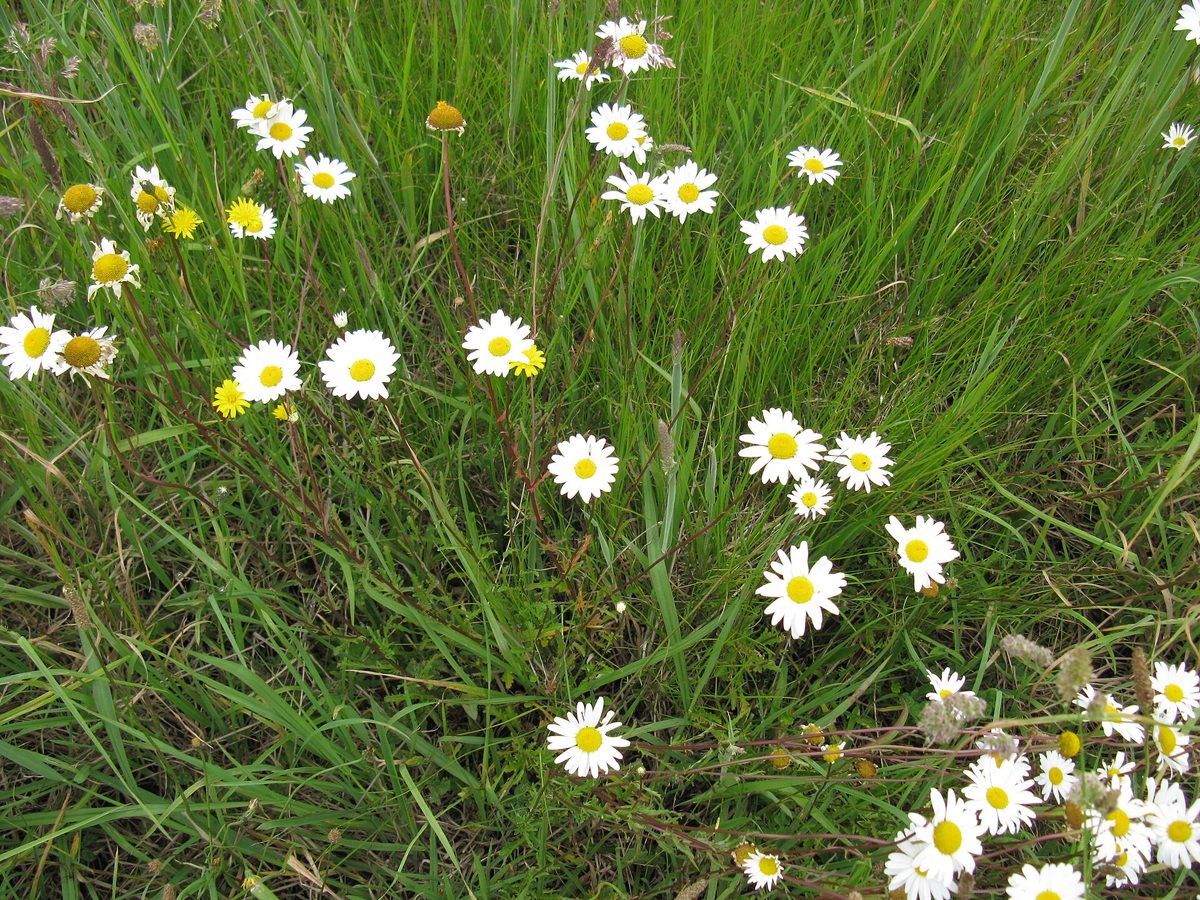
Photo: Harry Rose from South West Rocks, Australia, CC BY 2.0 via Wikimedia Commons

Quick facts
| Light: | Full sun11 source |
|---|---|
| Water: | Dry to medium11 source |
| Soil: | Well drained and occasionally dry11 source |
| Hardiness: | Zones 3a–8b11 source |
| Size: | 1–3 ft (0.3–0.91 m) × 1–2 ft (0.3–0.61 m)211 source |
| Growth rate: | Moderate11 source |
| Bloom: | May–Aug, White and yellow13 |
| Cats: | Not documented by major sources |
| Dogs: | Not documented by major sources |
| Native range: | ALT, AMU, AUT, BGM, BLR, BLT, BRY, BUL, CTA, CZE, DEN, FIN, FRA, GER, GRB, GRC, HUN, IRE, IRK, IRN, ITA, KAZ, KGZ, KRA, KRY, NCS, NET, NOR, POL, POR, ROM, RUC, RUE, RUS, RUW, SAR, SIC, SPA, SWE, SWI, TCS, TUE, TUR, TVA, TZK, UKR, UZB, WSB, YAK, YUG4 |
| Family: | Asteraceae |
How much light does an Oxeye Daisy need?
Oxeye daisy grows best in full sun, which the source defines as 6 or more hours of direct sunlight a day. The listed minimum is 6 hours a day. Choose a spot that gets direct sun for at least that long. Full sun is the only light condition recorded for this plant.
How often to water an Oxeye Daisy
Soil that is medium moist to dry and well drained suits oxeye daisy, and its water need runs from dry to medium. It also tolerates drought. Its soil drainage is listed as well drained and occasionally dry. The water range runs from dry at the low end to medium at the high end. The same tolerance list names clay soil.
- Water: Dry to medium1
Best soil for an Oxeye Daisy
Drainage for oxeye daisy is listed as good. That listing reads well drained and occasionally dry. The source names sandy, loamy or clay soil as suitable for this plant. It describes the soil as acidic to neutral, though it gives no more exact pH range. Clay soil also appears on the list of tolerances. Drought is the other tolerance listed for this plant.
Hardiness and temperature
USDA hardiness zones 3a through 8b are listed for oxeye daisy. Zone 3a is the coldest end of that range, and zone 8b is the warmest. A gardener in zone 4, 5, 6 or 7 sits inside the listed range. Zones 3a, 3b, 4a, 4b, 5a, 5b, 6a, 6b, 7a, 7b, 8a and 8b are each named in the listing.
- Hardiness: Zones 3a–8b1
How to plant an Oxeye Daisy
Set oxeye daisy out in USDA zones 3a through 8b. Allow for a mature spread of 1–2 ft (0.3–0.61 m) per plant. Its mature height is 1–3 ft (0.3–0.91 m), and its habit is erect. Pick a site with at least 6 hours of direct sun a day and soil that drains well. Clay soil is among the conditions it tolerates.
- Hardiness: Zones 3a–8b1
Winter care
Your winter plan depends on where your zone falls in the 3a to 8b range listed for oxeye daisy. The cold limit of the listing is zone 3a, and the warm limit is zone 8b. If you garden in zones 3a through 8b, you are inside the range where the plant is listed.
- Hardiness: Zones 3a–8b1
How to propagate an Oxeye Daisy
You can propagate oxeye daisy by seed or by division. Seed and division are the two methods recorded for this plant. Division is listed as its own method, separate from seed. Seed is the first of the two methods in the listing, and division is the second. Pick whichever of the two methods suits the plants and space you already have.
Common problems
Serious insect or disease problems are generally absent for oxeye daisy. Aphids, mites and leaf miners are occasional visitors. It may be susceptible to verticillium wilt, leaf spot and stem rot. Three diseases and three pests make up the full list recorded for this plant.
| Problem | Kind |
|---|---|
| Aphids | Pest |
| Mites | Pest |
| Leaf miners | Pest |
| Verticillium wilt | Disease |
| Leaf spot | Disease |
| Stem rot | Disease |
Is Oxeye Daisy toxic to cats and dogs?
Recommended supplies
- Soil: a free-draining mix, and a pot with a drainage hole.
Questions and answers
- How much sun does oxeye daisy need?
- Oxeye daisy prefers full sun, which is 6 or more hours of direct sunlight a day. That is the only light condition recorded for it. Its water need runs from dry to medium.
- How big does oxeye daisy get?
- Oxeye daisy grows 1–3 ft (0.3–0.91 m) tall and 1–2 ft (0.3–0.61 m) wide. Its habit is erect. Its growth rate is moderate.
- When does oxeye daisy bloom, and what color are the flowers?
- Oxeye daisy blooms from May through August. The flowers are white and yellow. Bees, butterflies and moths are the pollinators listed for it.
Sources
- NC State Extension Gardener Plant Toolbox. https://plants.ces.ncsu.edu/plants/leucanthemum-vulgare/. Accessed 14 October 2026.
- University of Minnesota Extension. https://extension.umn.edu/identify-invasive-species/oxeye-daisy. Accessed 28 October 2026.
- Chicago Botanic Garden. https://www.chicagobotanic.org/plant-information/plant-finder/leucanthemum-vulgare-ox-eye-daisy. Accessed 28 October 2026.
- Royal Botanic Gardens, Kew (World Checklist of Vascular Plants). https://sftp.kew.org/pub/data-repositories/WCVP/wcvp.zip. Accessed 4 June 2026.
How this page was made
- Written with AI assistance from the sources listed on this page. AI is never the source of a fact.