Eastern Redcedar (Juniperus virginiana)
Formerly Sabina virginiana, Sabina alba, Sabina glauca
Eastern redcedar (Juniperus virginiana) grows best in full sun, and part shade and full shade are also listed for it. Its water range runs from dry to medium. It is an evergreen tree with a moderate growth rate. Pet toxicity for cats and dogs is not documented on this page.
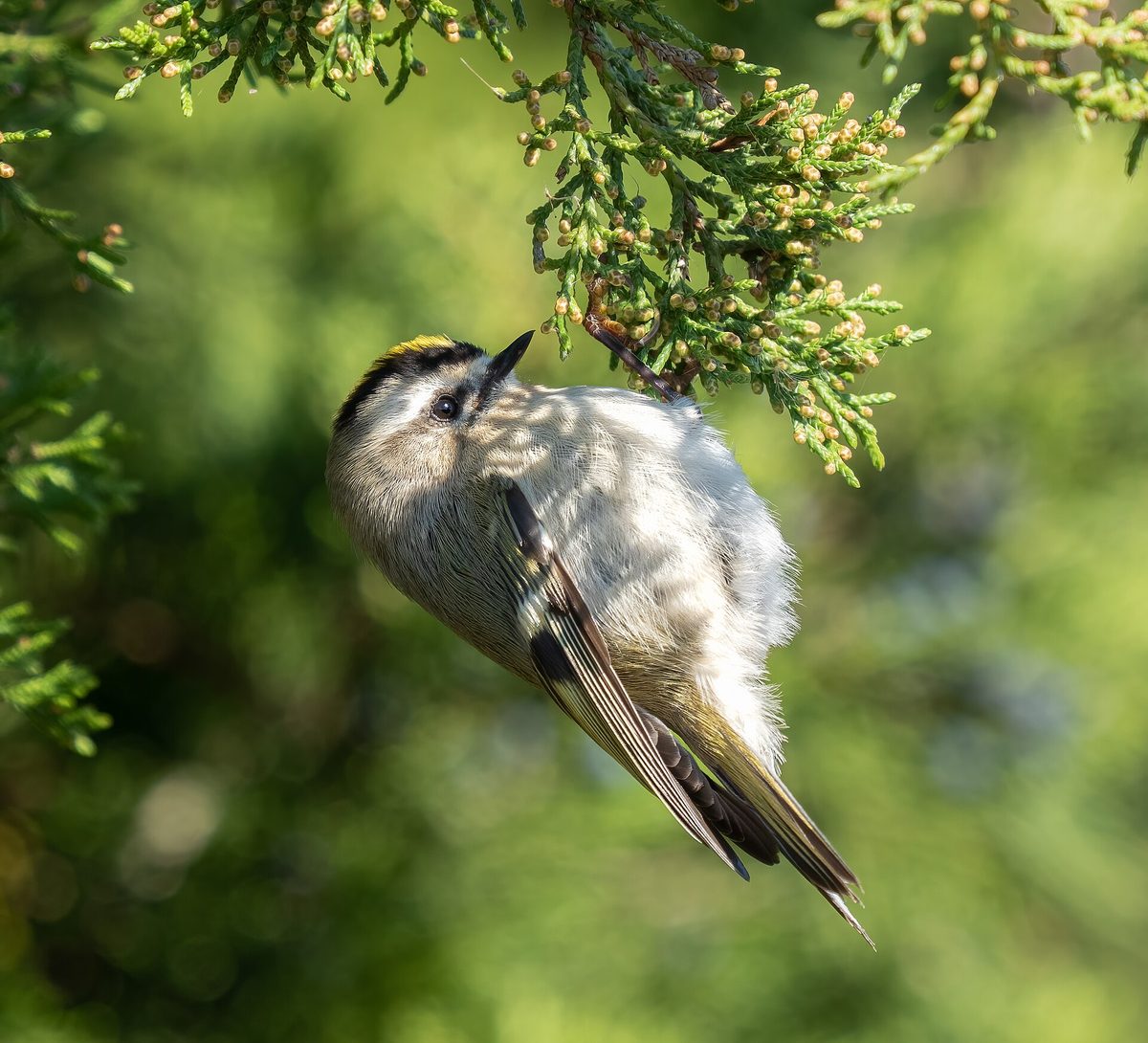
Photo: Rhododendrites, CC BY-SA 4.0 via Wikimedia Commons

Quick facts
| Light: | Full sun, part shade and full shade (full sun preferred)12 |
|---|---|
| Water: | Dry to medium11 source |
| Soil: | Well drained, moist, occasionally dry and occasionally wet; pH 5–8341 source |
| Hardiness: | Zones 2a–9b13 |
| Size: | 30–40 ft (9.14–12.19 m) × 10–20 ft (3.05–6.1 m)11 source |
| Growth rate: | Moderate1167878 |
| Bloom: | Green, purple, brown, yellow and blue219 |
| Cats: | Not documented by major sources |
| Dogs: | Not documented by major sources |
| Native range: | ALA, ARK, CNT, COL, DEL, FLA, GEO, ILL, INI, IOW, KAN, KTY, LOU, MAI, MAS, MIC, MIN, MRY, MSI, MSO, MXE, NCA, NDA, NEB, NWH, NWJ, NWY, OHI, OKL, ONT, PEN, QUE, RHO, SCA, SDA, TEN, TEX, VER, VRG, WDC, WIS, WVA10 |
| Family: | Cupressaceae |
How much light does an Eastern Redcedar need?
Full sun is the preferred exposure for eastern redcedar, which means six or more hours of direct sunlight a day. The Lady Bird Johnson Wildflower Center lists sun, part shade and shade as its light requirements. Part shade and full shade are therefore listed alongside the preferred full sun. Check your site for six or more hours of direct sun before you choose a spot.
How often to water an Eastern Redcedar
The water range listed for eastern redcedar runs from dry to medium. It is described as easily grown in average, dry to moist, well-drained soils in full sun. It does not do well on soils kept continually moist. The drainage record also includes occasionally dry and occasionally wet conditions.
- Water: Dry to medium1
Best soil for an Eastern Redcedar
Soil drainage for eastern redcedar is listed as well drained, moist, occasionally dry and occasionally wet. The tree does not do well on soils kept continually moist. Both occasional dryness and occasional wetness fall within what is listed. Cornell's woody plants database says it can tolerate acid to alkaline soil, with a pH from 5.0 to 8.0. A pH of 5 to 8 is therefore the range to work within.
Hardiness and temperature
The listed hardiness range for this tree is Zones 2a–9b. That range takes in each half-zone from 2a, 2b and 3a on up to 9a and 9b. No cited source records a minimum temperature or a humidity preference for it. Look up your own zone and compare it with that range before you plant.
Pruning an Eastern Redcedar
Light shaping is the pruning type listed for eastern redcedar. One extension source says that with proper pruning to remove lower branches, it should adapt well to street-scapes. Removing the lower branches is the specific step named in that passage. No other pruning method is recorded here.
- Pruning: Light shaping5
How to plant an Eastern Redcedar
Set eastern redcedar where your climate falls within Zones 2a–9b. In good conditions it grows 30 to 40 ft (9.14–12.19 m) tall and reaches a width of 10 to 20 ft (3.05–6.1 m). Leave room for that width when you choose a spot. Full sun is preferred, and part shade or full shade are also listed. The tree is listed as native in the lower 48 United States.
Winter care
Eastern redcedar is an evergreen, and its listed hardiness runs from Zone 2a to Zone 9b. No cited source records a minimum temperature for it. Winter protection steps, such as wrapping or mulching, are not documented for this tree. Check that your local zone sits inside the listed range.
How to propagate an Eastern Redcedar
You can propagate eastern redcedar from seed, stem cuttings or grafting. The cited passage says selected forms have been rooted from cuttings. Grafting is also listed as a method for this tree. Details such as timing, rooting media or hormone use are not documented here.
- Propagation: Seed, stem cuttings and grafting2
Common problems
Pests recorded for eastern redcedar include bagworms, juniper scale, juniper webworm and spider mites. The diseases listed are cedar apple rust, twig blight, phomopsis blight and quince rust. The extension entry says the tree is susceptible to twig blight and scale, bagworms are also a problem, and mites may occur.
| Problem | Kind |
|---|---|
| Bagworms | Pest |
| Juniper scale | Pest |
| Juniper webworm | Pest |
| Spider mites | Pest |
| Cedar-apple rust | Disease |
| Twig blight | Disease |
| Phomopsis blight | Disease |
| Quince rust | Disease |
Is Eastern Redcedar toxic to cats and dogs?
Recommended supplies
- Soil: a free-draining mix, and a pot with a drainage hole.
Questions and answers
- How much sun does eastern redcedar need?
- Full sun is preferred, which the extension entry describes as six or more hours of direct sunlight a day. Part shade and full shade are also listed for this tree.
- What zones can I grow eastern redcedar in?
- It is listed for USDA Zones 2a through 9b. It is also listed as native in the lower 48 United States. No cited source records a minimum temperature for it. Check your own zone against that range.
- Does eastern redcedar need a lot of water?
- Its water range is listed as dry to medium. It is described as easily grown in average, dry to moist, well-drained soils in full sun, and it does not do well on soils kept continually moist.
Sources
- NC State Extension Gardener Plant Toolbox. https://plants.ces.ncsu.edu/plants/juniperus-virginiana/. Accessed 12 October 2026.
- Lady Bird Johnson Wildflower Center. https://www.wildflower.org/plants/result.php?id_plant=juvi. Accessed 12 October 2026.
- University of Florida IFAS Extension (EDIS). https://ask.ifas.ufl.edu/publication/ST327?downloadOpen=true. Accessed 12 October 2026.
- Cornell University CALS Woody Plants Database. https://woodyplants.cals.cornell.edu/plant/128. Accessed 12 October 2026.
- University of Florida IFAS Extension (EDIS). https://ask.ifas.ufl.edu/st327. Accessed 12 October 2026.
- USDA Forest Service Fire Effects Information System. https://www.fs.usda.gov/database/feis/plants/tree/junvir/all.html. Accessed 30 October 2026.
- University of Florida IFAS Extension (EDIS). https://ask.ifas.ufl.edu/publication/ST327. Accessed 30 October 2026.
- University of Florida IFAS Extension (EDIS). https://ask.ifas.ufl.edu/publication/ST331. Accessed 30 October 2026.
- Clemson Cooperative Extension Home & Garden Information Center. https://hgic.clemson.edu/factsheet/juniper/. Accessed 12 October 2026.
- Royal Botanic Gardens, Kew (World Checklist of Vascular Plants). https://sftp.kew.org/pub/data-repositories/WCVP/wcvp.zip. Accessed 4 June 2026.
How this page was made
- Written with AI assistance from the sources listed on this page. AI is never the source of a fact.