Northern Red Oak (Quercus rubra)
Formerly Quercus borealis, Erythrobalanus rubra, Quercus sada
Give northern red oak full sun outdoors. It also needs dry to medium soil moisture once established. It likes well-drained, moist soil with a pH of 5 to 7.4. It grows fast into a large, hardy shade tree. It's native across much of the eastern US and parts of Canada. Grow new ones from seed. No cited source lists this tree's toxicity to cats or dogs, so that isn't documented.
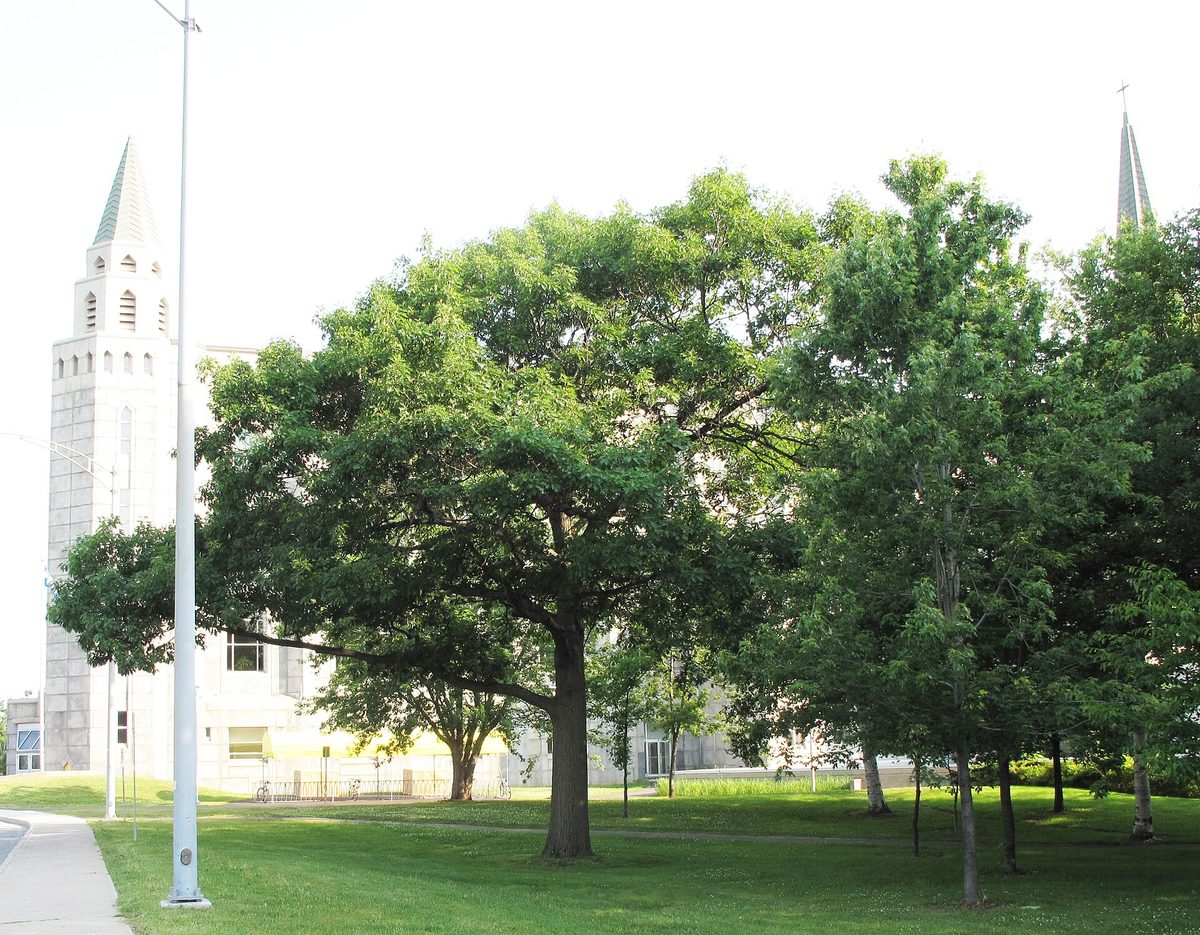
Photo: Wikimedia Commons contributor, CC BY-SA 4.0 via Wikimedia Commons

Quick facts
| Light: | Full sun, part shade and full shade (full sun preferred)12 |
|---|---|
| Water: | Dry to medium111 source |
| Soil: | Well drained, moist and occasionally dry; pH 5–7.431 source |
| Hardiness: | Zones 4a–8b11 source |
| Size: | Sources differ: Cornell University CALS Woody Plants Database; Cornell University CALS Woody Plants Database; Cornell University CALS Woody Plants Database × 60–75 ft (18.29–22.86 m)543Sources differ |
| Growth rate: | Rapid14 |
| Bloom: | Yellow, green and brown521 |
| Cats: | Not documented by major sources |
| Dogs: | Not documented by major sources |
| Native range: | ALA, ARK, CNT, DEL, GEO, ILL, INI, IOW, KAN, KTY, LOU, MAI, MAS, MIC, MIN, MRY, MSI, MSO, NBR, NCA, NEB, NSC, NWH, NWJ, NWY, OHI, OKL, ONT, PEI, PEN, QUE, RHO, SCA, TEN, VER, VRG, WDC, WIS, WVA6 |
| Family: | Fagaceae |
How much light does a Northern Red Oak need?
Plant northern red oak where it gets full sun most of the day. It also tolerates part shade or even full shade, though growth slows in dimmer spots. For the strongest trunk and fullest crown, give it an open, sunny site rather than deep shade.
How often to water a Northern Red Oak
Outdoors, northern red oak tolerates conditions from dry to medium soil moisture. Check the top few inches of soil before watering young trees, and let it dry out somewhat between waterings once the tree is established. Well-drained soil helps keep roots healthy at these moisture levels.
Best soil for a Northern Red Oak
This tree does best in soil that drains well but still holds some moisture. It also tolerates soil that turns occasionally dry between rains. Aim for a soil pH between 5.0 and 7.4, a range that spans acidic to mildly acidic conditions. Soil that drains well also supports the dry-to-medium moisture this tree tolerates outdoors. It is native across a wide range of US and Canadian soils, from the Midwest to the Atlantic coast.
Hardiness and temperature
Northern red oak grows outdoors in USDA hardiness zones 4a through 8b. That range covers cold northern winters as well as warmer zones farther south. No cited source gives this tree's exact minimum winter temperature. Choosing a site within its hardiness range is the best guide for cold tolerance outdoors. The tree's wide native range, from eastern Canada down through the central and eastern US, reflects that broad cold tolerance. It also keeps growing quickly within this zone range, reaching full size as a shade tree. It also needs full sun outdoors to grow well across that zone range.
- Hardiness: Zones 4a–8b1
How to plant a Northern Red Oak
Choose a site within USDA zones 4a through 8b for the best outdoor results. Pick a planting spot in full sun with room for a wide, mature crown. At maturity it can spread 60 to 75 ft (18.3 to 22.9 m) wide, so give it plenty of space from buildings and other trees. Moist soil that drains well and sits near pH 5 to 7.4 gives new plantings the best start.
- Hardiness: Zones 4a–8b1
Winter care
This oak survives outdoors, unprotected, within USDA zones 4a to 8b. No cited source states an exact minimum temperature for this species. Pick a site inside that zone range for the best winter survival. Its native range, from the Midwest to the Atlantic coast, spans a wide swing of winter conditions. This fast-growing tree keeps building height and width each year it stays within range. Full sun through the growing season helps this tree harden off before winter arrives. Well-drained soil also helps roots avoid winter waterlogging in this zone range.
- Hardiness: Zones 4a–8b1
How to propagate a Northern Red Oak
Grow new northern red oaks from seed, since that is the method the cited sources report. Seedlings grow into this fast-growing, large shade tree over time. Seed-grown trees establish best within zones 4a through 8b. Well-drained soil with a pH of 5.0 to 7.4 helps young roots establish after germination.
Common problems
Watch for two-lined chestnut borer and orange-striped oakworm on northern red oak outdoors. Oak wilt is the main disease reported for this species. Stressed or wounded trees are more likely to attract borers and develop wilt, so keep the tree healthy with the right light, water, and soil conditions.
| Problem | Kind |
|---|---|
| Two lined chestnut borer | Pest |
| Orange striped oakworm | Pest |
| Oak wilt | Disease |
Is Northern Red Oak toxic to cats and dogs?
Recommended supplies
- Soil: a free-draining mix, and a pot with a drainage hole.
Questions and answers
- How much sun does northern red oak need?
- Give it full sun for the best growth, though it also tolerates part shade or full shade outdoors. It still needs dry to medium soil moisture no matter the light level.
- What zones can I grow northern red oak in?
- You can grow it outdoors in USDA zones 4a through 8b. It also handles a wide native range from the Midwest to the Atlantic coast, which points to solid cold tolerance across that zone span.
- Is northern red oak toxic to cats or dogs?
- No cited source lists this tree's toxicity to cats or dogs, so contact your vet or a pet poison line if you're ever unsure after your cat or dog chews on it.
Sources
- NC State Extension Gardener Plant Toolbox. https://plants.ces.ncsu.edu/plants/quercus-rubra/. Accessed 14 October 2026.
- Lady Bird Johnson Wildflower Center. https://www.wildflower.org/plants/result.php?id_plant=QURUR. Accessed 14 October 2026.
- Cornell University CALS Woody Plants Database. https://woodyplants.cals.cornell.edu/plant/209. Accessed 14 October 2026.
- USDA Forest Service Fire Effects Information System. https://www.fs.usda.gov/database/feis/plants/tree/querub/all.html. Accessed 14 October 2026.
- Lady Bird Johnson Wildflower Center (Native Plant Database). https://www.wildflower.org/plants/result.php?id_plant=quru. Accessed 14 October 2026.
- Royal Botanic Gardens, Kew (World Checklist of Vascular Plants). https://sftp.kew.org/pub/data-repositories/WCVP/wcvp.zip. Accessed 4 June 2026.
How this page was made
- Written with AI assistance from the sources listed on this page. AI is never the source of a fact.