Dyer's Woad (Isatis tinctoria)
Formerly Isatis canescens, Isatis athoa, Isatis alpina
Give Dyer's woad full sun. Its soil should be well drained and moist. It is hardy in zones 4a–8b. Mature plants reach 2–4 ft (0.61–1.22 m) tall. The spread is 2–3 ft (0.61–0.91 m). The growth rate is moderate. Pet toxicity for cats and dogs is not documented on this page.
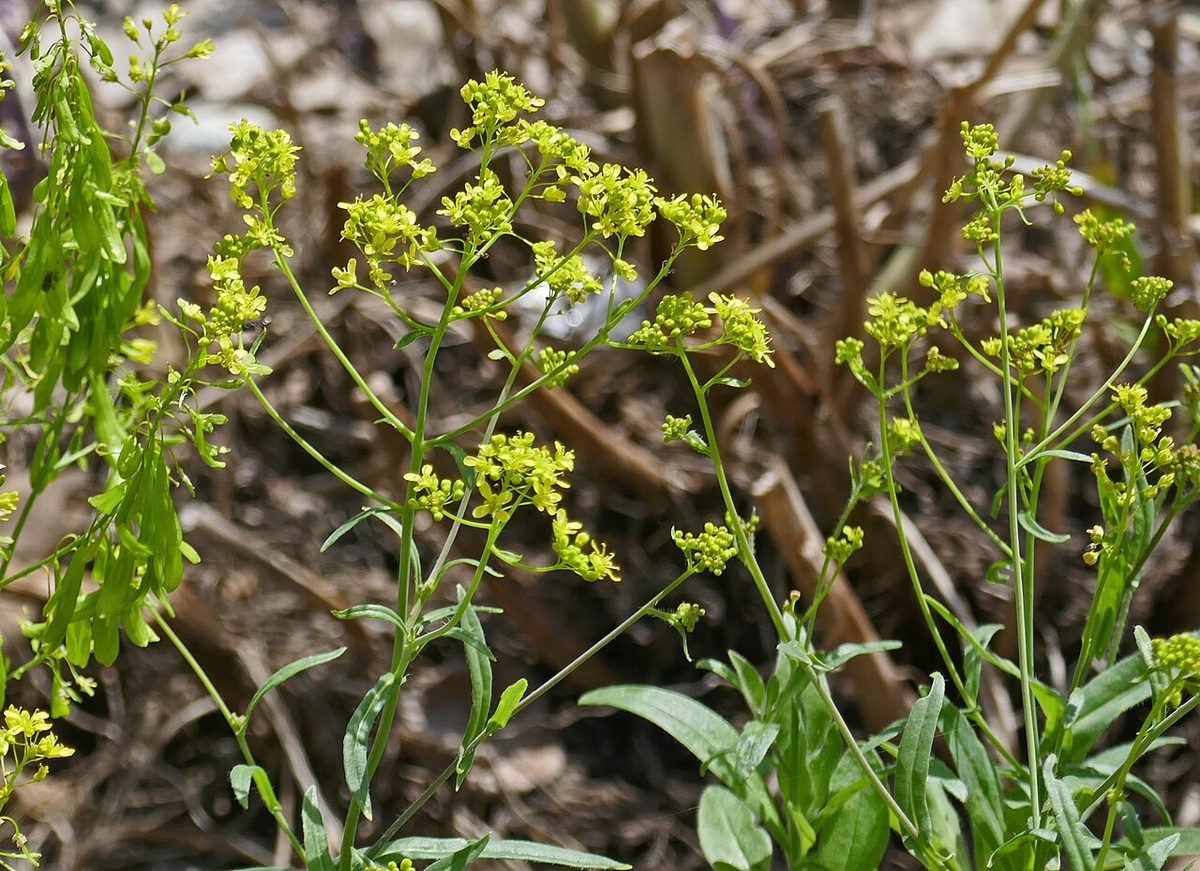
Photo: Geolina163, CC BY-SA 4.0 via Wikimedia Commons

Quick facts
| Light: | Full sun11 source |
|---|---|
| Soil: | Well drained and moist11 source |
| Hardiness: | Zones 4a–8b11 source |
| Size: | 2–4 ft (0.61–1.22 m) × 2–3 ft (0.61–0.91 m)11 source |
| Growth rate: | Moderate11 source |
| Bloom: | Yellow11 source |
| Cats: | Not documented by major sources |
| Dogs: | Not documented by major sources |
| Native range: | ALB, BUL, GRC, ITA, KRY, ROM, RUS, SIC, TUR, UKR, YUG3 |
| Family: | Brassicaceae |
How much light does a Dyer's Woad need?
Give Dyer's woad full sun, which means at least 6 hours of direct sun each day. Full sun is the only outdoor light level recorded for this plant. It is also the preferred level, not just an accepted one. Choose a spot in your garden that gets that much direct light. Shade is not listed among its outdoor light conditions.
- Light: Full sun1
Best soil for a Dyer's Woad
Dyer's woad is recorded for soil that is well drained and moist, with good drainage as the stated condition. Moist soil is part of its recorded range alongside good drainage. Pair that soil with a site in full sun, the outdoor light level recorded for it. Wherever you plant it, these two soil conditions are the ones to match in your garden bed.
- Soil drainage: Well drained and moist1
Hardiness and temperature
Dyer's woad is listed for USDA hardiness zones 4a through 8b. Zone 4a is the coldest zone in that range, and 8b is the warmest. Gardeners in zones colder than 4a or warmer than 8b fall outside the listed range. If your zone falls inside 4a–8b, your climate matches the listing. That range spans ten half-zones, from 4a up to 8b. A garden in zone 6 or 7 sits inside the listed range.
- Hardiness: Zones 4a–8b1
How to plant a Dyer's Woad
Plant Dyer's woad in a spot within USDA zones 4a to 8b. Choose a site that gets full sun. Give each plant room for a spread of 2–3 ft (0.61–0.91 m). Expect a mature height of 2–4 ft (0.61–1.22 m). The soil should be well drained and moist. The growth rate is moderate. The flowers are yellow. It will self-seed in the landscape, which you should allow for when choosing a spot.
- Hardiness: Zones 4a–8b1
Winter care
Winter hardiness for Dyer's woad is recorded as zones 4a through 8b. At the cold end, zone 4a is the coldest listed zone. At the warm end, zone 8b is the warmest listed zone. If your winter zone sits between those two, the plant is listed for your climate. In zone 5, 6 or 7 your winters fall within the listed range.
- Hardiness: Zones 4a–8b1
How to propagate a Dyer's Woad
The recorded way to propagate Dyer's woad is by seed. No cuttings, division or other propagation methods are recorded for it. It can be propagated by seeds, and it will also self-seed in the landscape. Dyer's woad reproduces by seed. Growing from seed is therefore the method to use if you want more plants.
Common problems
No significant pest problems are recorded for Dyer's woad. The disease listed for it is clubroot. The plant is described as susceptible to club root. Clubroot is the only disease named on this page. Watch for clubroot, the one problem named for this species.
| Problem | Kind |
|---|---|
| Clubroot | Disease |
Is Dyer's Woad toxic to cats and dogs?
Recommended supplies
- Soil: a free-draining mix, and a pot with a drainage hole.
Questions and answers
- How much sun does Dyer's woad need?
- Dyer's woad is recorded for full sun, which is 6 or more hours of direct sunlight a day. Shade is not among its listed outdoor light conditions.
- How big does Dyer's woad get when it is mature?
- Mature plants reach 2–4 ft (0.61–1.22 m) tall and spread 2–3 ft (0.61–0.91 m). The growth rate is moderate, and the flowers are yellow.
- Does Dyer's woad have pest or disease problems?
- No significant pests are recorded for it. Clubroot is the one disease named for this plant, and it is described as susceptible to club root.
Sources
- NC State Extension Gardener Plant Toolbox. https://plants.ces.ncsu.edu/plants/isatis-tinctoria/. Accessed 14 October 2026.
- USDA Forest Service Fire Effects Information System. https://www.fs.usda.gov/database/feis/plants/forb/isatin/all.html. Accessed 14 October 2026.
- Royal Botanic Gardens, Kew (World Checklist of Vascular Plants). https://sftp.kew.org/pub/data-repositories/WCVP/wcvp.zip. Accessed 4 June 2026.
How this page was made
- Written with AI assistance from the sources listed on this page. AI is never the source of a fact.