Common Viper's Bugloss (Echium vulgare)
Formerly Echium asturicum, Echium molle, Echium laetum
Common viper's bugloss (Echium vulgare) is listed for full sun, well-drained soil and USDA zones 4a to 8b, although toxicity to cats and dogs is not documented on this page. It reaches 1–3 ft (0.3–0.91 m) tall and 1–1.5 ft (0.3–0.46 m) wide. Its flowers are blue, pink and red.
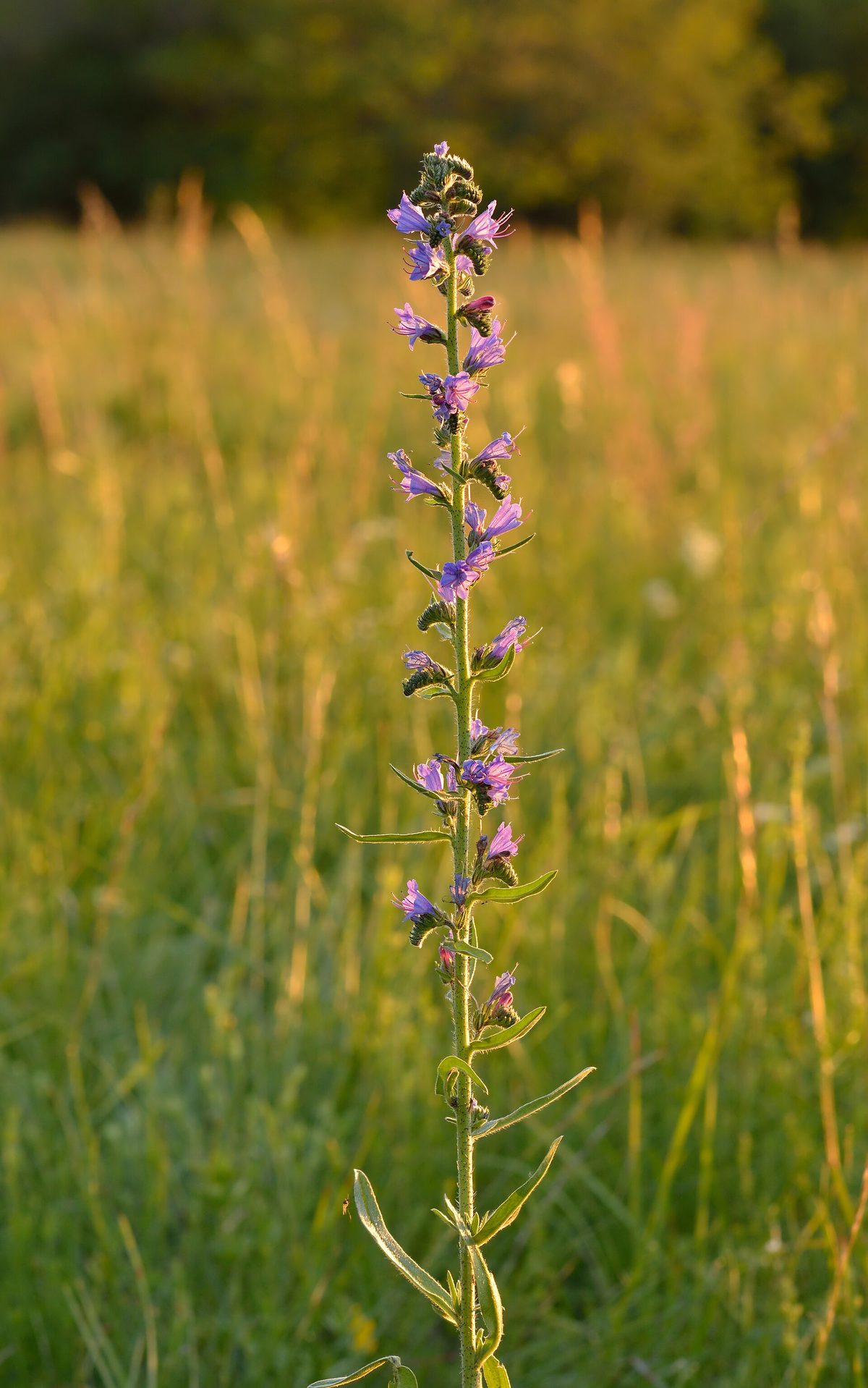
Photo: Ivar Leidus, CC BY-SA 3.0 via Wikimedia Commons

Quick facts
| Light: | Full sun11 source |
|---|---|
| Soil: | Well drained and occasionally dry11 source |
| Hardiness: | Zones 4a–8b11 source |
| Size: | 1–3 ft (0.3–0.91 m) × 1–1.5 ft (0.3–0.46 m)11 source |
| Growth rate: | Moderate111 source |
| Bloom: | Blue, pink and red11 source |
| Cats: | Not documented by major sources |
| Dogs: | Not documented by major sources |
| Native range: | ALB, ALT, AUT, BGM, BLR, BLT, BUL, CHX, COR, CYP, CZE, DEN, EAI, FIN, FRA, GER, GRB, GRC, HUN, IRE, IRK, ITA, KAZ, KGZ, KRA, KRY, NCS, NET, NOR, POL, POR, ROM, RUC, RUE, RUS, RUW, SAR, SIC, SPA, SWE, SWI, TCS, TKM, TUE, TUR, TZK, UKR, UZB, WSB, YUG3 |
| Family: | Boraginaceae |
How much light does a Common Viper's Bugloss need?
Full sun is the listed light for this plant, defined as 6 or more hours of direct sunlight a day. No other light level is recorded as preferred or accepted. A spot with 6 or more hours of direct sun a day matches that record, and neither part shade nor full shade is listed.
- Light: Full sun1
Best soil for a Common Viper's Bugloss
Drainage is the soil fact on file for this plant, and it is recorded as well drained and occasionally dry. The extension source lists it as good drainage. Soil that stays wet is not among the recorded conditions. The record includes occasionally dry soil as well as well-drained soil. Good drainage is the only soil detail documented, with no pH range or amendment on file.
- Soil drainage: Well drained and occasionally dry1
Hardiness and temperature
Zone ratings are the temperature information on file for this plant, which is listed for USDA zones 4a to 8b. The source names ten half-zones: 4a, 4b, 5a, 5b, 6a, 6b, 7a, 7b, 8a and 8b. The list begins at zone 4a and ends at zone 8b, and no minimum temperature or humidity preference is documented on this page.
- Hardiness: Zones 4a–8b1
How to plant a Common Viper's Bugloss
Zones 4a to 8b are the range to check before you plant. Choose a spot with full sun and good drainage. Leave room for a plant that reaches 1–1.5 ft (0.3–0.46 m) wide and 1–3 ft (0.3–0.91 m) tall. Its growth rate is listed as moderate. In the lower 48 states and Alaska, it is recorded as introduced.
- Hardiness: Zones 4a–8b1
Winter care
The coldest zone on the hardiness list is 4a, and the warmest is 8b. Gardeners in zones colder than 4a are outside the listed range. No minimum temperature, mulch advice or protection method is documented on this page. Check your own USDA zone against the 4a to 8b range before you count on this plant through winter.
- Hardiness: Zones 4a–8b1
Common problems
Candidatus Phytoplasma solani is the one problem recorded for this plant, and the EPPO Global Database lists it under the code PHYPSO. This page documents no pests, symptoms or treatments for it. Because only a name and a code are on file, nothing more about the disease is stated here.
- Common diseases: phytoplasma solani2
| Problem | Kind |
|---|---|
| Phytoplasma solani | Disease |
Is Common Viper's Bugloss toxic to cats and dogs?
Recommended supplies
- Soil: a free-draining mix, and a pot with a drainage hole.
Questions and answers
- How much sun does common viper's bugloss need?
- The listed light is full sun, which means 6 or more hours of direct sunlight a day. Full sun is the only light level recorded for it, and shade tolerance is not documented here.
- How big does common viper's bugloss get?
- It reaches 1–3 ft (0.3–0.91 m) tall and 1–1.5 ft (0.3–0.46 m) wide. Its growth rate is listed as moderate. The flowers are blue, pink and red.
- Which zones suit common viper's bugloss?
- It is listed for USDA zones 4a to 8b. The soil record is well drained and occasionally dry. In the lower 48 states and Alaska, it is recorded as introduced.
Sources
- NC State Extension. https://plants.ces.ncsu.edu/plants/echium-vulgare/. Accessed 14 October 2026.
- EPPO Global Database. https://gd.eppo.int/taxon/EHIVU/pests. Accessed 14 October 2026.
- Royal Botanic Gardens, Kew (World Checklist of Vascular Plants). https://sftp.kew.org/pub/data-repositories/WCVP/wcvp.zip. Accessed 4 June 2026.
How this page was made
- Written with AI assistance from the sources listed on this page. AI is never the source of a fact.