Canadian Horseweed (Erigeron canadensis)
Formerly Conyza canadensis, Leptilon canadense, Inula canadensis
An annual, Canadian horseweed (Erigeron canadensis) takes full sun and soil moisture from dry to medium. It reaches about 5 ft (1.52 m) tall and blooms in white and yellow from July to October. No toxicity position for cats or dogs is documented for it.
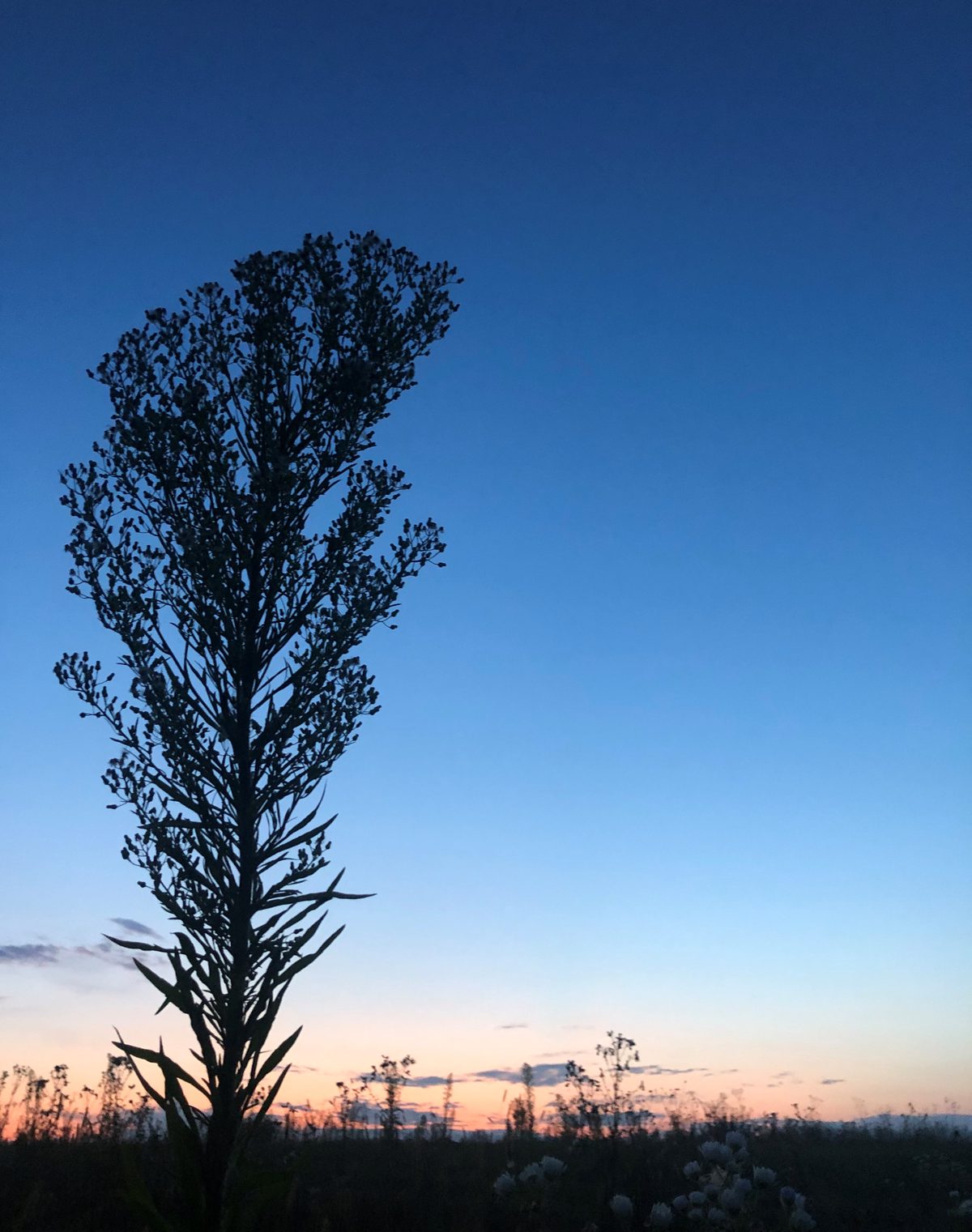
Photo: Ruslana Davydiuk, CC BY 4.0 via Wikimedia Commons

Quick facts
| Light: | Full sun11 source |
|---|---|
| Water: | Dry to medium21 source |
| Soil: | Well drained11 source |
| Size: | 5 ft (1.52 m) × 0.5–2 ft (0.15–0.61 m)311 source |
| Growth rate: | Moderate11 source |
| Bloom: | Jul–Oct, White and yellow211 source |
| Cats: | Not documented by major sources |
| Dogs: | Not documented by major sources |
| Native range: | ABT, ALA, ARI, ARK, BAH, BLZ, BOL, BRC, BZC, BZE, BZL, BZN, BZS, CAL, CAY, CLM, CNT, COL, COS, DOM, ECU, ELS, FLA, FRG, GAL, GEO, GUA, HAI, HON, IDA, ILL, INI, IOW, JAM, KAN, KTY, LEE, LOU, MAI, MAN, MAS, MIC, MIN, MNT, MRY, MSI, MSO, MXC, MXE, MXG, MXN, MXS, MXT, NCA, NDA, NEB, NEV, NIC, NSC, NWH, NWJ, NWM, NWY, OHI, OKL, ONT, ORE, PAN, PEI, PEN, PER, PUE, QUE, RHO, SAS, SCA, SDA, SUR, TCI, TEN, TEX, TRT, UTA, VEN, VER, VRG, WAS, WIN, WIS, WVA, WYO5 |
| Family: | Asteraceae |
How much light does a Canadian Horseweed need?
Full sun is the light level recorded for this plant, which means 6 or more hours of direct sunlight a day. No other light level is listed, and no shade tolerance is documented. Mature height is about 5 ft (1.52 m), and mature spread runs from 0.5 to 2 ft (0.15 to 0.61 m).
- Light: Full sun1
How often to water a Canadian Horseweed
Soil moisture for this plant runs from dry to medium. That range has a dry end and a medium end, and nothing wetter is listed. Dry and moist are the two soil moisture conditions named for this plant. No watering frequency is documented on this page. Well-drained soil is also listed for this plant.
- Water: Dry to medium2
Best soil for a Canadian Horseweed
The drainage class on file for this plant is well drained, and no other class is listed. No soil pH range is documented. Soil moisture runs from dry to medium, which sits alongside the drainage class. The source words this class as good drainage. No soil texture or amendment is documented either.
- Soil drainage: Well drained1
How to propagate a Canadian Horseweed
The propagation method recorded for this plant is seed. Reproduction by seed is the only route named, and nothing else is on file. No cuttings or division are documented. Its listed plant type is annual. Its growth rate is listed as moderate. The facts give no sowing depth, timing or germination detail.
- Propagation: Seed3
Common problems
Ten pests are on file for this plant: Chloridea virescens, Corythucha marmorata, Ditylenchus dipsaci, Graphocephala atropunctata, Helicoverpa zea, Lepyronia quadrangularis, Liriomyza huidobrensis, Spodoptera eridania, Spodoptera frugiperda and Spodoptera ornithogalli. Six disease entries are listed: Nepovirus nicotianae, Orthotospovirus impatiensnecromaculae, Orthotospovirus tomatomaculae, Phymatotrichopsis omnivora, Xylella fastidiosa and Xylella fastidiosa subsp multiplex. No treatment is documented.
- Common pests: chloridea virescens, corythucha marmorata, ditylenchus dipsaci, graphocephala atropunctata, helicoverpa zea, lepyronia quadrangularis, liriomyza huidobrensis, spodoptera eridania, spodoptera frugiperda and spodoptera ornithogalli4
- Common diseases: nepovirus nicotianae, orthotospovirus impatiensnecromaculae, orthotospovirus tomatomaculae, phymatotrichopsis omnivora, xylella fastidiosa and xylella fastidiosa subsp multiplex4
| Problem | Kind |
|---|---|
| Chloridea virescens | Pest |
| Corythucha marmorata | Pest |
| Ditylenchus dipsaci | Pest |
| Graphocephala atropunctata | Pest |
| Helicoverpa zea | Pest |
| Lepyronia quadrangularis | Pest |
| Liriomyza huidobrensis | Pest |
| Spodoptera eridania | Pest |
| Spodoptera frugiperda | Pest |
| Spodoptera ornithogalli | Pest |
| Nepovirus nicotianae | Disease |
| Orthotospovirus impatiensnecromaculae | Disease |
| Orthotospovirus tomatomaculae | Disease |
| Phymatotrichopsis omnivora | Disease |
| Xylella fastidiosa | Disease |
| Xylella fastidiosa subsp multiplex | Disease |
Is Canadian Horseweed toxic to cats and dogs?
Recommended supplies
- Soil: a free-draining mix, and a pot with a drainage hole.
Questions and answers
- How much sun does Canadian horseweed need?
- The light level on file is full sun, which the source defines as 6 or more hours of direct sunlight a day. No part shade or full shade value is documented for this plant. Soil moisture for it runs from dry to medium.
- What color are the flowers of Canadian horseweed, and when do they bloom?
- The flowers have white ray flowers and yellow disk flowers, and the color on file is white and yellow. Bloom time runs from July to October. Mature height is about 5 ft (1.52 m).
- Is Canadian horseweed native to the United States?
- Its status is native in the lower 48 states and introduced in Alaska and Hawaii. It is listed as an annual. The native range record lists region codes such as TEX, FLA and ONT. Its growth rate is listed as moderate.
Sources
- NC State Extension Gardener Plant Toolbox. https://plants.ces.ncsu.edu/plants/erigeron-canadensis/. Accessed 24 September 2026.
- Lady Bird Johnson Wildflower Center (Native Plant Database). https://www.wildflower.org/plants/result.php?id_plant=cocac3. Accessed 31 October 2026.
- Penn State Extension. https://extension.psu.edu/horseweed-a-winter-and-summer-annual. Accessed 28 October 2026.
- EPPO Global Database. https://gd.eppo.int/taxon/ERICA/pests. Accessed 24 September 2026.
- Royal Botanic Gardens, Kew (World Checklist of Vascular Plants). https://sftp.kew.org/pub/data-repositories/WCVP/wcvp.zip. Accessed 4 June 2026.
How this page was made
- Written with AI assistance from the sources listed on this page. AI is never the source of a fact.