Woodland Strawberry (Fragaria vesca)
Formerly Fragaria sylvestris, Fragaria californica, Fragaria elatior
Give woodland strawberry part shade, with full shade also listed, and keep its soil in the medium to wet range. It is hardy in USDA zones 4a to 9b. It is a spreading herbaceous perennial. Toxicity to cats and dogs is not documented for this plant on this page.
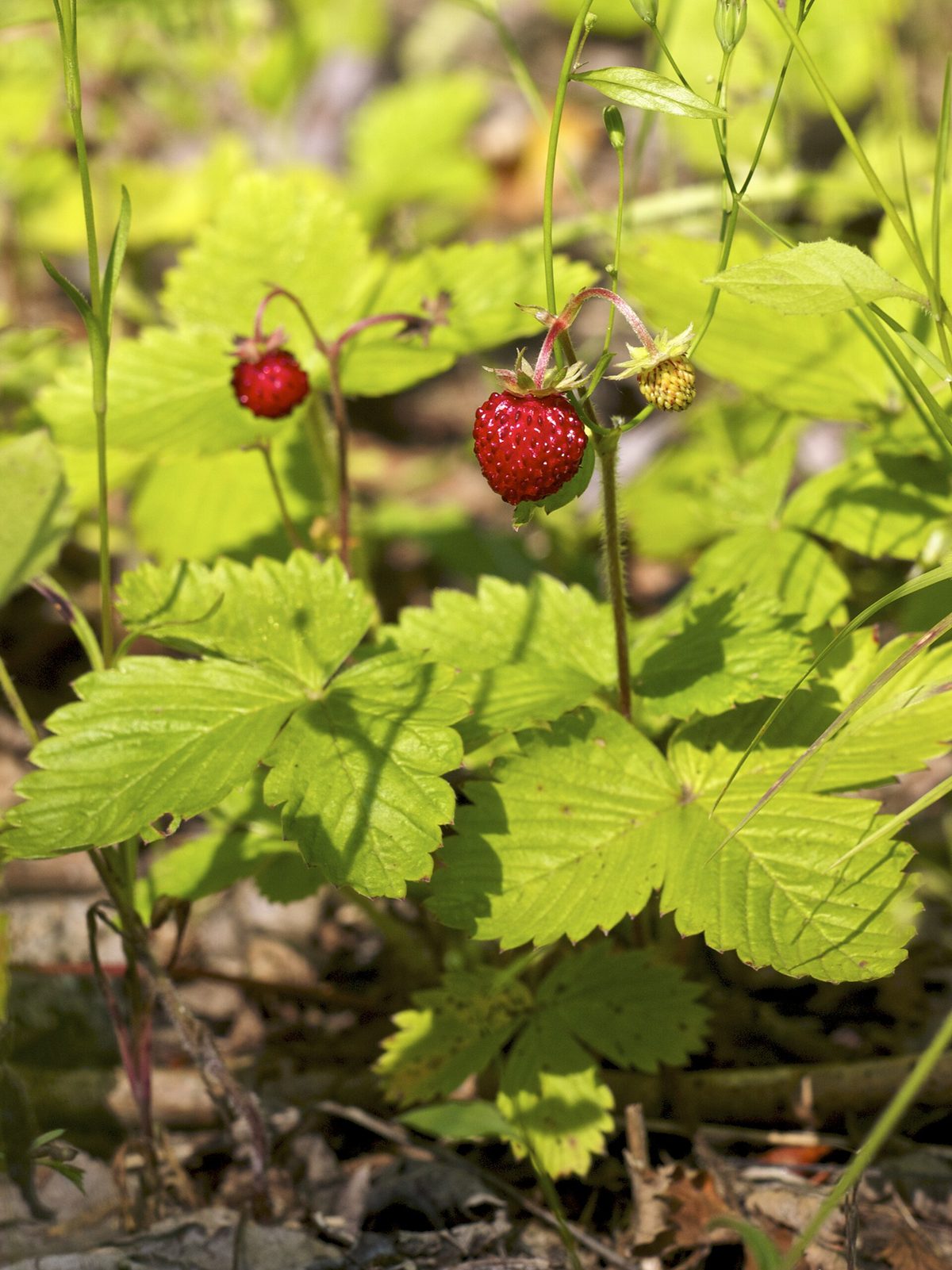
Photo: Jörg Hempel, CC BY-SA 3.0 via Wikimedia Commons

Quick facts
| Light: | Part shade and full shade (part shade preferred)12 |
|---|---|
| Water: | Medium to wet11 source |
| Soil: | Moist and occasionally wet11 source |
| Hardiness: | Zones 4a–9b31 source |
| Size: | 0.7–0.8 ft (0.2–0.25 m) × 2–3 ft (0.61–0.91 m)156 |
| Growth rate: | Rapid61 source |
| Bloom: | Apr–Jun, White711 source |
| Cats: | Not documented by major sources |
| Dogs: | Not documented by major sources |
| Native range: | ABT, ALB, ALT, ARI, AUT, AZO, BGM, BLR, BLT, BRC, BRY, BUL, CAL, CHX, CNT, COL, COR, CZE, DEN, FIN, FRA, GER, GRB, GRC, GUA, HUN, ICE, IDA, ILL, INI, IOW, IRE, IRK, IRN, ITA, KAZ, KGZ, KRA, KRY, LBS, MAI, MAN, MAS, MDR, MIC, MIN, MNT, MSI, MXC, MXE, MXG, MXN, MXS, NCA, NCS, NDA, NEB, NET, NFL, NOR, NSC, NWH, NWM, NWT, NWY, OHI, ONT, ORE, PEN, POL, POR, QUE, ROM, RUC, RUE, RUN, RUS, RUW, SAR, SAS, SDA, SIC, SPA, SWE, SWI, TCS, TEX, TUE, TUR, TVA, UKR, UTA, VER, VRG, WAS, WIS, WSB, WVA, WYO, YUG8 |
| Family: | Rosaceae |
How much light does a Woodland Strawberry need?
Outdoors, woodland strawberry does best in part shade, which is the preferred setting listed for it. Full shade is also listed as an acceptable light level. Both settings sit at the shady end of the scale, and full sun is not among the listed conditions. Its flowers are white, and bloom time runs from April to June depending on where in its range the plants grow.
How often to water a Woodland Strawberry
Woodland strawberry needs medium to wet conditions, and its listed soil moisture runs from moist to wet. Soil that is occasionally wet also falls within the drainage conditions listed for it. It is a rapid grower with a spreading habit. Plants reach a spread of 2–3 ft (0.61–0.91 m) across.
- Water: Medium to wet1
Best soil for a Woodland Strawberry
Woodland strawberry is listed for moist and occasionally wet soil drainage. Dry drainage is not among the listed conditions. Its water need runs from medium to wet, and its soil moisture is recorded as moist and wet. Occasionally wet soil is one of its two listed drainage conditions, alongside moist. It is a herbaceous perennial with a spreading habit. Soil pH is not documented for this page, so no pH range is given here. The plant is native to the lower 48 US states and introduced in Hawaii.
- Soil drainage: Moist and occasionally wet1
Hardiness and temperature
The listed hardiness range for woodland strawberry is Zones 4a–9b. At one edge sits zone 4a, and at the other edge sits zone 9b. A gardener in zone 4 and a gardener in zone 9 both fall inside the listed range. It is a herbaceous perennial.
- Hardiness: Zones 4a–9b3
How to plant a Woodland Strawberry
Plant woodland strawberry in USDA zones 4a to 9b. Allow 2–3 ft (0.61–0.91 m) of spread for each plant. Choose a part shade spot, since full shade is also listed. Expect a mature height of 0.7–0.8 ft (0.2–0.25 m). The soil it is listed for is moist and occasionally wet. It is native to the lower 48 US states and introduced in Hawaii.
- Hardiness: Zones 4a–9b3
Winter care
Woodland strawberry is listed for USDA Zones 4a–9b. Zone 4a marks the cold end of that listing, and zone 9b marks the warm end. Winters in zone 4a are the coldest the listing covers. Winters in zone 9b are the mildest it covers. The plant is a herbaceous perennial.
- Hardiness: Zones 4a–9b3
How to propagate a Woodland Strawberry
You can propagate woodland strawberry by seed or by layering. Plants grown from seed can either produce runners or not. Seed and layering are the two propagation methods listed for this plant. Its habit is listed as spreading, and its growth rate as rapid. The mature spread is 2–3 ft (0.61–0.91 m).
- Propagation: Seed and layering2
Common problems
Strawberry bud weevil, melon thrips and stem nematode are the pests listed for woodland strawberry. The diseases listed are strawberry vein banding virus, strawberry marginal chlorosis and strawberry witches broom. Its listed disease name is strawberry witches' broom phytoplasma. In all, three pests and three diseases are listed.
| Problem | Kind |
|---|---|
| Strawberry bud weevil | Pest |
| Melon thrips | Pest |
| Stem nematode | Pest |
| Strawberry vein banding virus | Disease |
| Strawberry marginal chlorosis | Disease |
| Strawberry witches broom | Disease |
Is Woodland Strawberry toxic to cats and dogs?
Recommended supplies
- Soil: a mix that holds moisture without staying wet.
Questions and answers
- What light does woodland strawberry need?
- It prefers part shade outdoors, and full shade is also listed. Those are the only two light levels listed for it. Its flowers are white.
- How much water does woodland strawberry need?
- Its water need is listed as medium to wet. Soil drainage is listed as moist and occasionally wet. It is a rapid grower with a spreading habit.
- Which hardiness zones suit woodland strawberry?
- The listed range is USDA Zones 4a–9b. That range covers zone 4a at the cold end and zone 9b at the warm end. The plant is a herbaceous perennial.
Sources
- Lady Bird Johnson Wildflower Center. https://www.wildflower.org/plants/result.php?id_plant=FRVE. Accessed 12 October 2026.
- University of Minnesota Extension. https://extension.umn.edu/garden-and-home/yard-and-garden/gardening-in-minnesota/growing-strawberries-in-the-home-garden. Accessed 12 October 2026.
- Chicago Botanic Garden. https://www.chicagobotanic.org/plant-information/plant-finder/fragaria-vesca-alexandria-alexandria-alpine-strawberry. Accessed 12 October 2026.
- EPPO Global Database. https://gd.eppo.int/taxon/FRAVE/pests. Accessed 12 October 2026.
- Oregon State University Extension Service. https://extension.oregonstate.edu/catalog/pub/ec-1577-gardening-oregon-native-plants-west-cascades. Accessed 12 October 2026.
- Oregon State University Extension Service. https://extension.oregonstate.edu/gallery/fire-resistant-plant-profiles-groundcovers. Accessed 12 October 2026.
- USDA Forest Service (Plant of the Week). https://www.fs.usda.gov/wildflowers/plant-of-the-week/fragaria_vesca.shtml. Accessed 31 October 2026.
- Royal Botanic Gardens, Kew (World Checklist of Vascular Plants). https://sftp.kew.org/pub/data-repositories/WCVP/wcvp.zip. Accessed 4 June 2026.
How this page was made
- Written with AI assistance from the sources listed on this page. AI is never the source of a fact.