Indian Banyan (Ficus benghalensis)
Formerly Urostigma bengalense, Perula benghalensis, Ficus karet
Give your Indian banyan bright, indirect light indoors. Water it when the top 2 to 3 inches (5 to 8 cm) of soil feels dry. Its soil should be well drained. Outdoors it is listed for USDA zones 10a to 12b. It is an evergreen tree. It can reach 100 ft (30.48 m) tall. Pet toxicity for cats and dogs is not documented on this page.
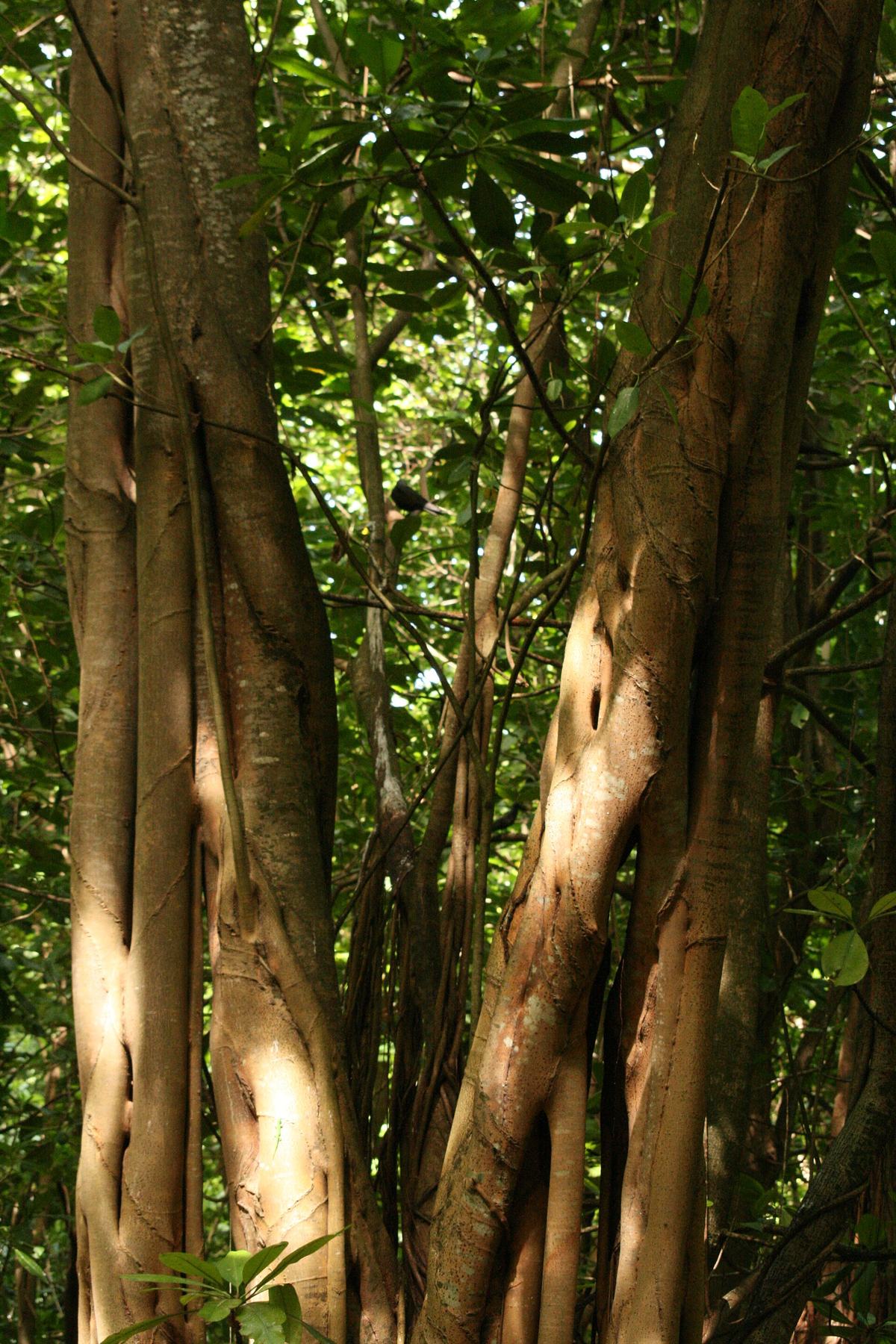
Photo: Marion Schneider & Christoph Aistleitner, Public domain via Wikimedia Commons

Quick facts
| Light: | Bright, indirect light11 source |
|---|---|
| Water: | Medium11 source |
| Soil: | Well drained and moist; pH 6–811 source |
| Size: | 100 ft (30.48 m)11 source |
| Growth rate: | Moderate1111 source |
| Bloom: | Yellow1Not documented by major sources |
| Cats: | Not documented by major sources |
| Dogs: | Not documented by major sources |
| Native range: | ASS, BAN, EHM, IND, LDV, MDV, NEP, PAK, SRL3 |
| Family: | Moraceae |
How much light does an Indian Banyan need?
Indoors, Indian banyan wants bright, indirect sunlight. Outdoors, full sun is its preferred setting, which means six or more hours of direct sunlight a day. It also accepts partial shade, meaning direct sunlight for only 2 to 6 hours of the day. For outdoor planting, USDA zones 10a to 12b are listed for it.
- Light: Bright, indirect light1
How often to water an Indian Banyan
Water the plant when the top 2 to 3 inches (5 to 8 cm) of the soil feels dry. Its overall water need is rated as medium. The medium rating applies to both the low and the high end of its range. The soil it grows in should have good drainage. Its soil is listed as both well drained and moist.
- Water: Medium1
Best soil for an Indian Banyan
Choose a soil that offers good drainage. The listing describes the soil for this tree as well drained and moist. Its pH range runs from 6.0 to 8.0, which the source calls neutral. A pH of 6 sits at the low end of that range, and a pH of 8 sits at the high end. The plant's water need is rated medium, and it should be watered when the top 2 to 3 inches (5 to 8 cm) of soil feels dry.
How to propagate an Indian Banyan
You can propagate Indian banyan by seed, stem cuttings or layering. Those are the three propagation methods on record for this species. Whichever method you choose, the indoor light preference for the plant stays bright, indirect light. Its growth rate is medium, and it can reach 100 ft (30.48 m) tall.
- Propagation: Seed, stem cuttings and layering1
Common problems
The disease listed for this plant is Pseudomonas cichorii. The pests listed include Anoplophora chinensis, Aonidiella citrina, Aonidiella orientalis, Apriona cinerea, Ceroplastes ceriferus, Ceroplastes floridensis and Ceroplastes stellifer. The list also includes Cryphalus dilutus, Euwallacea fornicatus, Euwallacea kuroshio, Fiorinia phantasma, Lopholeucaspis japonica and Lymantria mathura. Opogona sacchari, Parasaissetia nigra, Pseudaulacaspis pentagona, Ripersiella hibisci, Singhiella simplex, Greenidea ficicola and Josephiella malabarensis complete the list.
- Common pests: anoplophora chinensis, aonidiella citrina, aonidiella orientalis, apriona cinerea, ceroplastes ceriferus, ceroplastes floridensis, ceroplastes stellifer, cryphalus dilutus, euwallacea fornicatus, euwallacea kuroshio, fiorinia phantasma, lopholeucaspis japonica, lymantria mathura, opogona sacchari, parasaissetia nigra, pseudaulacaspis pentagona, ripersiella hibisci, singhiella simplex, greenidea ficicola and josephiella malabarensis2
- Common diseases: pseudomonas cichorii2
| Problem | Kind |
|---|---|
| Anoplophora chinensis | Pest |
| Aonidiella citrina | Pest |
| Aonidiella orientalis | Pest |
| Apriona cinerea | Pest |
| Ceroplastes ceriferus | Pest |
| Ceroplastes floridensis | Pest |
| Ceroplastes stellifer | Pest |
| Cryphalus dilutus | Pest |
| Euwallacea fornicatus | Pest |
| Euwallacea kuroshio | Pest |
| Fiorinia phantasma | Pest |
| Lopholeucaspis japonica | Pest |
| Lymantria mathura | Pest |
| Opogona sacchari | Pest |
| Parasaissetia nigra | Pest |
| Pseudaulacaspis pentagona | Pest |
| Ripersiella hibisci | Pest |
| Singhiella simplex | Pest |
| Greenidea ficicola | Pest |
| Josephiella malabarensis | Pest |
| Pseudomonas cichorii | Disease |
Is Indian Banyan toxic to cats and dogs?
Recommended supplies
- Light: bright, indirect light, such as near an east window; a full-spectrum grow light substitutes where no window does.
- Soil: a free-draining mix, and a pot with a drainage hole.
Questions and answers
- How much light does an Indian banyan need?
- Indoors, it needs bright, indirect light. Outdoors it prefers full sun, meaning six or more hours of direct sunlight a day, and it also accepts part shade of 2 to 6 hours. It is listed for zones 10a to 12b.
- When should I water my Indian banyan?
- Water it when the top 2 to 3 inches (5 to 8 cm) of the soil feels dry. Its water need is rated medium. The soil should also have good drainage. Its soil is listed as well drained and moist.
- How big does an Indian banyan get?
- It can grow up to 100 ft (30.48 m) tall. It is a tree with an erect and spreading habit. Its growth rate is medium. It is a broadleaf evergreen. In the lower 48 US states its native status is introduced.
Sources
- NC State Extension Gardener Plant Toolbox. https://plants.ces.ncsu.edu/plants/ficus-benghalensis/. Accessed 14 October 2026.
- EPPO Global Database. https://gd.eppo.int/taxon/FIUBG/pests. Accessed 14 October 2026.
- Royal Botanic Gardens, Kew (World Checklist of Vascular Plants). https://sftp.kew.org/pub/data-repositories/WCVP/wcvp.zip. Accessed 4 June 2026.
How this page was made
- Written with AI assistance from the sources listed on this page. AI is never the source of a fact.