Corn Poppy (Papaver rhoeas)
Formerly Papaver cereale, Papaver dodonei, Papaver fuchsii
Corn poppy (Papaver rhoeas) is an annual grown in full sun. Its water need is medium. The flowers are usually vivid red. The plant reaches 0.8–1.5 ft (0.23–0.46 m) tall. It is recorded for hardiness zones 3a–10b. Seed is the recorded propagation method. Pet toxicity for cats and dogs is not documented here.
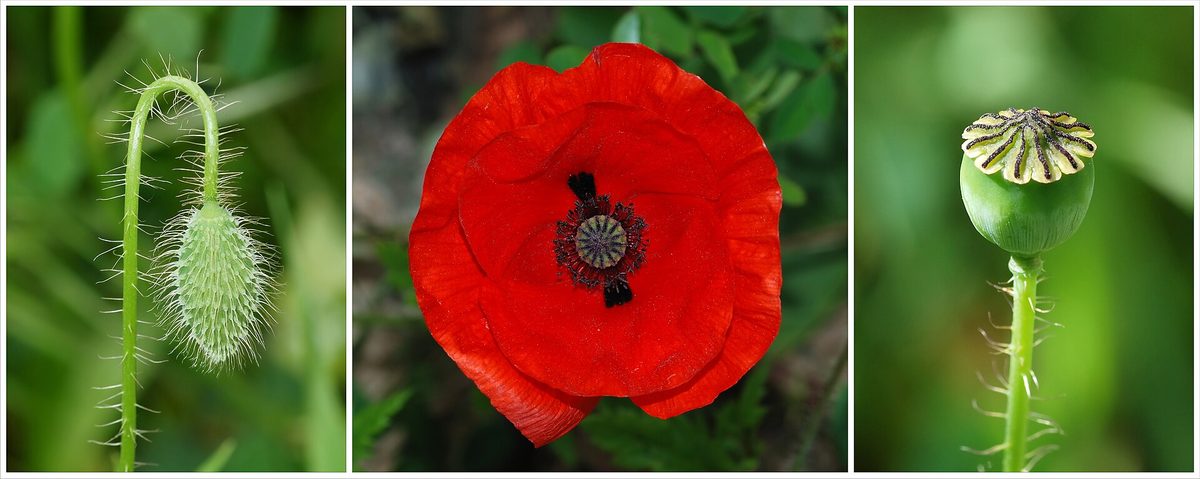
Photo: Alvesgaspar, CC BY-SA 3.0 via Wikimedia Commons

Quick facts
| Light: | Full sun11 source |
|---|---|
| Water: | Medium11 source |
| Soil: | Well drained11 source |
| Hardiness: | Zones 3a–10b11 source |
| Size: | 0.8–1.5 ft (0.23–0.46 m) × 0.5–1 ft (0.15–0.3 m)11 source |
| Growth rate: | Moderate111 source |
| Bloom: | Red, purple and white13 |
| Cats: | Not documented by major sources |
| Dogs: | Not documented by major sources |
| Native range: | AFG, ALB, ALG, AUT, AZO, BAL, BGM, BLR, BLT, BUL, CNY, COR, CVI, CYP, CZE, EAI, EGY, FRA, GER, GRC, HUN, IRN, IRQ, ITA, KAZ, KRI, KRY, LBS, LBY, MDR, MOR, NCS, NET, PAK, PAL, POL, POR, ROM, RUC, RUE, RUS, RUW, SAR, SAU, SIC, SIN, SPA, SWI, TCS, TKM, TUE, TUN, TUR, UKR, WHM, YUG4 |
| Family: | Papaveraceae |
How much light does a Corn Poppy need?
Full sun is the recorded outdoor light level, meaning six or more hours of direct sunlight a day. The flowers are usually vivid red with a black spot at their base, but sometimes they are purple or white. Nodding flower buds open to reveal bright red flowers. Plants stand 0.8–1.5 ft (0.23–0.46 m) tall and 0.5–1 ft (0.15–0.3 m) wide. The growth rate is medium.
- Light: Full sun1
How often to water a Corn Poppy
Medium is the recorded water level for this plant, at both ends of its range. The plant suits fertile, medium moist, well-drained soil in full sun. Good drainage is listed for the soil. Medium moisture and good drainage appear together in the record. Full sun is the recorded light level for the same planting.
- Water: Medium1
Best soil for a Corn Poppy
Well-drained soil is the recorded need for this plant. The soil should also be fertile and medium moist. These conditions are recorded for plants growing in full sun. Medium is the water level for that soil. Its drainage is listed as good. The plant is an annual raised from seed.
- Soil drainage: Well drained1
Hardiness and temperature
Zones 3a through 10b are listed for corn poppy. That range includes 3a, 3b, 4a, 4b, 5a, 5b, 6a, 6b, 7a, 7b, 8a, 8b, 9a, 9b, 10a and 10b. The coldest listed zone is 3a and the warmest is 10b. Full sun is the recorded outdoor light for these zones. The plant type is recorded as annual.
- Hardiness: Zones 3a–10b1
How to plant a Corn Poppy
Choose a sunny site with six or more hours of direct sunlight a day. The soil should be fertile, medium moist and well drained. Allow for a spread of 0.5–1 ft (0.15–0.3 m). Plants reach 0.8–1.5 ft (0.23–0.46 m) tall. This annual is started from seed. Its hardiness range spans zones 3a to 10b. The native range includes France, Germany, Italy and Spain. In the United States it is recorded as introduced in Alaska and the lower 48 states.
- Hardiness: Zones 3a–10b1
Winter care
The listed hardiness runs from zone 3a at the cold end to zone 10b at the warm end. The plant type is recorded as annual. Full sun is the recorded outdoor light. Medium is the recorded water level. Well-drained soil is the recorded soil need. Propagation is by seed. No frost protection, mulching or cutting-back advice is documented.
- Hardiness: Zones 3a–10b1
How to propagate a Corn Poppy
You can propagate corn poppy by seed. The plant type is recorded as annual. The growth rate is medium. Hardiness zones 3a–10b are listed for it. Full sun is the recorded outdoor light. The flowers are usually vivid red, sometimes purple or white. Water is recorded as medium.
- Propagation: Seed1
Common problems
Three pests are recorded for this plant: carnation tortrix moth, stem nematode and pea leafminer. The carnation tortrix moth is recorded as Cacoecimorpha pronubana. The disease recorded is tomato spotted wilt virus. The virus is recorded under the name Orthotospovirus tomatomaculae.
| Problem | Kind |
|---|---|
| Carnation tortrix moth | Pest |
| Stem nematode | Pest |
| Pea leafminer | Pest |
| Tomato spotted wilt virus | Disease |
Is Corn Poppy toxic to cats and dogs?
Recommended supplies
- Soil: a free-draining mix, and a pot with a drainage hole.
Questions and answers
- How much sun does corn poppy need?
- The recorded outdoor light is full sun, meaning six or more hours of direct sunlight a day. Medium is the recorded water level for the same plant. Plants reach 0.8–1.5 ft (0.23–0.46 m) tall.
- How do you grow corn poppy from seed?
- Seed is the recorded propagation method. It is an annual, listed for hardiness zones 3a–10b. Well-drained soil in full sun is recorded. Plants spread 0.5–1 ft (0.15–0.3 m).
- What color are corn poppy flowers?
- The flowers are usually vivid red with a black spot at their base. Some are purple or white. Nodding flower buds open to reveal red flowers. Plants reach 0.8–1.5 ft (0.23–0.46 m) tall.
Sources
- NC State Extension Gardener Plant Toolbox. https://plants.ces.ncsu.edu/plants/papaver-rhoeas/. Accessed 14 October 2026.
- EPPO Global Database. https://gd.eppo.int/taxon/PAPRH/pests. Accessed 21 October 2026.
- Clemson Cooperative Extension Home & Garden Information Center. https://hgic.clemson.edu/corn-poppies/. Accessed 14 October 2026.
- Royal Botanic Gardens, Kew (World Checklist of Vascular Plants). https://sftp.kew.org/pub/data-repositories/WCVP/wcvp.zip. Accessed 4 June 2026.
How this page was made
- Written with AI assistance from the sources listed on this page. AI is never the source of a fact.