Cultivated Tobacco (Nicotiana tabacum)
Formerly Nicotiana fruticosa, Nicotiana mexicana, Nicotiana alba
Cultivated tobacco, Nicotiana tabacum, prefers full sun outdoors, needs good drainage, and does not tolerate temperatures below 24.8 °F (-4 °C). It is toxic to both cats and dogs, so keep it away from your pets. Indoor light and watering needs are not documented for this plant.
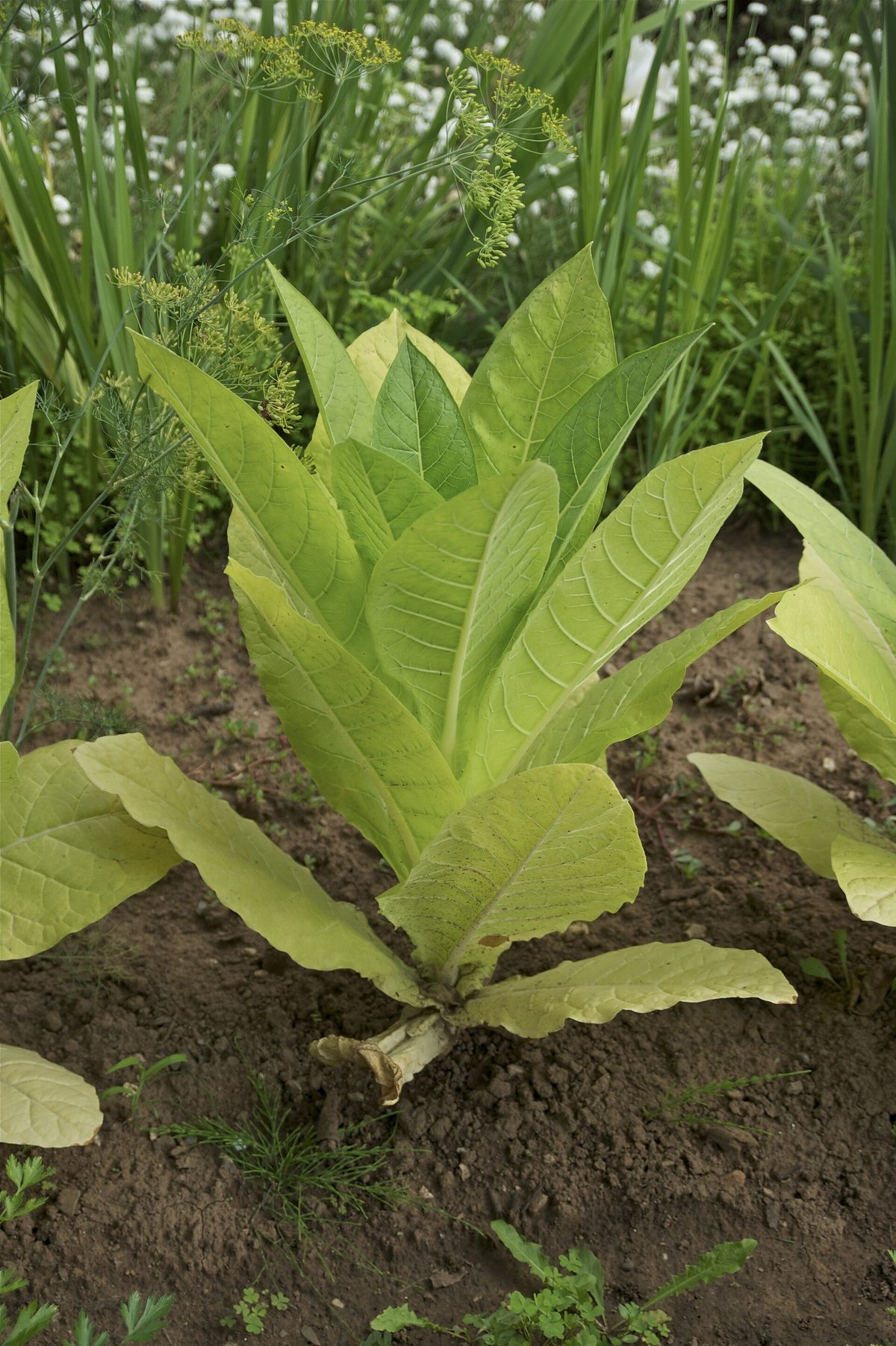
Photo: Jebulon, CC0 via Wikimedia Commons

Quick facts
| Soil: | Well drained, moist and occasionally dry11 source |
|---|---|
| Minimum temperature: | 24.8 °F (-4 °C)11 source |
| Size: | 3–10 ft (0.91–3.05 m) × 1–2 ft (0.3–0.61 m)11 source |
| Growth rate: | Rapid11 source |
| Bloom: | White, green and pink11 source |
| Cats: | Toxic to cats (1 source) 3 |
| Dogs: | Toxic to dogs (1 source) 3 |
| Native range: | BOL4 |
| Family: | Solanaceae |
Best soil for a Cultivated Tobacco
Cultivated tobacco is listed for soil that is well drained, moist and occasionally dry. Good drainage is the condition on record for this plant. Mature plants stand 3–10 ft (0.91–3.05 m) tall and spread 1–2 ft (0.3–0.61 m) across, so leave that much room when you choose a spot. No cited source records a soil pH range, so none is given here.
- Soil drainage: Well drained, moist and occasionally dry1
Temperature and humidity
The lowest temperature on record for this plant is 24.8 °F (-4 °C). It does not tolerate temperatures below the mid-20s °F. Outdoors it is rated for USDA zones 7a to 11b. Full sun, meaning 6 or more hours of direct sunlight a day, is preferred, and part shade is also listed. No cited source records a humidity range.
- Minimum temperature: 24.8 °F (-4 °C)1
How to propagate a Cultivated Tobacco
Seed is the propagation method recorded for cultivated tobacco. No cited source lists cuttings, division or any other propagation method. The growth rate is rapid. Its status in the United States is introduced in the lower 48 states, Hawaii and Puerto Rico. The record for its native range gives the region code BOL.
- Propagation: Seed1
Common problems
The pests on record are tobacco whitefly, tobacco budworm, tobacco flea beetle, corn earworm, root knot nematode, tobacco cutworm and red spider mite. The diseases on record are tobacco ringspot virus, tomato spotted wilt virus, blue mold, tobacco wildfire disease and bacterial wilt. It is also susceptible to tobacco mosaic virus.
| Problem | Kind |
|---|---|
| Tobacco whitefly | Pest |
| Tobacco budworm | Pest |
| Tobacco flea beetle | Pest |
| Corn earworm | Pest |
| Root knot nematode | Pest |
| Tobacco cutworm | Pest |
| Red spider mite | Pest |
| Tobacco ringspot virus | Disease |
| Tomato spotted wilt virus | Disease |
| Blue mold | Disease |
| Tobacco wildfire disease | Disease |
| Bacterial wilt | Disease |
Is Cultivated Tobacco toxic to cats and dogs?
Cultivated tobacco is listed as toxic to cats, and it is listed as toxic to dogs. Pet Poison Helpline states that nicotine poisoning occurs in pet animals following oral ingestion. It also states that even small amounts of nicotine can lead to serious illness. Nicotine is the substance named in that passage. Keep this plant away from both your cats and your dogs.
Pet-safe alternatives
Recommended supplies
- Soil: a free-draining mix, and a pot with a drainage hole.
Questions and answers
- Is cultivated tobacco toxic to cats and dogs?
- Cultivated tobacco is listed as toxic to cats and toxic to dogs. Pet Poison Helpline states that even small amounts of nicotine can lead to serious illness. Keep the plant out of reach of both animals.
- How cold can cultivated tobacco get?
- The lowest temperature on record is 24.8 °F (-4 °C). The plant does not tolerate temperatures below the mid-20s °F. It is rated for USDA zones 7a to 11b.
- How is cultivated tobacco propagated?
- Seed is the propagation method recorded for this plant. Its growth rate is rapid, and it prefers full sun outdoors. Mature plants reach 3–10 ft (0.91–3.05 m) in height.
Sources
- NC State Extension Gardener Plant Toolbox. https://plants.ces.ncsu.edu/plants/nicotiana-tabacum/. Accessed 14 October 2026.
- EPPO Global Database. https://gd.eppo.int/taxon/NIOTA/pests. Accessed 14 October 2026.
- Pet Poison Helpline. https://www.petpoisonhelpline.com/poison/tobacco/. Accessed 15 October 2026.
- Royal Botanic Gardens, Kew (World Checklist of Vascular Plants). https://sftp.kew.org/pub/data-repositories/WCVP/wcvp.zip. Accessed 4 June 2026.
How this page was made
- Written with AI assistance from the sources listed on this page. AI is never the source of a fact.