Asiatic Dayflower (Commelina communis)
Formerly Commelina minor, Commelina ludens, Commelina barbata
Keep Asiatic dayflower, Commelina communis, in full sun, with part shade also listed. It is listed as an annual and its growth rate is rapid. No watering facts are documented for this page. Toxicity to cats and to dogs is not documented here either. It is introduced, not native, in the lower 48 US states.
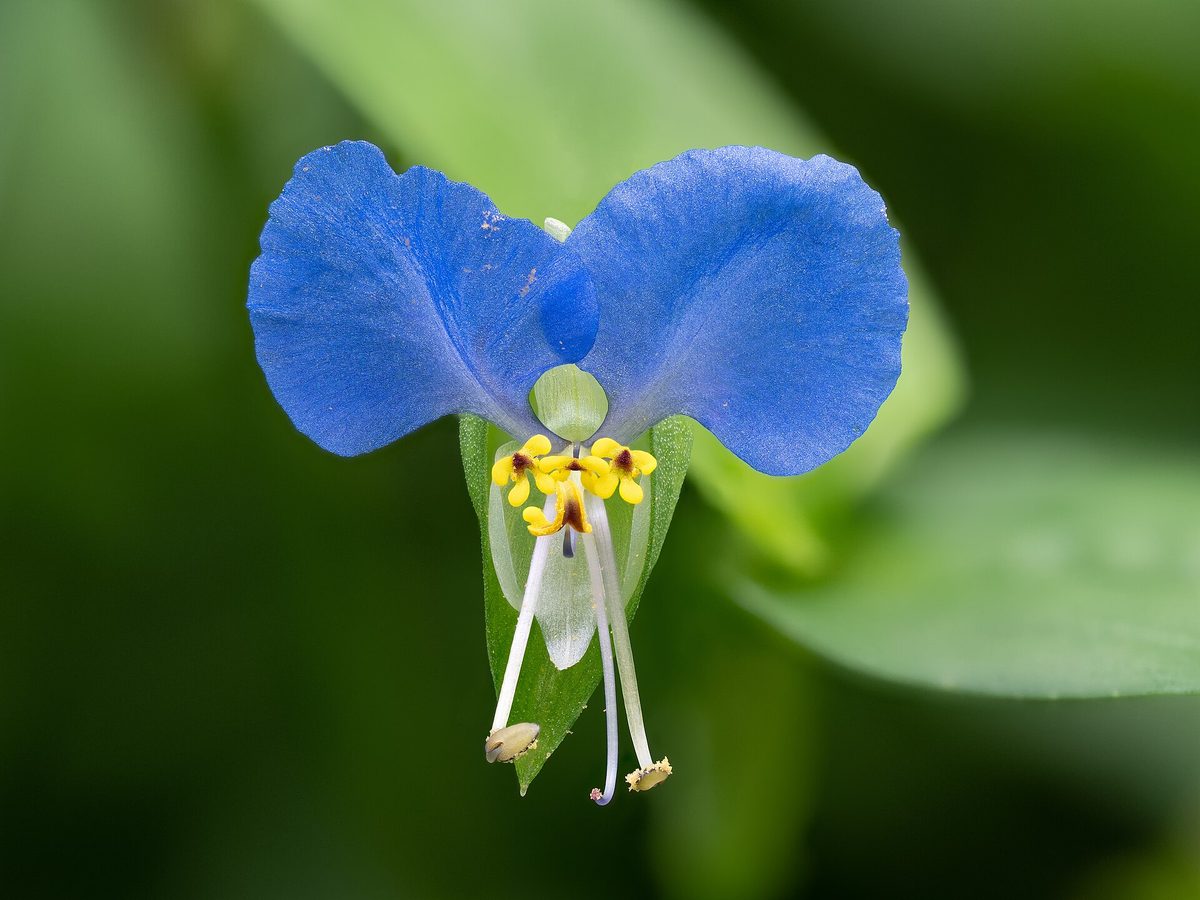
Photo: Ermell, CC BY-SA 4.0 via Wikimedia Commons

Quick facts
| Light: | Full sun and part shade (full sun preferred)11 source |
|---|---|
| Soil: | Moist and occasionally dry11 source |
| Hardiness: | Zones 5a–8a11 source |
| Size: | 1–3 ft (0.3–0.91 m) × 2–10 ft (0.61–3.05 m)11 source |
| Growth rate: | Rapid111 source |
| Bloom: | Jul–Sep, Blue, yellow, white and purple11 source |
| Cats: | Not documented by major sources |
| Dogs: | Not documented by major sources |
| Native range: | AMU, BRY, CBD, CHC, CHH, CHI, CHM, CHN, CHS, CTA, IRK, JAP, KAM, KHA, KOR, KUR, LAO, MYA, NNS, PRM, SAK, TAI, THA, VIE, YAK2 |
| Family: | Commelinaceae |
How much light does an Asiatic Dayflower need?
Open sun is the preferred exposure for this plant, and part shade is also listed. The source describes part shade as direct sunlight for only part of the day, between 2 and 6 hours. Light needs are given for outdoor growing only, and no indoor rating is documented.
- Light: Full sun and part shade (full sun preferred)1
Best soil for an Asiatic Dayflower
Soil for this plant is listed as moist and occasionally dry. The source describes moist to mesic conditions. The listing covers two drainage conditions, moist and occasionally dry, and it names no others. A soil pH range is not documented for this plant, so no target is given here. No soil type such as sand, loam or clay is documented either. Drainage is therefore the only soil factor you can take from the record.
- Soil drainage: Moist and occasionally dry1
Hardiness and temperature
The USDA hardiness listing runs from zone 5a to zone 8a. The source lists each half zone: 5a, 5b, 6a, 6b, 7a, 7b and 8a. No minimum temperature is documented for this plant. No humidity preference is documented either. The zone range is the only temperature guidance on record for this page.
- Hardiness: Zones 5a–8a1
How to plant an Asiatic Dayflower
Leave room for a spread of 2 to 10 ft (0.61 to 3.05 m), the range listed for mature plants. Height at maturity is listed as 1 to 3 ft (0.3 to 0.91 m). Choose a site in USDA zones 5a through 8a, the range listed for this plant. The record lists the rate of growth as rapid. It is listed as an annual. No sowing depth or planting date is documented.
- Hardiness: Zones 5a–8a1
Winter care
Winter protection is not documented for this plant. The only cold-related fact on record is the zone range of 5a through 8a. No lowest survivable temperature is recorded, so none is stated here. The plant is listed as an annual. Check your own zone against the 5a to 8a range before relying on it outdoors through a cold season.
- Hardiness: Zones 5a–8a1
Common problems
Neither pests nor diseases are recorded for Asiatic dayflower in the Plant Toolbox, which states there are no known diseases or insect pests. That is a statement of what the source records, not a guarantee for your garden. The common pests list and the common diseases list are both empty on this page. No treatment advice is given because no problem is documented.
Is Asiatic Dayflower toxic to cats and dogs?
Recommended supplies
- Soil: a mix that holds moisture without staying wet.
Questions and answers
- When does Asiatic dayflower bloom?
- It blooms from mid-summer to early fall. The listed flower colors are blue, yellow, white and purple. The bloom window is the only flowering timing documented on this page.
- Is Asiatic dayflower hardy in my area?
- It is listed for USDA zones 5a through 8a. That covers 5a, 5b, 6a, 6b, 7a, 7b and 8a. No minimum temperature is documented.
- How big does Asiatic dayflower get?
- Height at maturity is listed as 1 to 3 ft (0.3 to 0.91 m). Spread is listed as 2 to 10 ft (0.61 to 3.05 m). The growth rate is rapid.
Sources
- NC State Extension Gardener Plant Toolbox. https://plants.ces.ncsu.edu/plants/commelina-communis/. Accessed 1 November 2026.
- Royal Botanic Gardens, Kew (World Checklist of Vascular Plants). https://sftp.kew.org/pub/data-repositories/WCVP/wcvp.zip. Accessed 4 June 2026.
How this page was made
- Written with AI assistance from the sources listed on this page. AI is never the source of a fact.