Garden Onion (Allium cepa)
Formerly Allium ascalonicum, Cepa esculenta, Porrum cepa
Keep garden onion (Allium cepa) alive with full sun and soil that stays medium to wet. Onions are shallow-rooted and need constant moisture for proper growth. Onion is listed as toxic to both cats and dogs by the ASPCA and by Pet Poison Helpline. The plant stands about 1–1.5 ft (0.3–0.46 m) tall.
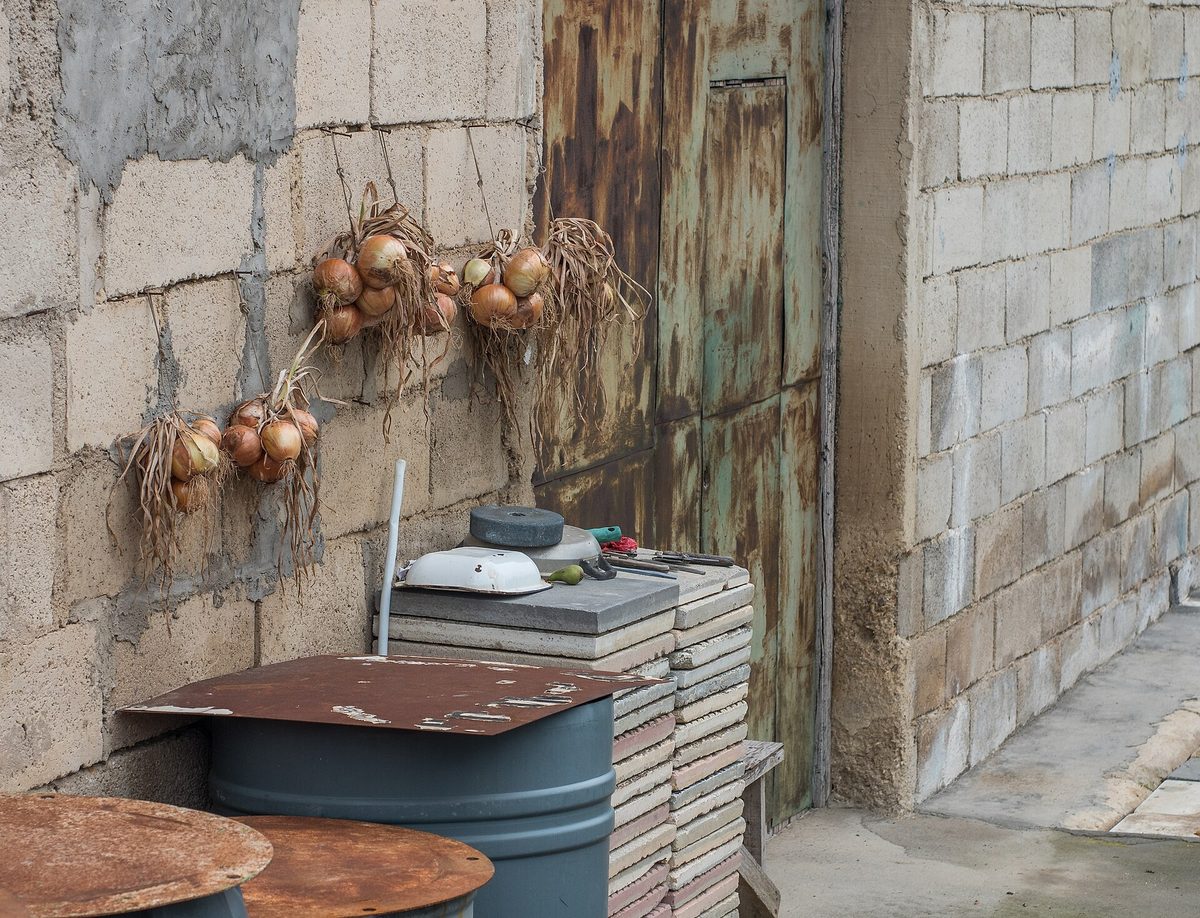
Photo: Basotxerri, CC BY-SA 4.0 via Wikimedia Commons

Quick facts
| Light: | Full sun123 |
|---|---|
| Water: | Medium to wet24 |
| Soil: | Well drained; pH 6.2–6.512 |
| Size: | 1–1.5 ft (0.3–0.46 m) × 0.5–1 ft (0.15–0.3 m)41 source |
| Bloom: | White and pink41 source |
| Cats: | Toxic to cats 910 |
| Dogs: | Toxic to dogs 910 |
| Native range: | TKM11 |
| Family: | Amaryllidaceae |
How much light does a Garden Onion need?
Garden onion prefers full sun outdoors. All onion relatives should be grown in full sun for best results. All onions require full sun for the best growth, and full sun is the only outdoor light level on record for this plant. Plan for a plant about 1–1.5 ft (0.3–0.46 m) tall in that sun.
How often to water a Garden Onion
Onions are shallow-rooted and require constant moisture for proper growth. Aim for soil that is moist but well-drained, fertile and loose. The preferred range runs from medium to wet. Medium is the lower end of that range and wet is the upper end. The recorded soil drainage for this plant is well-drained.
Best soil for a Garden Onion
Garden onion grows best in a fertile, well-drained, loamy soil with plenty of organic matter. The ideal pH is between 6.2 and 6.5. A wider pH band of 6.0 to 7.0 is also named for well-drained soil that is high in organic matter. Drainage for this plant is recorded as well-drained. Moist but well-drained, fertile, loose soil is described for it as well.
Fertilizing a Garden Onion
Garden onion is a heavy feeder. It has a high requirement for nutrients, supplied either by soil organic matter or by fertilizers. Soil that is fertile, with plenty of organic matter, is described as best for growing quality onions. Overall maintenance for the plant is rated medium.
- Fertilizer: Heavy feeder5
When to plant Garden Onion
Plant onions starting 6 weeks before your average last frost date. The same timing is recorded for direct sowing and for transplants. Onions and the related shallots, leeks and garlic all grow best during cool weather. Garden onion is classed as a cool-season crop.
| Step | When |
|---|---|
| Direct sow | 6 weeks after last spring frost |
| Transplant | 6 weeks after last spring frost |
When and how to harvest Garden Onion
Harvest bulb onions when about three-fourths of the tops have fallen over. Days to maturity run from 85 to 120 for mature bulbs. The count starts from transplant. The falling tops are the stated sign for bulb onions. Mature plants stand 1–1.5 ft (0.3–0.46 m) tall and 0.5–1 ft (0.15–0.3 m) wide.
How to propagate a Garden Onion
You can grow garden onion from seed, transplants or small bulbs called sets. The listed propagation methods are seed and offsets. The bulb makes several offsets during the growing season. Plant type is recorded as a bulb. Start planting about 6 weeks before your average last frost date. Seed, transplants and sets are the three starting forms named for onions.
Common problems
Thrips, onion maggot, bulb mites, cutworms, grasshoppers, nematodes, snails and slugs, wheat curl mite and allium leafminer are the pests listed for garden onion. The diseases listed are bacterial soft rot, basal rot, black mold, blue mold rot, botrytis leaf blight, downy mildew, neck rot, pink root, purple blotch and white rot.
| Problem | Kind |
|---|---|
| Thrips | Pest |
| Onion maggot | Pest |
| Bulb mites | Pest |
| Cutworms | Pest |
| Grasshoppers | Pest |
| Nematodes | Pest |
| Snails and slugs | Pest |
| Wheat curl mite | Pest |
| Allium leafminer | Pest |
| Bacterial soft rot | Disease |
| Basal rot | Disease |
| Black mold | Disease |
| Blue mold rot | Disease |
| Botrytis leaf blight | Disease |
| Downy mildew | Disease |
| Neck rot | Disease |
| Pink root | Disease |
| Purple blotch | Disease |
| White rot | Disease |
Is Garden Onion toxic to cats and dogs?
The ASPCA lists garden onion as toxic to cats. It lists the plant as toxic to dogs as well. Pet Poison Helpline says onion, along with chives, garlic and leeks, belongs to the Allium family and that all are poisonous to dogs and cats. For cats the position is toxic, and for dogs the position is also toxic. Chives, garlic and leeks are named in the same Pet Poison Helpline entry as poisonous relatives.
Pet-safe alternatives
Recommended supplies
- Soil: a free-draining mix, and a pot with a drainage hole.
Questions and answers
- Is garden onion toxic to cats and dogs?
- Garden onion is listed as toxic to both cats and dogs. The ASPCA lists it that way, and Pet Poison Helpline says onions, chives, garlic and leeks in the Allium family are poisonous to dogs and cats.
- How much sun does garden onion need?
- Garden onion needs full sun. All onions require full sun for the best growth, and full sun is the only outdoor light level listed for it. Its soil should be well-drained, and its water need runs from medium to wet.
- When do you harvest garden onion?
- Harvest bulb onions when about three-fourths of the tops have fallen over. Days to maturity run from 85 to 120 for mature bulbs, counted from transplant. Plant them starting 6 weeks before your average last frost date.
Sources
- Clemson Cooperative Extension HGIC. https://hgic.clemson.edu/factsheet/onion-leek-shallot-garlic/. Accessed 12 October 2026.
- University of Minnesota Extension. https://extension.umn.edu/garden-and-home/yard-and-garden/gardening-in-minnesota/growing-onions. Accessed 12 October 2026.
- Ohio State University Extension (Ohioline). https://cfaes.osu.edu/fact-sheet/growing-onions-garden. Accessed 12 October 2026.
- NC State Extension Gardener Plant Toolbox. https://plants.ces.ncsu.edu/plants/allium-cepa/. Accessed 13 October 2026.
- University of Maryland Extension. https://extension.umd.edu/resource/growing-onions-home-garden. Accessed 30 October 2026.
- Purdue University Extension. https://extension.purdue.edu/foodlink/food.php?food=onion%2C+green+onion%2C+scallion. Accessed 13 October 2026.
- NC State Extension Gardener Plant Toolbox. https://plants.ces.ncsu.edu/plants/allium-cepa/common-name/onion/. Accessed 1 November 2026.
- UC Statewide Integrated Pest Management Program. https://ipm.ucanr.edu/home-and-landscape/onions-and-garlic/. Accessed 12 October 2026.
- ASPCA Animal Poison Control Center. https://www.aspca.org/pet-care/aspca-poison-control/toxic-and-non-toxic-plants/onion. Accessed 12 October 2026.
- Pet Poison Helpline. https://www.petpoisonhelpline.com/poison/onion/. Accessed 12 October 2026.
- Royal Botanic Gardens, Kew (World Checklist of Vascular Plants). https://sftp.kew.org/pub/data-repositories/WCVP/wcvp.zip. Accessed 4 June 2026.
How this page was made
- Written with AI assistance from the sources listed on this page. AI is never the source of a fact.