Staghorn Sumac (Rhus typhina)
Formerly Rhus hirta, Rhus viridiflora, Rhus typhia
Give staghorn sumac full sun, with part shade as the other listed option, and keep it on the dry side. It is a deciduous tree that reaches 35–40 ft (10.67–12.19 m) tall and is hardy in Zones 3a–9b. No cited source on this page documents toxicity for cats or for dogs.
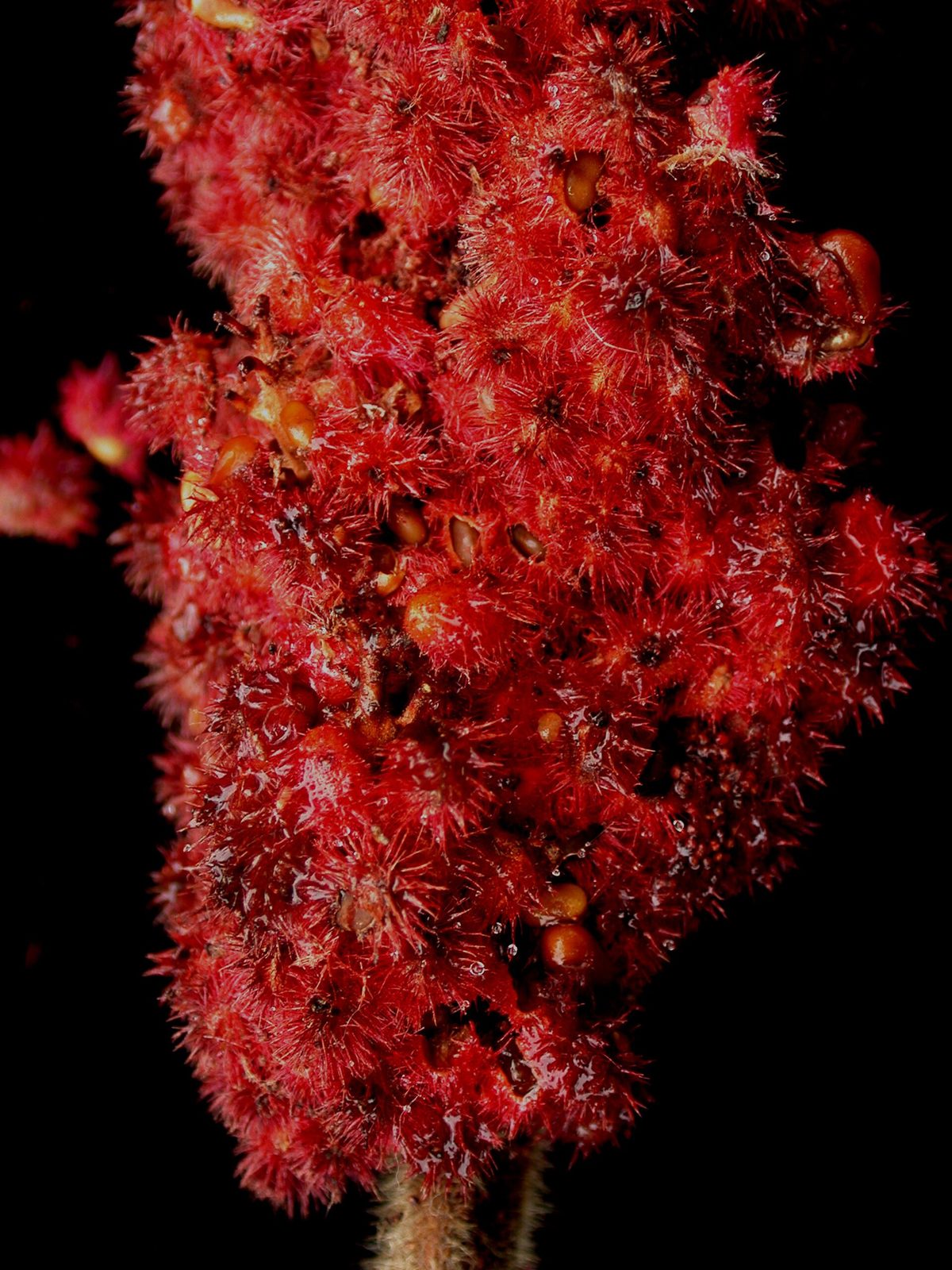
Photo: Wikimedia Commons contributor, CC BY-SA 4.0 via Wikimedia Commons

Quick facts
| Light: | Full sun and part shade (full sun preferred)12 |
|---|---|
| Water: | Dry31 source |
| Soil: | Well drained; pH 5–8121 source |
| Hardiness: | Zones 3a–9b11 source |
| Size: | 35–40 ft (10.67–12.19 m) × 35–45 ft (10.67–13.72 m)21 source |
| Growth rate: | Rapid11 source |
| Bloom: | Jun–Jul, Red, yellow, green and white311 source |
| Cats: | Not documented by major sources |
| Dogs: | Not documented by major sources |
| Native range: | ALA, CNT, DEL, GEO, ILL, INI, IOW, KTY, MAI, MAS, MIC, MIN, MRY, NBR, NCA, NSC, NWH, NWJ, NWY, OHI, ONT, PEI, PEN, QUE, RHO, SCA, TEN, VER, VRG, WDC, WIS, WVA5 |
| Family: | Anacardiaceae |
How much light does a Staghorn Sumac need?
Six or more hours of direct sunlight a day counts as full sun, and full sun is the exposure this tree prefers. Part shade is also listed as an exposure the tree takes. No cited source says how the tree performs in part shade. Pair the light with well-drained soil, which is the drainage this species is listed for.
How often to water a Staghorn Sumac
The water need listed for this tree is dry, at both the low end and the high end of the range. Dry is the only moisture level given, and no wetter range is recorded. The listed drainage is good, and that is the soil condition to pair with a dry water rating. No cited source gives a watering schedule, so this page does not set one.
- Water: Dry3
Best soil for a Staghorn Sumac
Soil pH from 5 to 8 is listed for this tree, which spans acid to alkaline soil. The listed drainage is good, and well drained is the only drainage class recorded. A dry water rating goes with that well-drained soil. A pH of 5 to 8 covers a wide band, so most garden soils fall inside it. No cited source names a soil texture, such as sand or clay, or an amendment to add.
Hardiness and temperature
Hardiness zones for this tree run from 3a to 9b, and every half-zone in between is listed. Zone 3a is the cold end of that range, and Zone 9b is the warm end. No cited source records a minimum temperature for the tree. No humidity preference is recorded either. Check your own zone against the listed span before you plant.
- Hardiness: Zones 3a–9b1
How to plant a Staghorn Sumac
Space this tree for a mature spread of 35–45 ft (10.67–13.72 m). Its mature height is 35–40 ft (10.67–12.19 m). Choose a spot in full sun, with part shade as a second option. Look for well-drained soil with a pH between 5 and 8. The listed hardiness runs from Zone 3a to Zone 9b. Growth is listed as rapid. The tree is listed as native in the lower 48 states of the US.
- Hardiness: Zones 3a–9b1
Winter care
As a deciduous tree, it is listed as hardy from Zone 3a to Zone 9b. Zone 3a sits at the cold edge of the listed range. Zone 9b sits at the warm edge. No cited source records a minimum temperature, so this page gives no cold threshold. No cited source gives winter protection, mulching or wrapping advice.
- Hardiness: Zones 3a–9b1
How to propagate a Staghorn Sumac
You can propagate this tree from seed, division, stem cuttings or root cuttings. Those four are the only methods recorded for the species. Stem cuttings and root cuttings are listed separately, so they count as two methods. No cited source gives timing, rooting medium or hormone details for any of them. This page therefore names the methods and stops there.
- Propagation: Seed, division, stem cuttings and root cuttings1
Common problems
Cotton root rot is the one disease recorded for this tree. It is listed under the name Phymatotrichopsis omnivora. No cited source records common pests for this species. A missing pest list is a gap in the record, not a statement that none exist. No treatment or prevention step for cotton root rot is given.
- Common diseases: cotton root rot4
| Problem | Kind |
|---|---|
| Cotton root rot | Disease |
Is Staghorn Sumac toxic to cats and dogs?
Recommended supplies
- Soil: a free-draining mix, and a pot with a drainage hole.
Questions and answers
- What color are the flowers of staghorn sumac?
- Bloom color is listed as red, yellow, green and white. Bloom time is listed as Jun–Jul. No cited source describes the shape or size of the flowers.
- How big does staghorn sumac get?
- It is a tree that reaches 35–40 ft (10.67–12.19 m) tall with a spread of 35–45 ft (10.67–13.72 m). Its growth rate is listed as rapid.
- Is staghorn sumac native to the United States?
- It is listed as native in the lower 48 states. Its native range is recorded as a list of 32 regions. No cited source says more about where it grows in the wild.
Sources
- NC State Extension Gardener Plant Toolbox. https://plants.ces.ncsu.edu/plants/rhus-typhina/. Accessed 14 October 2026.
- Cornell University CALS Woody Plants Database. https://woodyplants.cals.cornell.edu/plant/219. Accessed 14 October 2026.
- Lady Bird Johnson Wildflower Center (Native Plant Database). https://www.wildflower.org/plants/result.php?id_plant=RHTY. Accessed 14 October 2026.
- EPPO Global Database. https://gd.eppo.int/taxon/RHUTY/pests. Accessed 21 October 2026.
- Royal Botanic Gardens, Kew (World Checklist of Vascular Plants). https://sftp.kew.org/pub/data-repositories/WCVP/wcvp.zip. Accessed 4 June 2026.
How this page was made
- Written with AI assistance from the sources listed on this page. AI is never the source of a fact.