Horehound (Marrubium vulgare)
Formerly Marrubium hyperleucum, Marrubium apulum, Marrubium hamatum
Horehound does best outdoors in full sun. It also tolerates part shade. Give it water that ranges from dry to medium. Let the soil dry out before you water again. This plant is drought tolerant. In summer, it typically needs water only about once a week. No cited source on this page records whether horehound is toxic to cats or dogs, so its pet-toxicity status is not documented here.
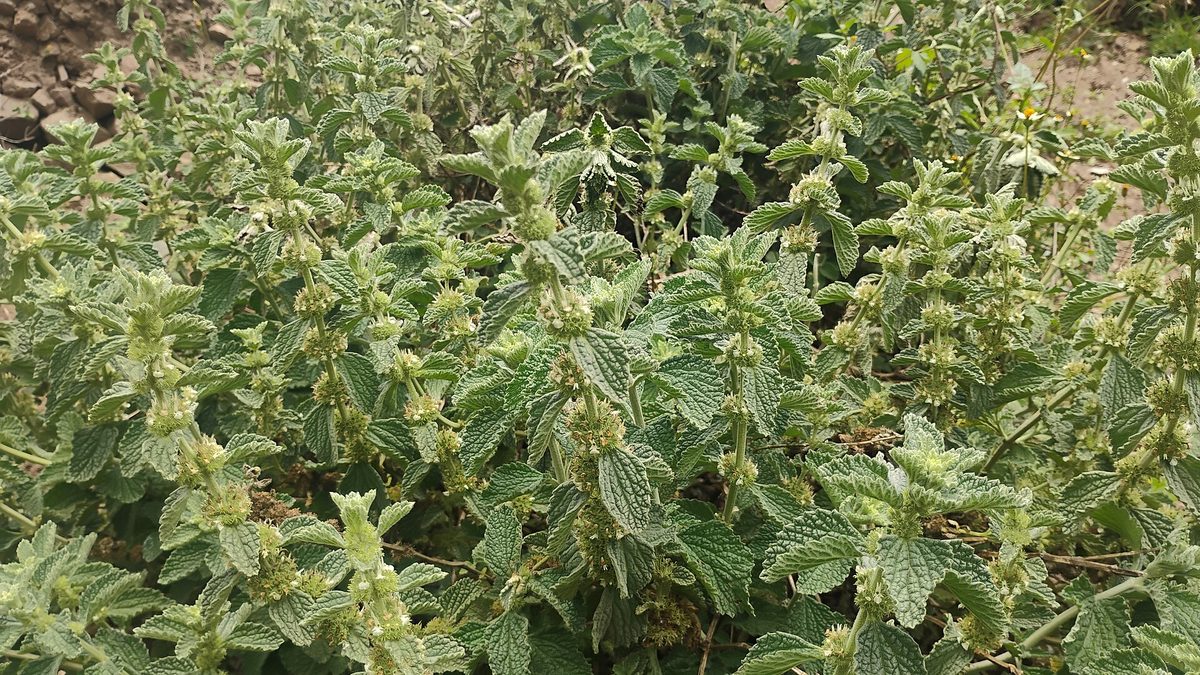
Photo: Carlo Brescia, CC BY-SA 4.0 via Wikimedia Commons

Quick facts
| Light: | Full sun and part shade (full sun preferred)12 |
|---|---|
| Water: | Dry to medium221 source |
| Soil: | Well drained and occasionally dry; Neutral soil pH range of 6.0 to 8.0 (also tolerates acid soil below 6.0, per source)12 |
| Hardiness: | Zones 3a–9b11 source |
| Size: | 1–2 ft (0.3–0.61 m) × 1–2 ft (0.3–0.61 m)11 source |
| Growth rate: | Slow11 source |
| Bloom: | Jun–Nov, White11 source |
| Cats: | Not documented by major sources |
| Dogs: | Not documented by major sources |
| Family: | Lamiaceae |
How much light does a Horehound need?
Grow horehound in full sun, where it gets at least six hours of direct light a day. It also tolerates part shade, with as little as two to six hours of direct sun. Full sun is the better choice for this plant, but part shade still works if that's what the spot offers.
How often to water a Horehound
Horehound's water needs range from dry to medium, meaning you can let the soil dry out somewhat before you water it again. This plant is drought tolerant, and in summer it only needs water about once a week, with the soil left to dry between waterings.
Best soil for a Horehound
Plant horehound outdoors in soil with good drainage. It also tolerates soil that generally runs occasionally dry, so a spot that dries out between rains still works for it. Sandy, well-drained ground typically suits it best, and it copes well with a dry spell. Its water needs run from dry to medium, so you don't have to keep the soil constantly damp.
Hardiness and temperature
Outdoors, horehound is hardy in United States Department of Agriculture plant hardiness zones 3a, 3b, 4a, 4b, 5a, 5b, 6a, 6b, 7a, 7b, 8a, 8b, 9a, and 9b. That is the full range of zones where horehound is generally rated as hardy for growing outdoors year-round.
- Hardiness: Zones 3a–9b1
How to plant a Horehound
Horehound grows outdoors in USDA zones 3a through 9b, so check whether your area falls in that range before planting it outside. At maturity, it typically reaches about 1 to 2 ft (0.3 to 0.61 m) tall and spreads a similar 1 to 2 ft (0.3 to 0.61 m) wide, so space new plants roughly that distance apart.
- Hardiness: Zones 3a–9b1
Winter care
Winter survival for horehound outdoors depends on your USDA hardiness zone, and this plant is rated hardy from zone 3a through zone 9b. If your area's winters fall outside that zone range, either much colder than zone 3a or much milder than zone 9b, horehound is not rated to survive outdoors there.
- Hardiness: Zones 3a–9b1
How to propagate a Horehound
Horehound can be propagated from seed, from leaf cuttings, or by dividing the roots of a more mature plant to start new plants. Seeds and cuttings for horehound are typically started early in spring. Root division for horehound is done using the roots of plants that are already more mature.
Common problems
Horehound has no significant insect pests documented for this species. It also has no significant diseases documented, and overall it is not considered susceptible to many disease or insect problems. Despite having few documented pest and disease problems, the plant can still be weedy.
Is Horehound toxic to cats and dogs?
Recommended supplies
- Soil: a free-draining mix, and a pot with a drainage hole.
Questions and answers
- How much sun does horehound need?
- Outdoors, give horehound at least six hours of full sun a day. It also tolerates part shade, meaning as little as two to six hours of direct sun a day. Full sun is the preferred condition, but part shade still works if that's the only option.
- How often should you water horehound?
- This plant's water needs fall between dry and medium outdoors. It is drought tolerant. In summer, water it no more than about once a week and let the soil dry between waterings.
- Is horehound toxic to cats or dogs?
- None of the sources cited for horehound mention a toxicity listing for cats or for dogs, so this page cannot state a pet-safety position for either animal.
Sources
- NC State Extension Gardener Plant Toolbox. https://plants.ces.ncsu.edu/plants/marrubium-vulgare/. Accessed 15 November 2026.
- Utah State University Extension. https://extension.usu.edu/yardandgarden/research/horehound-in-the-garden. Accessed 15 November 2026.
How this page was made
- Written with AI assistance from the sources listed on this page. AI is never the source of a fact.