Cloudberry (Rubus chamaemorus)
Formerly Rubus yessoicus, Rubus parapungens, Chamaemorus anglicus
Cloudberry, Rubus chamaemorus, is a herbaceous perennial that grows up to about 1 ft (0.3 m) tall. Give it full sun, with part shade also listed, and match the dry soil moisture recorded for it. No cited source records whether it is toxic to cats or to dogs, so that position is not documented.
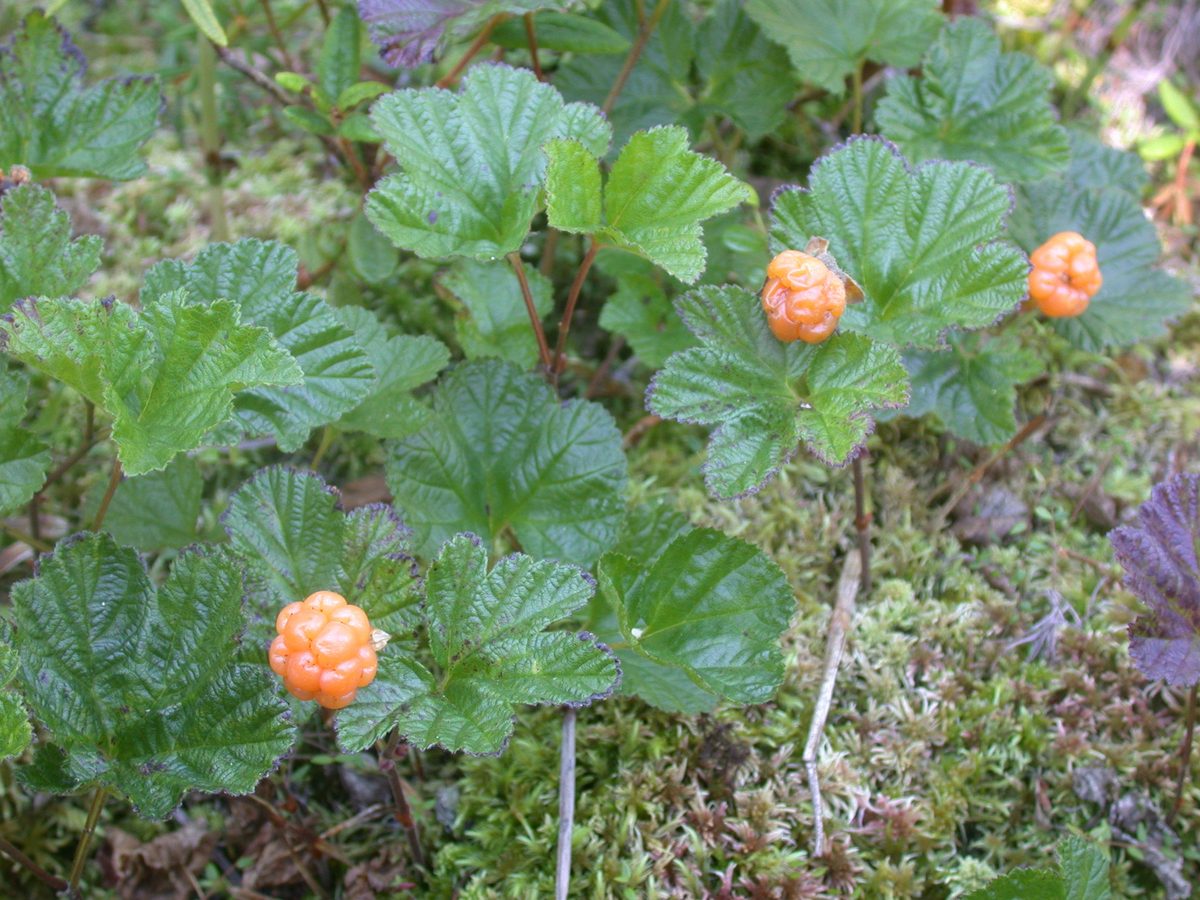
Photo: Wikimedia Commons contributor, CC BY-SA 4.0 via Wikimedia Commons

Quick facts
| Light: | Full sun and part shade (full sun preferred)11 source |
|---|---|
| Water: | Dry11 source |
| Soil: | Well drained11 source |
| Size: | 1 ft (0.3 m)11 source |
| Bloom: | White11 source |
| Cats: | Not documented by major sources |
| Dogs: | Not documented by major sources |
| Native range: | ALT, AMU, ASK, BLR, BLT, BRC, BRY, CHM, CTA, CZE, DEN, EHM, FIN, GER, GNL, GRB, IRE, IRK, JAP, KAM, KHA, KOR, KRA, KUR, LAB, MAG, MAI, MAN, MIN, MON, NBR, NFL, NOR, NSC, NUN, NWH, NWT, NWY, ONT, PEI, POL, PRM, QUE, RUC, RUN, RUW, SAK, SAS, SVA, SWE, TVA, WSB, YAK, YUK4 |
| Family: | Rosaceae |
How much light does a Cloudberry need?
Cloudberry does best in full sun. Part shade is also listed as a condition it takes. The recorded light requirement is simply sun, with full sun as the preferred setting and part shade as the second option. The plant itself stays low, reaching up to about 1 ft (0.3 m) tall. Hours of direct sun per day are not documented for this plant.
- Light: Full sun and part shade (full sun preferred)1
How often to water a Cloudberry
Cloudberry is listed for dry soil moisture, and the value on file is simply Dry. The record gives dry as both its lowest and its highest moisture level. Its drainage is recorded as well drained. Moisture levels wetter than dry are not documented for this plant. A watering schedule is not documented for it either.
- Water: Dry1
Best soil for a Cloudberry
Cloudberry is listed for well-drained soil. The soil moisture recorded for it is dry. It is a herbaceous perennial forb about 4 to 12 in (10-30 cm) high. A soil pH range is not documented for this plant. Soil texture, depth and amendments are not documented either, so drainage and dryness are the two soil conditions on file.
- Soil drainage: Well drained1
How to propagate a Cloudberry
The recorded propagation methods for cloudberry are seed and division. The plant reproduces primarily vegetatively from rhizomes. Seed is also on the list of methods, alongside division. Timing, depth and temperature for sowing seed are not documented. The best time to divide a clump is not documented either.
- Propagation: Seed and division2
Common problems
The EPPO Global Database records the whitemarked tussock moth, Orgyia leucostigma, on Rubus plants. It also records the leafy gall bacterium, Rhodococcus fascians, on Rubus. Signs of damage and control methods for either problem are not documented for this page.
| Problem | Kind |
|---|---|
| Whitemarked tussock moth | Pest |
| Leafy gall bacterium | Disease |
Is Cloudberry toxic to cats and dogs?
Recommended supplies
- Soil: a free-draining mix, and a pot with a drainage hole.
Questions and answers
- How much sun does cloudberry need?
- Cloudberry prefers full sun, and part shade is also listed as a setting it takes. The recorded light requirement is sun. The plant stays low, up to about 1 ft (0.3 m) tall.
- How tall does cloudberry grow, and what color are its flowers?
- Cloudberry grows up to about 1 ft (0.3 m) tall. It is a herbaceous perennial forb, 4 to 12 in (10-30 cm) high. The bloom color recorded for it is white.
- Is cloudberry native to the United States?
- Cloudberry has native status in both Alaska and the lower 48 states. Its native range is a list of regional codes that includes FIN, NOR, SWE and GNL. The list also includes CAN-region codes such as LAB, QUE and ONT.
Sources
- Lady Bird Johnson Wildflower Center. https://www.wildflower.org/plants/result.php?id_plant=RUCH. Accessed 24 September 2026.
- USDA Forest Service Fire Effects Information System. https://www.fs.usda.gov/database/feis/plants/shrub/rubcha/all.html. Accessed 24 October 2026.
- EPPO Global Database. https://gd.eppo.int/taxon/RUBCH/pests. Accessed 12 October 2026.
- Royal Botanic Gardens, Kew (World Checklist of Vascular Plants). https://sftp.kew.org/pub/data-repositories/WCVP/wcvp.zip. Accessed 4 June 2026.
How this page was made
- Written with AI assistance from the sources listed on this page. AI is never the source of a fact.