White Ash (Fraxinus americana)
Formerly Fraxinus discolor, Fraxinus biltmoreana, Fraxinus juglandifolia
White ash grows best outdoors in full sun. It also tolerates part shade, full shade and soil from dry to wet. It grows rapidly, reaching 60-120 ft (18.3-36.6 m) tall. It is hardy outdoors in USDA zones 3a to 9b. It is propagated by seed. Its soil pH can range from 5 to 8. No cited source lists its toxicity to cats or dogs.
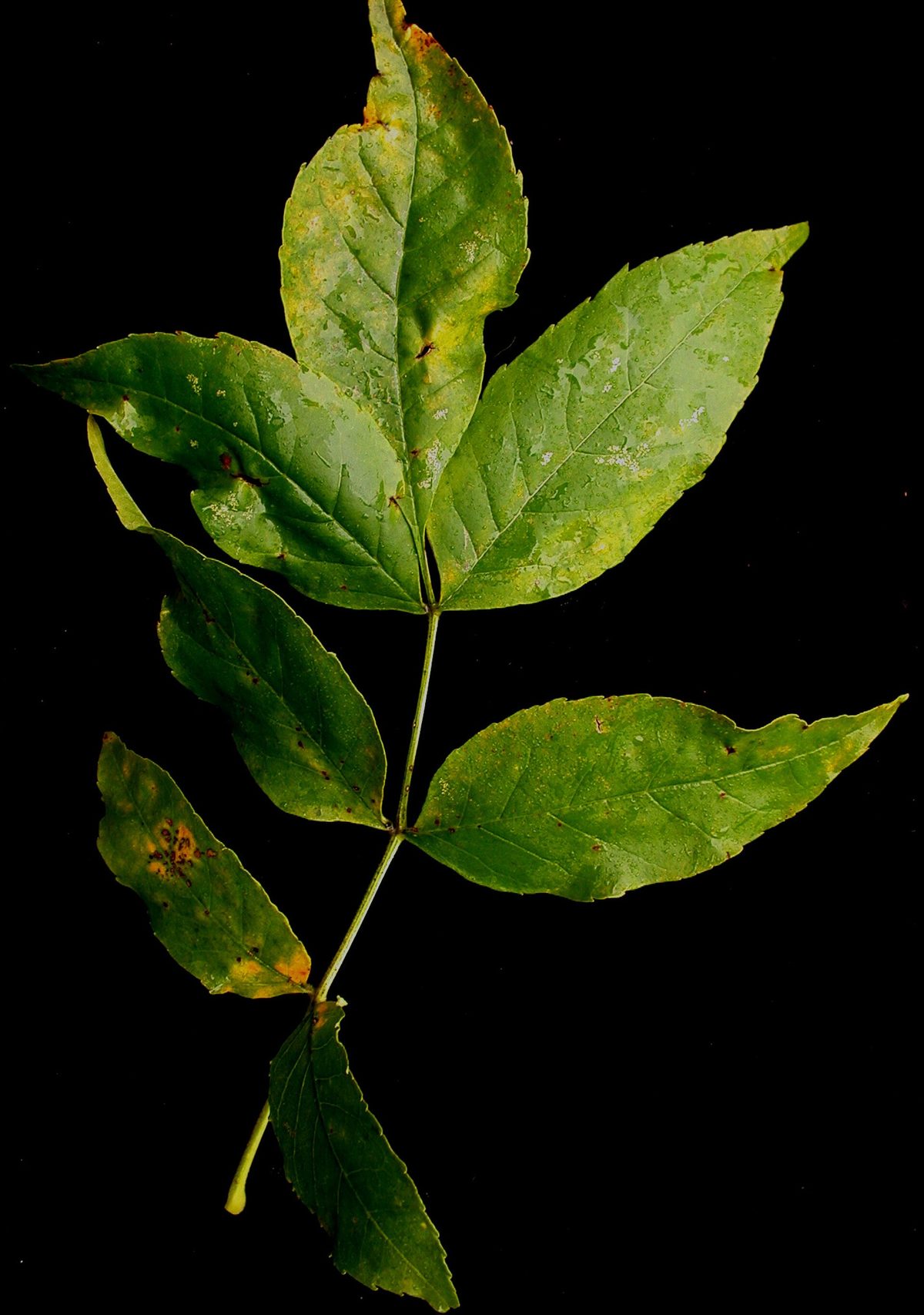
Photo: Wikimedia Commons contributor, CC BY-SA 4.0 via Wikimedia Commons

Quick facts
| Light: | Full sun, part shade and full shade (full sun preferred)11 source |
|---|---|
| Water: | Dry to wet21 source |
| Soil: | Well drained, moist, occasionally dry and occasionally wet; pH 5–812 |
| Hardiness: | Zones 3a–9b11 source |
| Size: | 60–120 ft (18.29–36.58 m) × 50–75 ft (15.24–22.86 m)11 source |
| Growth rate: | Rapid11 source |
| Bloom: | Apr–May, Green and purple11 source |
| Cats: | Not documented by major sources |
| Dogs: | Not documented by major sources |
| Family: | Oleaceae |
How much light does a White Ash need?
Outdoors, this tree tolerates a very wide span of light, from full sun down through part shade to full shade. Among those options, full sun is the exposure this species prefers, and part shade or full shade are both listed as conditions it also tolerates.
- Light: Full sun, part shade and full shade (full sun preferred)1
How often to water a White Ash
Soil moisture for this tree can swing from dry to wet without trouble outdoors. It also grows well in soil that stays consistently moist with good drainage. That same soil can tolerate occasional dry spells as well as occasional periods of very wet or saturated conditions.
- Water: Dry to wet2
Best soil for a White Ash
Good drainage suits this tree the best outdoors, along with soil that stays consistently moist. It also tolerates soil that is occasionally wet or saturated, as well as soil that occasionally turns dry. Its soil pH range runs from 5 to 8. That means this tree can handle soil as acidic as pH 5 and as alkaline as pH 8.
Hardiness and temperature
USDA hardiness zones documented for this tree run from 3a, 3b, 4a and 4b, up through zones 5a and 5b too. It is also hardy in zones 6a, 6b, 7a, 7b, 8a, 8b, 9a and 9b, covering a span of fourteen half-zones in total overall.
- Hardiness: Zones 3a–9b1
How to plant a White Ash
Before planting, confirm your USDA zone falls between 3a and 9b, the hardiness range documented for this tree. Give it enough room to reach its full size, since it can spread 50-75 ft (15.2-22.9 m) wide at maturity. Choose a site with full sun if possible, since that is the exposure this species prefers, though part shade and full shade both work too. Pick soil with good drainage and consistent moisture where you can, since this species also tolerates soil that occasionally turns wet or dry. The soil where you plant it can range from pH 5 to pH 8, covering acidic to alkaline conditions. New trees are started from seed rather than any other documented method. It can reach a mature height of 60-120 ft (18.3-36.6 m).
- Hardiness: Zones 3a–9b1
Winter care
Winters as cold as USDA zone 3a are within the hardiness range documented for this tree, up through the milder winters of zone 9b. That span includes 3a, 3b, 4a, 4b, 5a, 5b, 6a, 6b, 7a, 7b, 8a, 8b, 9a and 9b, fourteen half-zones rated winter-hardy.
- Hardiness: Zones 3a–9b1
How to propagate a White Ash
Seed is the method documented for growing new white ash trees, and no other propagation method is documented for starting new plants of this species. If you want to grow white ash yourself, seed is the single method recorded for producing new trees, rather than any vegetative technique.
- Propagation: Seed1
Common problems
Watch for emerald ash borer, redheaded ash borer, lilac borer, carpenterworm and oystershell scale on this tree outdoors. It can also attract leaf miners, fall webworms, ash sawflies, ash flower gall mite and ash leaf curl aphid. Disease problems recorded for this species include verticillium wilt, ganoderma root rot, surface fungal rot, fungal leaf spots and powdery mildew. It can also develop rust, anthracnose, cankers and ash yellows.
- Common pests: emerald ash borer, redheaded ash borer, lilac borer, carpenterworm, oystershell scale, leaf miners, fall webworms, ash sawflies, ash flower gall mite and ash leaf curl aphid111
- Common diseases: verticillium wilt, ganoderma root rot, surface fungal rot, fungal leaf spots, powdery mildew, rust, anthracnose, cankers and ash yellows11
| Problem | Kind |
|---|---|
| Emerald ash borer | Pest |
| Redheaded ash borer | Pest |
| Lilac borer | Pest |
| Carpenterworm | Pest |
| Oystershell scale | Pest |
| Leaf miners | Pest |
| Fall webworms | Pest |
| Ash sawflies | Pest |
| Ash flower gall mite | Pest |
| Ash leaf curl aphid | Pest |
| Verticillium wilt | Disease |
| Ganoderma root rot | Disease |
| Surface fungal rot | Disease |
| Fungal leaf spots | Disease |
| Powdery mildew | Disease |
| Rust | Disease |
| Anthracnose | Disease |
| Cankers | Disease |
| Ash yellows | Disease |
Is White Ash toxic to cats and dogs?
Recommended supplies
- Soil: a free-draining mix, and a pot with a drainage hole.
Questions and answers
- What kind of soil does white ash need?
- This tree prefers soil with reliable drainage and steady moisture, though it can handle occasional dry or wet spells too. Its soil pH can range from 5 to 8, so both acidic and alkaline soil work for it. It also handles soil moisture ranging from dry to wet outdoors.
- Is white ash toxic to cats or dogs?
- No cited source on this page lists white ash as toxic or non-toxic to cats or dogs, so that status is not documented here.
- How big does white ash get and how fast does it grow?
- This species grows rapidly outdoors. It typically reaches 60-120 ft (18.3-36.6 m) tall at maturity. It spreads 50-75 ft (15.2-22.9 m) wide at maturity too. It also prefers full sun outdoors, though it tolerates part shade and full shade as well.
Sources
- NC State Extension Gardener Plant Toolbox. https://plants.ces.ncsu.edu/plants/fraxinus-americana/. Accessed 15 November 2026.
- Cornell University CALS Woody Plants Database. https://woodyplants.cals.cornell.edu/plant/98. Accessed 15 November 2026.
How this page was made
- Written with AI assistance from the sources listed on this page. AI is never the source of a fact.