Japanese Persimmon (Diospyros kaki)
Formerly Embryopteris kaki, Diospyros amara, Diospyros argyi
Grow this tree outdoors in full sun. Keep its soil at medium moisture. It is a deciduous tree reaching 20-30 ft (6.1-9.14 m) tall. It is hardy in USDA zones 7a to 10b. Its growth rate is moderate. It grows best in soil with a pH of 6 to 8. No cited source lists it as toxic or non-toxic to cats or dogs, so that is not documented.
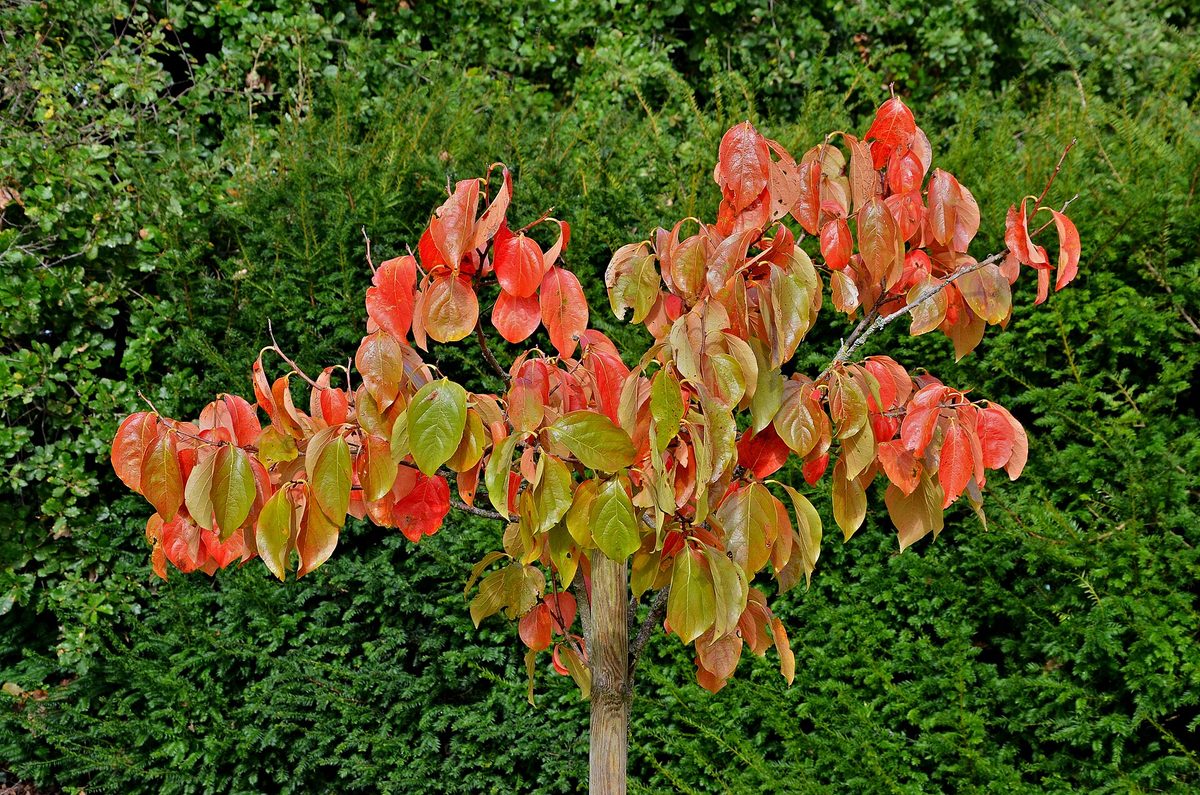
Photo: JLPC, CC BY-SA 3.0 via Wikimedia Commons

Quick facts
| Light: | Full sun11 source |
|---|---|
| Water: | Medium11 source |
| Soil: | pH 6–811 source |
| Hardiness: | Zones 7a–10b11 source |
| Size: | 20–30 ft (6.1–9.14 m) × 15–25 ft (4.57–7.62 m)11 source |
| Growth rate: | Moderate11 source |
| Bloom: | Apr11 source |
| Cats: | Not documented by major sources |
| Dogs: | Not documented by major sources |
| Family: | Ebenaceae |
How much light does a Japanese Persimmon need?
Full sun is the light level Japanese persimmon needs outdoors, meaning at least six hours of direct sunlight each day. That is also the only light level recorded for this species, so plan its outdoor planting spot around getting that much direct sunlight every day.
- Light: Full sun1
How often to water a Japanese Persimmon
Japanese persimmon needs a medium amount of water outdoors, enough to keep its soil loamy and moist yet still well-drained, which the species grows best in. Check the soil before you water again, and aim to keep it at that same medium moisture level rather than letting it dry out completely.
- Water: Medium1
Best soil for a Japanese Persimmon
Soil with a pH between 6 and 8 suits Japanese persimmon best outdoors in the garden. That whole 6-to-8 band is treated as neutral soil for this species growing outdoors. Loamy soil that holds some moisture while still draining well also suits it outdoors in the ground. Along with that moisture balance, a soil pH of 6.0 to 6.5 also suits it best outdoors.
- Soil pH: pH 6–81
Hardiness and temperature
This tree can survive outdoor winters across USDA hardiness zones 7a through 10b, the full range recorded for it outdoors. Below that range, cold can become a problem, since the species does not tolerate temperatures under 10.4°F (-12°C). Because it generally blooms mid-April outdoors, late frosts around that time can still damage it, so timing matters in colder parts of its range.
Pruning a Japanese Persimmon
Pruning for Japanese persimmon outdoors is minimal, limited to removing dead or injured branches as you notice them. You should also cut out any branches that are growing in a crossing pattern, since that light shaping is all this tree needs beyond removing dead wood.
- Pruning: Remove dead growth only and Light shaping2
How to plant a Japanese Persimmon
Plant Japanese persimmon outdoors only within USDA hardiness zones 7a through 10b, where winter cold stays within what this tree can handle. Choose a spot there that gets full sun, since that is the light level this tree needs outdoors. Leave enough room for it to reach its mature size of 20 to 30 ft (6.1-9.14 m) tall and 15 to 25 ft (4.57-7.62 m) wide. Pick a planting site with soil in the pH range of 6 to 8, the level this tree prefers outdoors.
- Hardiness: Zones 7a–10b1
Winter care
Japanese persimmon is deciduous, so it drops its leaves outdoors each year. It can survive winter outdoors as far north as USDA zone 7a and as far south as the warmth of zone 10b. Below 10.4°F (-12°C), cold outdoors becomes more than this tree can tolerate. Even after winter ends, late frosts near its mid-April bloom time outdoors can still cause damage.
Common problems
Outdoors, watch for scale, mealybug and persimmon borer on Japanese persimmon. Leaf spot is the disease most often reported for this tree. Monitoring for the persimmon borer in particular is recommended, since it is named as a specific concern for this species. Fruit drop from this tree can also be messy outdoors.
| Problem | Kind |
|---|---|
| Scale insects | Pest |
| Mealybug | Pest |
| Persimmon borer | Pest |
| Leaf spot | Disease |
Is Japanese Persimmon toxic to cats and dogs?
Questions and answers
- What zones can you grow Japanese persimmon in outdoors?
- You can grow Japanese persimmon outdoors in USDA hardiness zones 7a through 10b. Below that range, winter cold below 10.4°F (-12°C) is more than this tree can tolerate.
- How much sun does Japanese persimmon need?
- Japanese persimmon needs full sun to grow outdoors, at least six hours of direct light every day. That is the only light level recorded for this species.
- What pests and diseases affect Japanese persimmon?
- Outdoors, watch for scale, mealybug and persimmon borer, along with leaf spot disease. Fruit drop can also be messy under this tree in the yard.
Sources
- NC State Extension Gardener Plant Toolbox. https://plants.ces.ncsu.edu/plants/diospyros-kaki/. Accessed 15 November 2026.
- Clemson Cooperative Extension Home & Garden Information Center. https://hgic.clemson.edu/factsheet/how-to-grow-persimmons-in-south-carolina/. Accessed 15 November 2026.
How this page was made
- Written with AI assistance from the sources listed on this page. AI is never the source of a fact.