Golden Shower (Cassia fistula)
Formerly Bactyrilobium fistula, Cathartocarpus fistula, Cassia fistuloides
Golden shower is a tree that grows in full sun. Its water needs are medium. It should be grown on well-drained soil. Its growth rate is rapid. Mature trees reach 30 to 40 ft (9.1–12.2 m) tall. The seeds are poisonous. No cited source documents toxicity to cats or dogs.
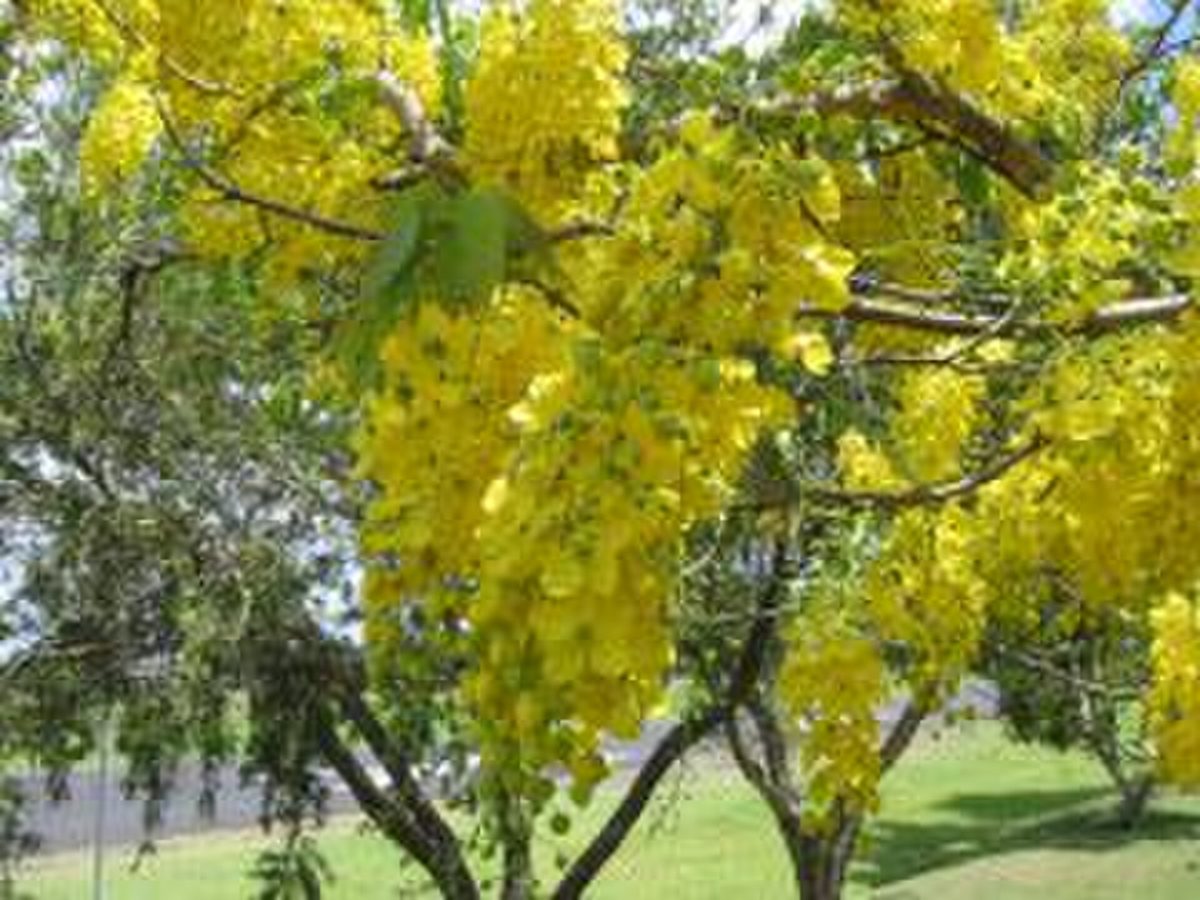
Photo: en, CC BY 2.5 via Wikimedia Commons

Quick facts
| Water: | Medium11 source |
|---|---|
| Soil: | Well drained21 source |
| Size: | 29.9–40 ft (9.1–12.2 m) × 29.9–40 ft (9.1–12.2 m)21 source |
| Growth rate: | Rapid21 source |
| Cats: | Not documented by major sources |
| Dogs: | Not documented by major sources |
| Native range: | IND, SRL4 |
| Family: | Fabaceae |
How often to water a Golden Shower
Golden shower needs a medium amount of water. Its drought tolerance is moderate. No cited source gives a watering schedule for this tree. The source says to grow it in full sun. It should also be on well-drained soil. Root rot is among the diseases listed for it. Mature trees reach 30 to 40 ft (9.1–12.2 m) tall.
- Water: Medium1
Best soil for a Golden Shower
The source says golden shower should be grown on well-drained soil. Full sun is the light requirement listed alongside it. No cited source records a soil pH range for this tree. It is a tree. Mature trees are 30 to 40 ft (9.1–12.2 m) tall. They also spread 30 to 40 ft (9.1–12.2 m) across. Its native range is recorded as IND and SRL.
- Soil drainage: Well drained2
Pruning a Golden Shower
Young trees need occasional pruning. Pruning at that age controls shape and helps develop a uniform crown. The pruning type recorded is light shaping. No cited source describes pruning of mature trees. Mature trees reach 30 to 40 ft (9.1–12.2 m) tall. They spread the same distance, 30 to 40 ft (9.1–12.2 m). The tree grows at a rapid rate.
- Pruning: Light shaping3
How to propagate a Golden Shower
The recorded propagation method for golden shower is seed. The source says the seeds are poisonous. No other propagation method is documented in cited sources. It is a tree that grows at a rapid rate. Full sun is its light requirement outdoors. Its native range is recorded as IND and SRL. In the US lower 48 and Puerto Rico, its status is introduced.
- Propagation: Seed1
Common problems
No pests are of major concern for this tree. It is occasionally bothered by caterpillars. Caterpillars are the only pest recorded. The diseases listed are mildew, leaf spot and root rot. That makes three diseases in the record. Leaf spot is one of the three. No cited source names other pests or diseases.
| Problem | Kind |
|---|---|
| Caterpillars | Pest |
| Mildew | Disease |
| Leaf spot | Disease |
| Root rot | Disease |
Is Golden Shower toxic to cats and dogs?
Recommended supplies
- Soil: a free-draining mix, and a pot with a drainage hole.
Questions and answers
- How big does golden shower grow?
- Mature trees reach 30 to 40 ft (9.1–12.2 m) in height. They spread the same distance, 30 to 40 ft (9.1–12.2 m). The growth rate is rapid.
- How much light and water does golden shower need outdoors?
- The recorded light requirement is full sun. It should be grown in full sun on well-drained soil. Water needs are medium, and drought tolerance is moderate.
- What pests and diseases affect golden shower?
- No pests are of major concern, though caterpillars occasionally bother it. The diseases listed are mildew, leaf spot and root rot. Propagation is by seed, and the seeds are poisonous.
Sources
- University of Florida IFAS Extension (EDIS). https://ask.ifas.ufl.edu/st127. Accessed 24 October 2026.
- University of Florida IFAS Extension (EDIS). https://ask.ifas.ufl.edu/publication/ST127. Accessed 24 October 2026.
- University of Florida IFAS Extension (EDIS). https://ask.ifas.ufl.edu/publication/st127. Accessed 24 October 2026.
- Royal Botanic Gardens, Kew (World Checklist of Vascular Plants). https://sftp.kew.org/pub/data-repositories/WCVP/wcvp.zip. Accessed 4 June 2026.
How this page was made
- Written with AI assistance from the sources listed on this page. AI is never the source of a fact.