Nutgrass (Cyperus rotundus)
Formerly Cyperus olivaris, Pycreus rotundus, Chlorocyperus rotundus
Purple nutsedge grows best in full sun outdoors, where it gets at least six hours of direct light a day. Its soil needs range from dry to wet, since the plant tolerates drought, poor soil, and wet ground. Established plants still manage in dry soil even though they prefer moist conditions.
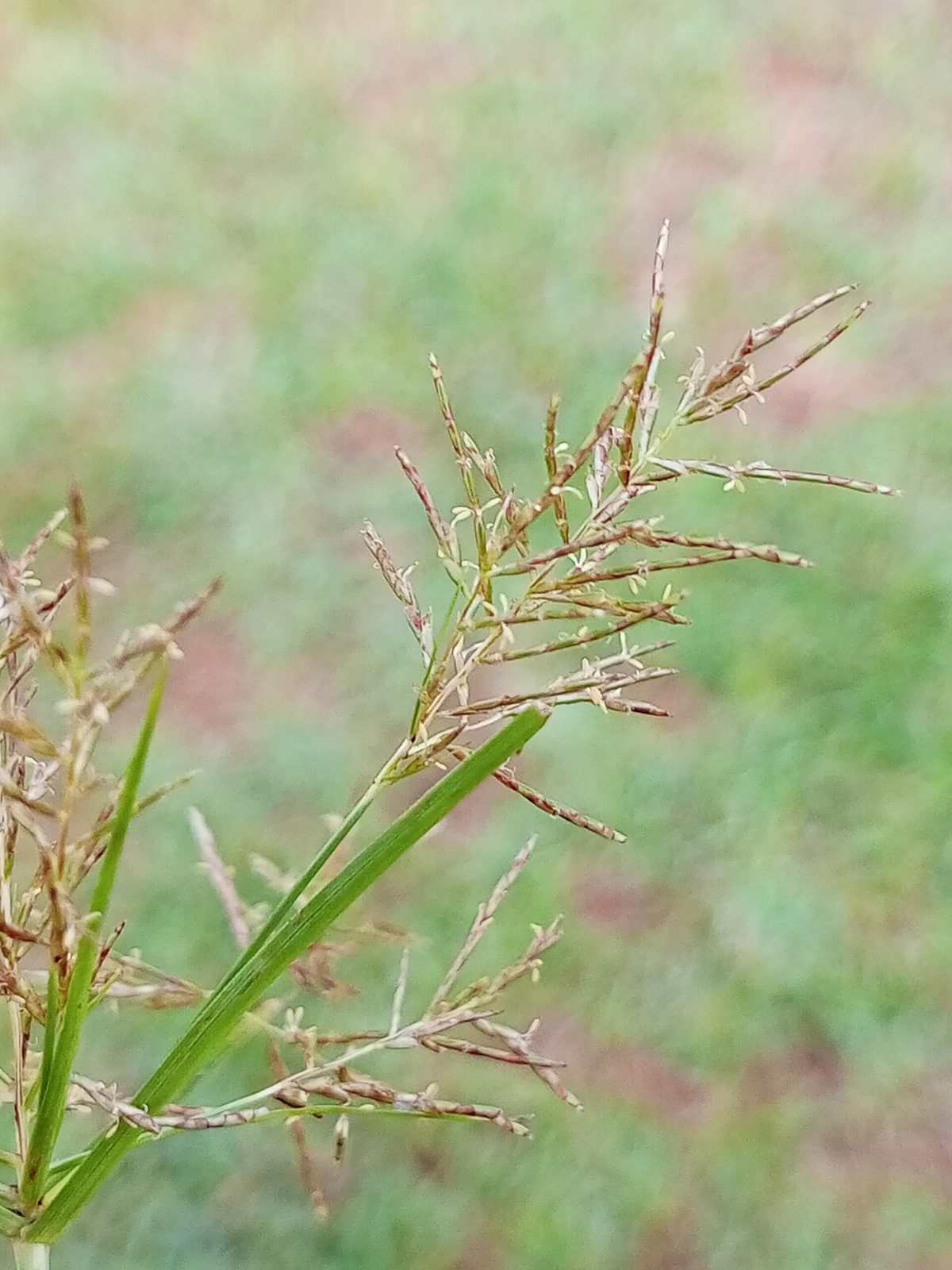
Photo: Nativeplants garden, CC BY-SA 4.0 via Wikimedia Commons

Quick facts
| Light: | Full sun11 source |
|---|---|
| Water: | Dry to wet12 |
| Soil: | Moist, occasionally dry and occasionally wet21 source |
| Hardiness: | Zones 3a–10b11 source |
| Size: | Sources differ: University of Florida IFAS Extension (EDIS) × 0.2–0.4 ft (0.05–0.13 m)231Sources differ |
| Growth rate: | Rapid111 source |
| Bloom: | Mar–Aug, Brown and purple11 source |
| Cats: | Not documented by major sources |
| Dogs: | Not documented by major sources |
| Native range: | AFG, ALB, ALD, ALG, AND, ANG, ASS, AUT, AZO, BAL, BAN, BEN, BKN, BOR, BOT, BUL, BUR, CAF, CBD, CGS, CHA, CHC, CHH, CHM, CHN, CHS, CHT, CMN, CNY, COM, CON, COR, CPP, CPV, CRL, CVI, CYP, DJI, EAI, EGY, EHM, EQG, ERI, ETH, FRA, GAB, GAM, GGI, GHA, GRC, GST, GUI, HAW, IND, IRN, IRQ, ITA, IVO, JAP, JAW, KAZ, KEN, KGZ, KOR, KRI, KZN, LBS, LBY, LES, LSI, MAU, MCI, MDG, MDR, MLI, MLW, MLY, MOL, MOR, MOZ, MRN, MRS, MTN, MYA, NAM, NAT, NCB, NCS, NEP, NGA, NGR, NNS, NSW, NTA, OFS, OGA, OMA, PAK, PAL, PHI, POR, QLD, REU, ROD, ROM, RWA, SAR, SAU, SCS, SEL, SEN, SEY, SIC, SIE, SIN, SOA, SOC, SOM, SPA, SRL, STH, SUD, SUL, SUM, SWI, SWZ, TAI, TAN, TCI, TCS, THA, TKM, TOG, TUE, TUN, TUR, TVL, TZK, UGA, UZB, VAN, VIE, WAK, WAU, WHM, WSA, YEM, YUG, ZAI, ZAM, ZIM4 |
| Family: | Cyperaceae |
How much light does a Nutgrass need?
Purple nutsedge grows best outdoors in full sun. That means it needs at least six hours of direct, unfiltered sunlight each day to perform well. Choose an open bed or border rather than a shaded corner, since full sun is the light level documented for this species outdoors. A spot that receives strong sun for most of the day matches the conditions this species is documented to need.
- Light: Full sun1
How often to water a Nutgrass
This plant's water needs span a wide range, from dry to wet soil. This plant is documented as tolerant of drought, poor soil, and wet ground. So it copes with both too little and too much moisture in the soil. It prefers soil that stays moist, but plants that are already established still do well even when the soil turns dry.
Best soil for a Nutgrass
Purple nutsedge is documented to grow in soil that is moist, occasionally dry, or occasionally wet. It does not need one steady drainage level. This range means the plant can handle soil that dries out between waterings. It also handles soil that stays wet for a stretch. A separate record lists the same plant as tolerant of drought, poor soil, and wet ground.
- Soil drainage: Moist, occasionally dry and occasionally wet2
Hardiness and temperature
Purple nutsedge is hardy across USDA zones 3a through 10b. That span reaches from cold-winter areas in the north to warm, humid regions in the south. Zone 3a marks winters far colder than zone 10b, so the rating given here covers a broad stretch of the growing map.
- Hardiness: Zones 3a–10b1
How to plant a Nutgrass
Purple nutsedge can be planted outdoors in USDA zones 3a through 10b, since this is the hardiness range documented for the species. Pick a planting site in full sun, since that is the light level this species needs once it is in the ground. Work the chosen site into soil that can handle being moist, occasionally dry, or occasionally wet. That is the drainage range the plant is documented to tolerate.
- Hardiness: Zones 3a–10b1
Winter care
Purple nutsedge is hardy outdoors from USDA zone 3a up through zone 10b, according to the zone list documented for this species. That rating covers zones 3a, 4a, 5a, 6a, 7a, 8a, 9a, and 10b, plus the zones in between marked with a b. Together they form one continuous span from the coldest to the warmest zone listed.
- Hardiness: Zones 3a–10b1
How to propagate a Nutgrass
You can propagate purple nutsedge by division, by root cuttings, or by seed. In the wild, this species spreads the same way. It uses small tubers, creeping rhizomes, or seed to start new plants without help from a gardener. All three of these routes are listed as effective ways to grow a new plant from an existing one or from seed.
- Propagation: Division, root cuttings and seed2
Common problems
Purple nutsedge has no insect pests recorded against it. It also has no known diseases recorded against it. No pest or disease problems are documented for this species. That covers both common garden insects and disease organisms such as fungi and bacteria.
Is Nutgrass toxic to cats and dogs?
Recommended supplies
- Soil: a mix that holds moisture without staying wet.
Questions and answers
- Does purple nutsedge need full sun to grow well outdoors?
- Yes, purple nutsedge needs full sun outdoors. That means at least six hours of direct, unfiltered sunlight each day for it to grow as documented.
- How can you propagate purple nutsedge?
- You can propagate this species by division, by root cuttings, or by seed. In the wild it spreads the same way, using small tubers, creeping rhizomes, or seed without any help.
- Does purple nutsedge have any common pests or diseases?
- No pest or disease problems are documented for this species, covering both common garden insects and disease organisms such as fungi.
Sources
- NC State Extension Gardener Plant Toolbox. https://plants.ces.ncsu.edu/plants/cyperus-rotundus/. Accessed 13 October 2026.
- Clemson Cooperative Extension Home & Garden Information Center. https://hgic.clemson.edu/factsheet/nutsedge/. Accessed 13 October 2026.
- University of Florida IFAS Extension (EDIS). https://ask.ifas.ufl.edu/publication/EP569. Accessed 13 October 2026.
- Royal Botanic Gardens, Kew (World Checklist of Vascular Plants). https://sftp.kew.org/pub/data-repositories/WCVP/wcvp.zip. Accessed 4 June 2026.
How this page was made
- Written with AI assistance from the sources listed on this page. AI is never the source of a fact.