Yellow Nutsedge (Cyperus esculentus)
Formerly Cyperus phymatodes, Pycreus esculentus, Pterocyperus esculentus
Yellow nutsedge grows in full sun or part shade. It tolerates a water range from dry to wet. It is listed for hardiness zones 8a to 10b. Its growth rate is rapid. It reaches 0.5–2 ft (0.15–0.61 m) tall. Its blooms are yellow, brown and red. Toxicity to cats and dogs is not documented on this page.
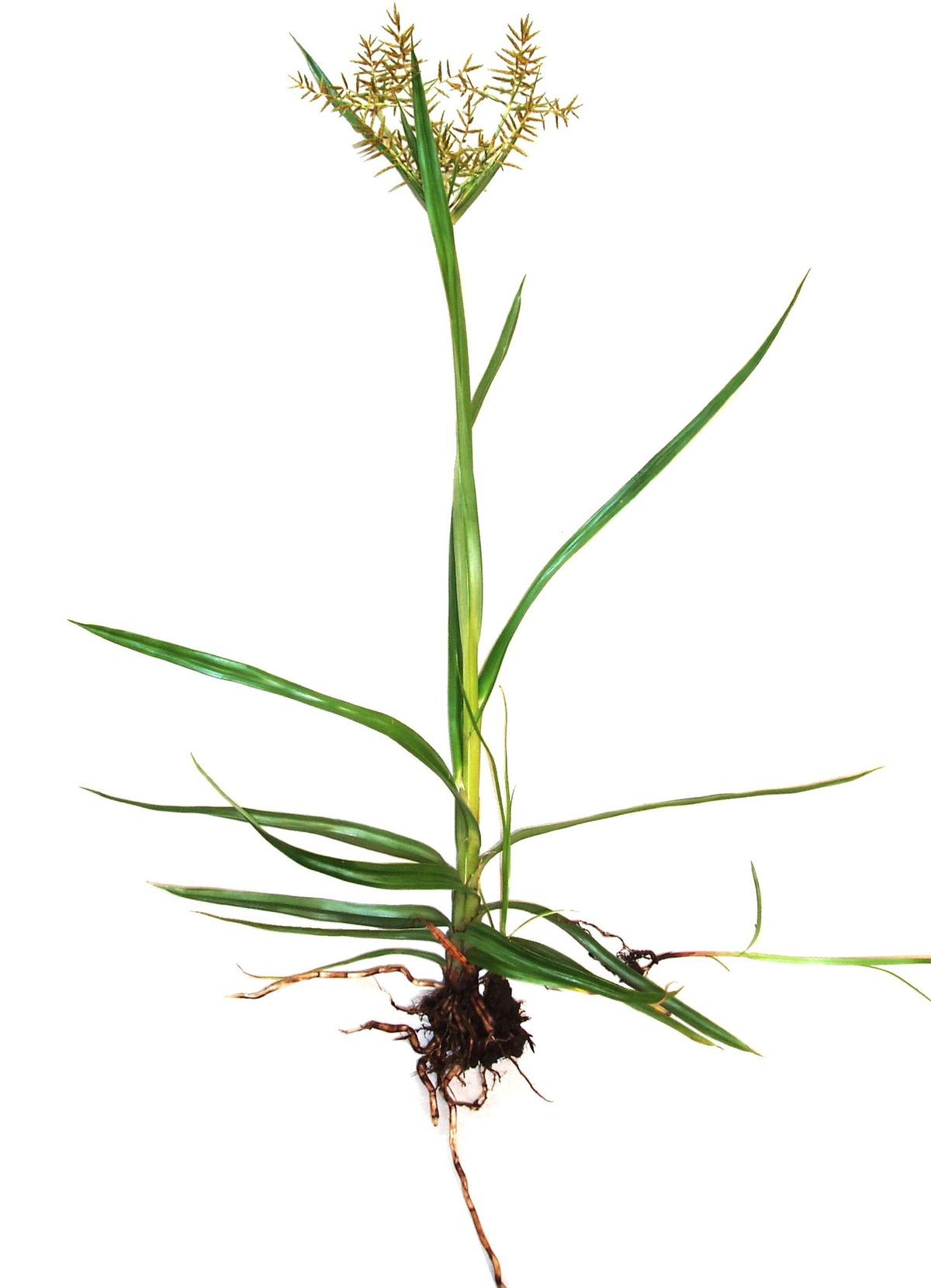
Photo: Wilcox, Mike, CC BY 4.0 via Wikimedia Commons

Quick facts
| Light: | Full sun and part shade (full sun preferred)12 |
|---|---|
| Water: | Dry to wet21 source |
| Soil: | Moist, occasionally dry, occasionally wet and poorly drained21 source |
| Hardiness: | Zones 8a–10b11 source |
| Size: | 0.5–2 ft (0.15–0.61 m) × 0.2–0.4 ft (0.05–0.13 m)31 source |
| Growth rate: | Rapid111 source |
| Bloom: | Jun–Oct, Yellow, brown and red41521 source |
| Cats: | Not documented by major sources |
| Dogs: | Not documented by major sources |
| Native range: | AFG, AGE, AGW, ALA, ALB, ALG, ANG, ARI, ARK, ARU, AZO, BAH, BAN, BEN, BER, BKN, BLZ, BOL, BOT, BRC, BUL, BUR, BZC, BZE, BZL, BZN, BZS, CAB, CAF, CAL, CHA, CLM, CMN, CNT, CNY, COL, COM, CON, COR, COS, CPI, CPP, CPV, CUB, CVI, DEL, DJI, DOM, ECU, EGY, EQG, ERI, ETH, FLA, FRA, GAB, GAL, GAM, GEO, GGI, GHA, GNB, GRC, GUA, GUI, HON, IDA, ILL, IND, INI, IOW, IRN, IRQ, ITA, IVO, JAM, KAN, KEN, KRI, KTY, LBR, LBS, LBY, LEE, LES, LOU, MAI, MAS, MDG, MDR, MIC, MIN, MLI, MLW, MOZ, MRY, MSI, MSO, MTN, MXC, MXE, MXG, MXN, MXS, MXT, MYA, NAM, NAT, NBR, NCA, NCS, NDA, NEB, NEP, NEV, NGA, NGR, NIC, NLA, NWH, NWJ, NWM, NWY, OFS, OHI, OKL, ONT, ORE, PAK, PAN, PAR, PEN, PER, POR, PUE, QUE, RHO, RWA, SCA, SDA, SEN, SIC, SIE, SOM, SPA, SUD, SWZ, TAN, TCS, TEN, TEX, TOG, TRT, TUN, TUR, TVL, UGA, URU, UTA, VEN, VER, VNA, VRG, WAS, WDC, WHM, WIN, WIS, WVA, YEM, ZAI, ZAM, ZIM6 |
| Family: | Cyperaceae |
How much light does a Yellow Nutsedge need?
Full sun is the preferred light for yellow nutsedge, meaning six or more hours of direct sunlight a day. It can persist in moderate shade as well as in full sun. The listed light range is full sun and part shade, with full sun preferred. Pick a spot with at least six hours of direct sun if you want to match the preferred condition.
How often to water a Yellow Nutsedge
The water range listed for yellow nutsedge runs from dry to wet. One extension source says it thrives in moist, poorly drained soils. The recorded drainage conditions are moist, occasionally dry, occasionally wet and poorly drained. Wet or poorly drained soil falls within the conditions listed for this plant.
- Water: Dry to wet2
Best soil for a Yellow Nutsedge
Moist soil suits yellow nutsedge. One extension source says it thrives in moist, poorly drained soils. The recorded drainage conditions are moist, occasionally dry, occasionally wet and poorly drained. The recorded water range runs from dry to wet. Poorly drained soil is included, and so is soil that is occasionally dry. Each of these conditions appears on the plant's soil list. No preferred soil pH is documented on this page.
- Soil drainage: Moist, occasionally dry, occasionally wet and poorly drained2
Hardiness and temperature
USDA hardiness zones 8a to 10b are listed for yellow nutsedge. The listing covers 8a, 8b, 9a, 9b, 10a and 10b. The lowest listed zone is 8a. The highest listed zone is 10b. A garden in zone 7 or colder sits outside the listed range. Zone 9 lies inside it. No minimum temperature or humidity preference is documented on this page.
- Hardiness: Zones 8a–10b1
How to plant a Yellow Nutsedge
Choose a spot with full sun, with part shade as the alternative. Zones 8a to 10b are the listed hardiness range. Moist soil suits it, and poorly drained soil is also on its list. Its mature spread is 0.2–0.4 ft (0.05–0.13 m). Its mature height is 0.5–2 ft (0.15–0.61 m). The growth rate is rapid. In the lower 48 US states its status is native, while in Hawaii and Puerto Rico it is introduced. Planting depth is not documented on this page.
- Hardiness: Zones 8a–10b1
Winter care
The listed hardiness range for yellow nutsedge is zones 8a to 10b. Zone 8a is the coldest zone in that range. Zone 10b is the warmest zone in that range. If your garden is in zone 7 or colder, it sits outside the listed range. If your garden is in zone 9, it sits inside the listed range. The plant type is recorded as bulb. No minimum temperature or frost protection method is documented on this page.
- Hardiness: Zones 8a–10b1
How to propagate a Yellow Nutsedge
You can propagate yellow nutsedge from root cuttings or from seed. Root cutting is one recorded method. Seed is the other recorded method. The plant type is recorded as bulb. Its growth rate is rapid. Mature plants stand 0.5–2 ft (0.15–0.61 m) tall. No timing, depth or spacing for either method is documented on this page.
- Propagation: Root cuttings and seed1
Common problems
Yellow nutsedge has no known pests or diseases on record. No common pests are listed for it. No common diseases are listed for it either. Its growth rate is rapid. It reaches 0.5–2 ft (0.15–0.61 m) tall. Its blooms are yellow, brown and red. Toxicity to cats and dogs is not documented on this page.
Is Yellow Nutsedge toxic to cats and dogs?
Recommended supplies
- Soil: a mix that holds moisture without staying wet.
Questions and answers
- Does yellow nutsedge grow in shade?
- Yellow nutsedge prefers full sun, meaning six or more hours of direct sunlight a day. Part shade is also on its listed range. It can persist in moderate shade as well as in full sun.
- Which hardiness zones suit yellow nutsedge?
- Yellow nutsedge is listed for USDA hardiness zones 8a to 10b. The listing covers 8a, 8b, 9a, 9b, 10a and 10b. Zone 7 and colder fall outside that listing.
- Does yellow nutsedge need wet soil?
- Its recorded water range runs from dry to wet. It is also recorded in moist, occasionally dry, occasionally wet and poorly drained soils. One extension source says it thrives in moist, poorly drained soils.
Sources
- NC State Extension. https://plants.ces.ncsu.edu/plants/cyperus-esculentus/. Accessed 14 October 2026.
- Penn State Extension. https://extension.psu.edu/lawn-and-turfgrass-weeds-yellow-nutsedge-cyperus-esculentus. Accessed 14 October 2026.
- NC State Extension Gardener Plant Toolbox. https://plants.ces.ncsu.edu/plants/cyperus-esculentus/common-name/yellow-nutsedge/. Accessed 31 October 2026.
- Lady Bird Johnson Wildflower Center (Native Plant Database). https://www.wildflower.org/plants/result.php?id_plant=CYES. Accessed 28 October 2026.
- University of Florida IFAS Extension (EDIS). https://ask.ifas.ufl.edu/publication/EP569. Accessed 28 October 2026.
- Royal Botanic Gardens, Kew (World Checklist of Vascular Plants). https://sftp.kew.org/pub/data-repositories/WCVP/wcvp.zip. Accessed 4 June 2026.
How this page was made
- Written with AI assistance from the sources listed on this page. AI is never the source of a fact.