Foxtail Amaranth (Amaranthus caudatus)
Formerly Amaranthus edulis, Euxolus arvensis, Amaranthus cararu
Give it full sun, or part shade. It is an annual. It grows 3–5 ft (0.91–1.52 m) tall. It spreads 1–2 ft (0.3–0.61 m) wide. The soil should drain well. Zones 2a–11b are listed. Watering and toxicity to cats and dogs are not documented here.
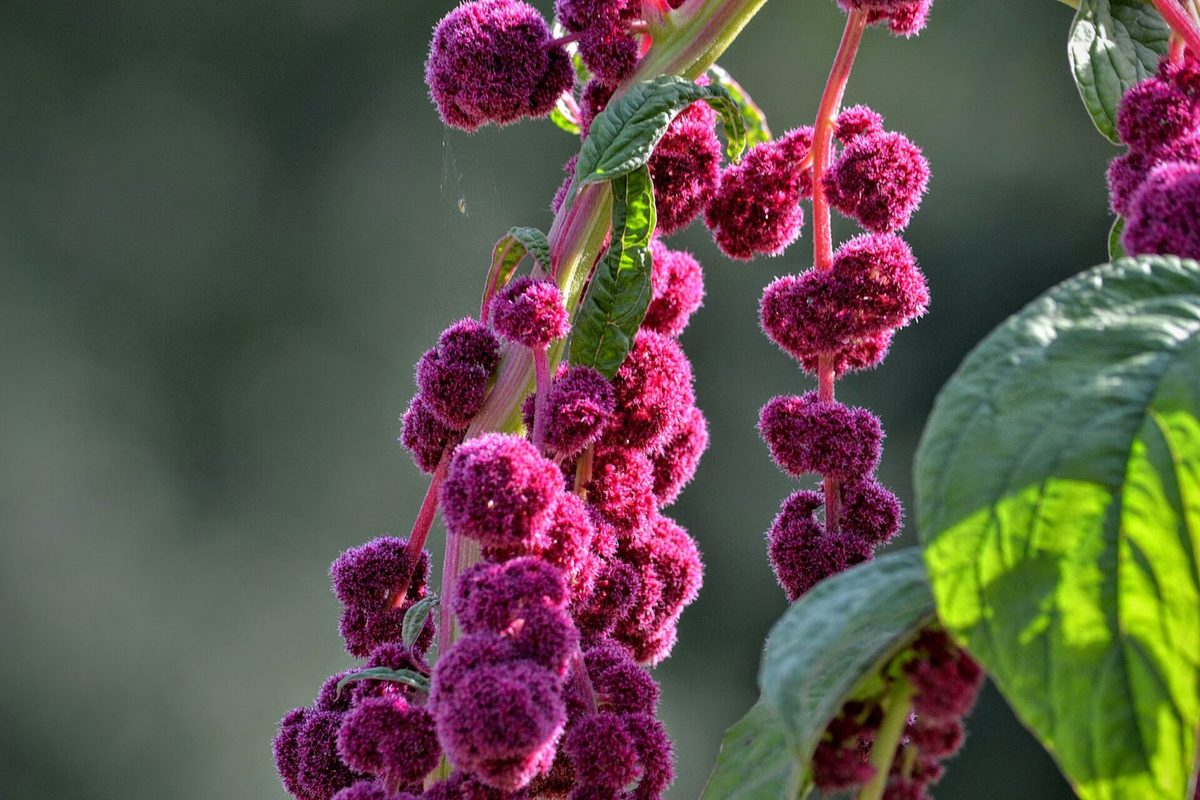
Photo: Joanna Boisse, CC BY-SA 4.0 via Wikimedia Commons

Quick facts
| Light: | Full sun and part shade (full sun preferred)121 source |
|---|---|
| Soil: | Well drained121 source |
| Hardiness: | Zones 2a–11b121 source |
| Size: | 3–5 ft (0.91–1.52 m) × 1–2 ft (0.3–0.61 m)211 source |
| Growth rate: | Moderate211 source |
| Bloom: | Jul–Aug and Sep–Oct, Yellow, red and green3211 source |
| Cats: | Not documented by major sources |
| Dogs: | Not documented by major sources |
| Native range: | AGW, BOL, ECU, PER4 |
| Family: | Amaranthaceae |
How much light does a Foxtail Amaranth need?
Foxtail amaranth does best in full sun, which is listed as its preferred light outdoors. The record defines full sun as 6 or more hours of direct sunlight a day. Part shade is also listed as a light condition for this plant, but full sun comes first. Plan for at least 6 hours of direct sun if you want to meet the preferred condition.
Best soil for a Foxtail Amaranth
The recorded soil condition for foxtail amaranth is good drainage, meaning well-drained soil. Well-drained soil is the only drainage class listed for this annual species. No other soil moisture condition is recorded for foxtail amaranth. Choose well-drained ground when you set out this plant.
Hardiness and temperature
Foxtail amaranth is listed for USDA hardiness zones 2a to 11b. The listing names each half-zone: 2a, 2b, 3a, 3b, 4a, 4b, 5a, 5b, 6a, 6b, 7a, 7b, 8a, 8b, 9a, 9b, 10a, 10b, 11a and 11b. The range is wide, running from zone 2a at the cold end to zone 11b at the warm end.
How to plant a Foxtail Amaranth
Plant foxtail amaranth where it will have room for a mature height of 3–5 ft (0.91–1.52 m). Its mature spread is 1–2 ft (0.3–0.61 m), which is the width to allow around each plant. It is an annual, and the recommended way to start it is from seed. The hardiness zones listed for it run from 2a to 11b. Pick a spot with full sun and well-drained soil. It has a moderate growth rate. Its native range is recorded as AGW, BOL, ECU and PER. Its US status is introduced in the lower 48 states and in Puerto Rico.
Winter care
Foxtail amaranth is recorded as an annual. Its hardiness listing runs from zone 2a at the cold end to zone 11b at the warm end. The listing names each half-zone in between, from 2b and 3a up through 10b and 11a. Annual is the only plant type recorded for it.
How to propagate a Foxtail Amaranth
Foxtail amaranth is propagated by seed. Seed is the recommended propagation strategy for this species. No other propagation method is recorded for it. Seed is the one method named, and it is the method to use when you want more plants. The plant is recorded as an annual.
- Propagation: Seed1
Common problems
Aphids are the pest recorded for foxtail amaranth, and they are found on flowers and foliage. Three diseases are listed: phytophthora blight, root rot and bacterial leaf spot. Phytophthora blight and root rot are described as affecting annuals and herbaceous perennials. No other pests are recorded for this species.
| Problem | Kind |
|---|---|
| Aphids | Pest |
| Phytophthora blight | Disease |
| Root rot | Disease |
| Bacterial leaf spot | Disease |
Is Foxtail Amaranth toxic to cats and dogs?
Recommended supplies
- Soil: a free-draining mix, and a pot with a drainage hole.
Questions and answers
- How much sun does foxtail amaranth need?
- Full sun is its preferred light, which means 6 or more hours of direct sunlight a day. Part shade is also listed for this plant. Full sun and part shade are the only two light conditions recorded.
- How big does foxtail amaranth get?
- Foxtail amaranth reaches a mature height of 3–5 ft (0.91–1.52 m). Its mature spread is 1–2 ft (0.3–0.61 m). It is recorded as an annual with a moderate growth rate.
- When does foxtail amaranth bloom, and in what colors?
- The bloom time is July to August and again September to October. The flower colors listed are yellow, red and green. Those are the only bloom windows and colors recorded for this plant.
Sources
- NC State Extension Gardener Plant Toolbox. https://plants.ces.ncsu.edu/plants/amaranthus-caudatus/common-name/foxtail-amaranth/. Accessed 14 October 2026.
- NC State Extension Gardener Plant Toolbox. https://plants.ces.ncsu.edu/plants/amaranthus-caudatus/. Accessed 14 October 2026.
- Chicago Botanic Garden. https://www.chicagobotanic.org/plant-information/plant-finder/amaranthus-caudatus-love-lies-bleeding. Accessed 1 November 2026.
- Royal Botanic Gardens, Kew (World Checklist of Vascular Plants). https://sftp.kew.org/pub/data-repositories/WCVP/wcvp.zip. Accessed 4 June 2026.
How this page was made
- Written with AI assistance from the sources listed on this page. AI is never the source of a fact.