Orange Eye Butterflybush (Buddleja davidii)
Formerly Buddleja variabilis, Buddleja striata, Buddleja veitchiana
Grow orange eye butterflybush in full sun, though part shade is also listed, and give it well-drained soil. It is a rapidly growing, deciduous shrub that suits USDA zones 5a–9b. Mature plants reach 6–10 ft (1.83–3.05 m) tall. Pet toxicity for cats and dogs is not documented on this page.
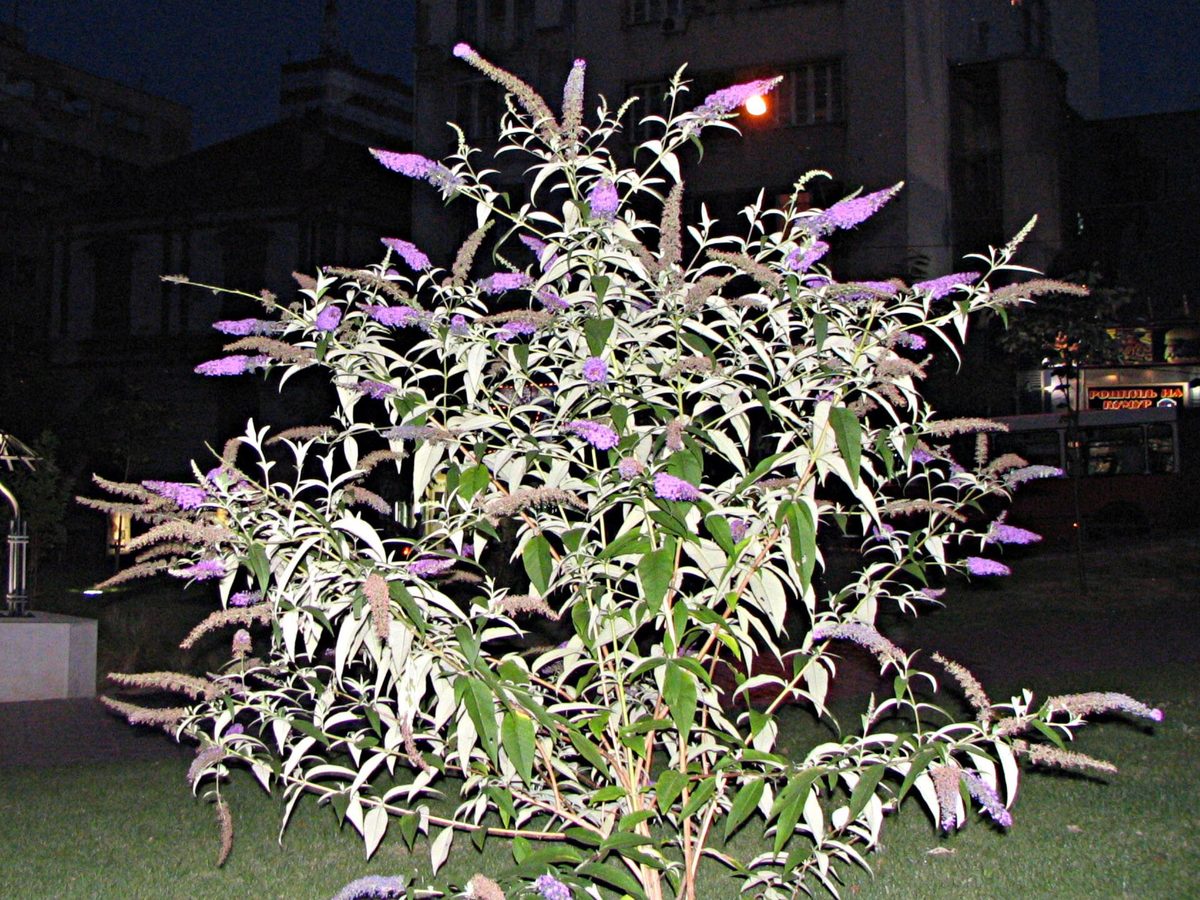
Photo: Wikimedia Commons contributor, CC BY-SA 3.0 via Wikimedia Commons

Quick facts
| Light: | Full sun and part shade (full sun preferred)11 source |
|---|---|
| Soil: | Well drained and occasionally dry; pH 6–723 |
| Hardiness: | Zones 5a–9b11 source |
| Size: | 6–10 ft (1.83–3.05 m) × 4–10 ft (1.22–3.05 m)31 source |
| Growth rate: | Rapid131311 |
| Bloom: | Jun–Sep, Purple, orange, white, blue, pink and yellow131 source |
| Cats: | Not documented by major sources |
| Dogs: | Not documented by major sources |
| Native range: | CHC, CHN, CHS, CHT6 |
| Family: | Scrophulariaceae |
How much light does an Orange Eye Butterflybush need?
This shrub prefers full sun. Part shade is also listed for it, with full sun as the preferred exposure. Flowers appear over a bloom season that runs from June to September. They range across purple, orange, white, blue, pink and yellow, and one form is lilac-colored with an orange throat.
- Light: Full sun and part shade (full sun preferred)1
Best soil for an Orange Eye Butterflybush
Plant it in well-drained soil that is occasionally dry. One plant database lists consistently moist, well-drained soil, with occasional periods of dry soil. The roots will quickly rot when waterlogged. A soil pH of 6.0 to 7.0 is preferred. Pair well-drained, occasionally dry soil with a pH between 6 and 7 for the conditions the sources describe. Waterlogged ground is the condition to avoid, while occasional dry spells in the soil are listed as acceptable.
Hardiness and temperature
Orange eye butterflybush is winter hardy in USDA hardiness zones 5 through 9. This page records the range as zones 5a–9b. Zone 5a is the coldest end of the recorded range and zone 9b is the warmest. It is a deciduous perennial shrub with a bushy habit. It grows rapidly and can reach mature size in one to two growing seasons.
- Hardiness: Zones 5a–9b1
How to plant an Orange Eye Butterflybush
Plant it where winters fall within USDA zones 5 through 9, the range in which it is winter hardy. It prefers full sun and well-drained soil. Mature plants typically reach 6–10 ft (1.83–3.05 m) tall. The spread is typically 4–10 ft (1.22–3.05 m), with a rather open, arching form. Leave room for that width when you set the shrub. It reaches mature size in one to two growing seasons. Its recorded native range uses the region codes CHC, CHN, CHS and CHT.
- Hardiness: Zones 5a–9b1
Winter care
This is a deciduous shrub, and it is winter hardy in USDA zones 5 through 9. The recorded range is zones 5a–9b. Its best flowers appear when the plant is severely pruned in late winter. Its roots will quickly rot when waterlogged. It is described as a perennial shrub with a bushy habit.
- Hardiness: Zones 5a–9b1
How to propagate an Orange Eye Butterflybush
You can propagate this shrub from seed or from stem cuttings. Even cut stems can re-sprout. The plant also spreads by seed. Stem cuttings and seed are the two methods recorded for this shrub. It is described as a rapidly growing, sometimes weedy shrub. In the United States it is recorded as introduced in the lower 48 states, Hawaii and Puerto Rico.
Common problems
The two pests recorded for this shrub are spider mites and caterpillars. Spider mites can become a problem during drought. Foliage-feeding caterpillars are also listed among pests of trees and shrubs. No diseases are listed for this shrub in the Cornell woody plants database. NC State Extension reports no serious insect or disease problems.
| Problem | Kind |
|---|---|
| Spider mites | Pest |
| Caterpillars | Pest |
Is Orange Eye Butterflybush toxic to cats and dogs?
Recommended supplies
- Soil: a free-draining mix, and a pot with a drainage hole.
Questions and answers
- How much sun does orange eye butterflybush need?
- It prefers full sun, and part shade is also listed for it. Flowers appear from June to September in a range of colors, including purple, orange, white, blue, pink and yellow.
- How big does orange eye butterflybush get?
- It typically grows 6–10 ft (1.83–3.05 m) tall and 4–10 ft (1.22–3.05 m) wide, with a rather open, arching form. Growth is rapid, and it can reach mature size in one to two growing seasons.
- What soil does orange eye butterflybush need?
- It needs well-drained soil with a pH of 6 to 7, and occasional dry periods are acceptable. Its roots will quickly rot when waterlogged.
Sources
- NC State Extension. https://plants.ces.ncsu.edu/plants/buddleja-davidii/. Accessed 12 October 2026.
- Cornell University CALS Woody Plants Database. https://woodyplants.cals.cornell.edu/plant/416. Accessed 12 October 2026.
- Clemson Cooperative Extension HGIC. https://hgic.clemson.edu/factsheet/butterfly-bush/. Accessed 12 October 2026.
- Oregon State University Extension Service. https://extension.oregonstate.edu/catalog/pub/ec-1589-invasive-weeds-forestland-butterfly-bush. Accessed 12 October 2026.
- UC Statewide IPM Program. https://ipm.ucanr.edu/home-and-landscape/buddleja/. Accessed 12 October 2026.
- Royal Botanic Gardens, Kew (World Checklist of Vascular Plants). https://sftp.kew.org/pub/data-repositories/WCVP/wcvp.zip. Accessed 4 June 2026.
How this page was made
- Written with AI assistance from the sources listed on this page. AI is never the source of a fact.