Pacific Madrone (Arbutus menziesii)
Formerly Arbutus procera, Arbutus menziesii var. elliptica, Arbutus menziesii var. oblongifolia
Pacific madrone grows best outdoors in full sun. It also tolerates part shade in a less sunny spot. A full-sun site matches its preferred exposure outdoors. Outdoors, this tree has low water needs. It is suited to dry soil. Once it is established, water it infrequently and deeply, or not at all. No cited source on this page records whether this tree is toxic to cats or dogs.
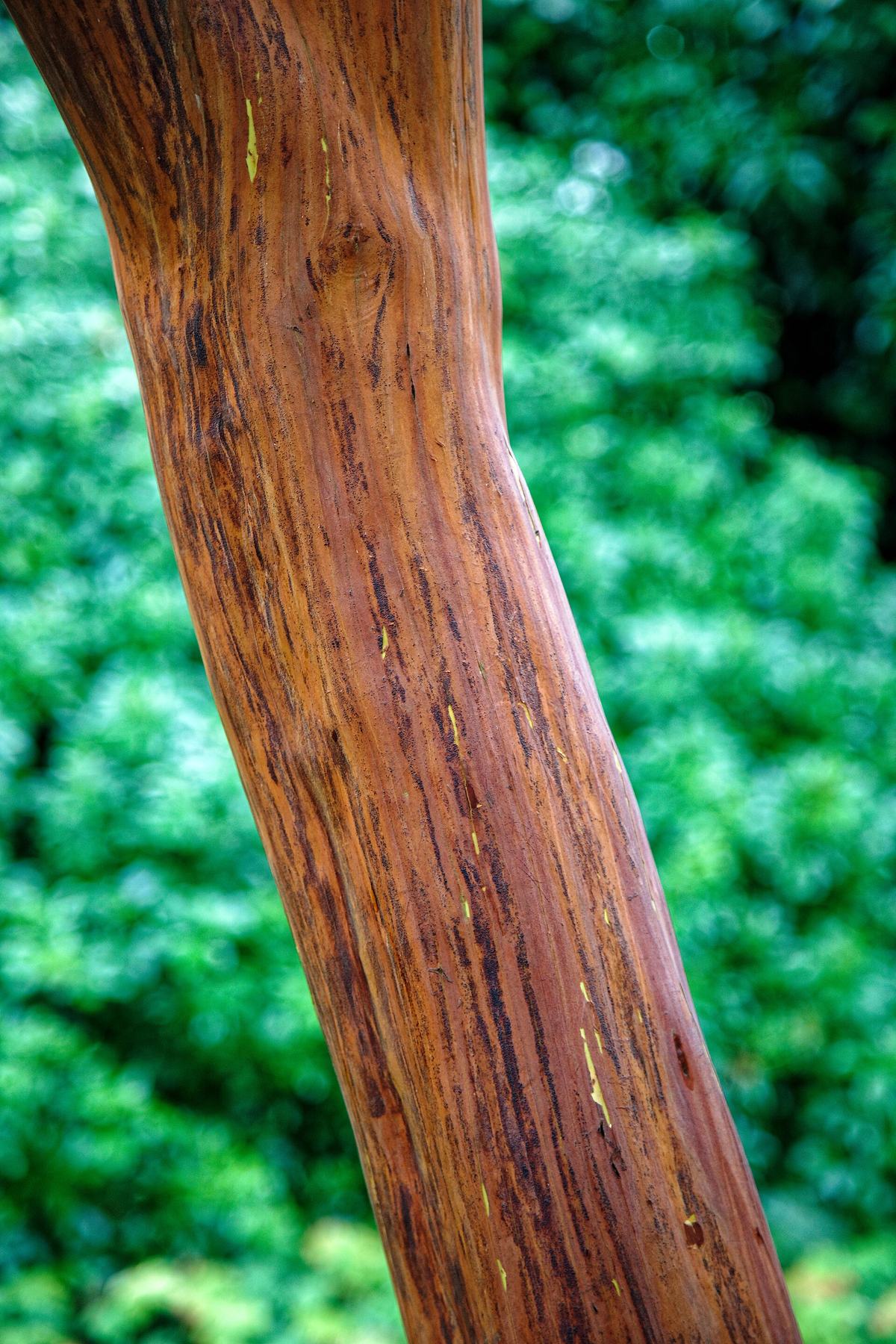
Photo: Acabashi, CC BY-SA 4.0 via Wikimedia Commons

Quick facts
| Light: | Full sun and part shade (full sun preferred)12 |
|---|---|
| Water: | Dry23 |
| Soil: | Well drained21 source |
| Hardiness: | Zones 5a–8b11 source |
| Size: | 30–65 ft (9.14–19.81 m) × 20–50 ft (6.1–15.24 m)11 source |
| Growth rate: | Moderate11 source |
| Bloom: | Mar–May, White and green211 source |
| Cats: | Not documented by major sources |
| Dogs: | Not documented by major sources |
| Family: | Ericaceae |
How much light does a Pacific Madrone need?
Outdoors, this tree prefers full sun, meaning six or more hours of direct sunlight a day, though it also tolerates part shade in a site with less exposure. Full sun is the preferred exposure for this tree, with part shade standing as a tolerated alternative. A spot that gets direct sun for most of the day works well outdoors for this tree. If only part shade is available, this tree can still be planted there.
How often to water a Pacific Madrone
This tree has low water needs outdoors and is suited to dry soil. Once it is established, water it infrequently and deeply, or not at all. This low water use makes it a fit for a dry site in the landscape. Even once established, it rarely needs extra water during dry weather. A planting site with dry conditions matches what this tree is suited to outdoors. You do not need to water on a regular schedule once this tree is established outdoors.
Best soil for a Pacific Madrone
Well-drained soil is what Pacific madrone needs outdoors. One source describes its native soil as sandy. That same source calls the soil acidic as well as well-drained. Choose a planting site where water drains away quickly. Avoid low spots where water collects after rain. A loose, sandy texture helps the site meet that drainage need. This page's sources do not give a specific pH range for this tree. A sandy, well-drained mix is close to what this tree's native soil provides. That combination of texture and drainage is what the cited source describes.
- Soil drainage: Well drained2
Hardiness and temperature
Pacific madrone's outdoor hardiness falls between USDA zones 5a and 8b. Zone 5a marks its coldest end, and zone 8b its warmest. This tree has a low humidity preference outdoors. One source notes it most likely does best in cooler mountain conditions. That same source points to the heat and humidity of coastal and lowland areas as less suitable. None of the sources checked here state a minimum winter temperature for this tree. Those zone numbers describe the coldest winter temperatures this tree can take outdoors. A cooler climate outdoors is likely to suit this tree better than a hot, humid one.
- Hardiness: Zones 5a–8b1
Fertilizing a Pacific Madrone
No fertilizer is needed for Pacific madrone outdoors. One cited source specifically advises against over-fertilizing this particular tree. Skip routine feeding schedules for this species. Let it grow without added plant food. This tree's fertilizer needs are best described as none at all. Resist the urge to feed this tree on a seasonal schedule outdoors.
- Fertilizer: Not needed1
How to plant a Pacific Madrone
You can plant Pacific madrone outdoors in USDA zones 5a through 8b. Plant it in full sun, its preferred exposure, or in part shade if that is what the site offers. At maturity, this tree reaches 30-65 ft (9.14-19.81 m) tall and spreads 20-50 ft (6.1-15.24 m) wide. Give it enough room to reach that mature spread without crowding nearby plantings. It is classed as a tree in the sources checked for this page. This tree's mature spread of 20-50 ft (6.1-15.24 m) is worth planning for before you plant outdoors. Its mature height of 30-65 ft (9.14-19.81 m) is also part of the space this tree will need outdoors.
- Hardiness: Zones 5a–8b1
Winter care
Pacific madrone survives outdoors through winter in USDA zones 5a to 8b. Zone 5a marks the coldest end of that range, and zone 8b the warmest. Below zone 5a, winter cold outdoors falls outside the range this tree is rated for. This tree keeps its leaves year-round, since it is evergreen. That means it carries foliage through the winter months outdoors. Outside that zone range, winter cold outdoors exceeds what this tree is documented to handle.
- Hardiness: Zones 5a–8b1
How to propagate a Pacific Madrone
Seed and stem cuttings are the propagation materials recorded for Pacific madrone outdoors. The stem cuttings used for this tree are softwood cuttings, one of its recorded propagation materials. Seed is the other method recorded for this species. You can start a new plant from either material. Gardeners outdoors have both a seed-grown and a cutting-grown option for this tree. No other propagation material besides seed and softwood cuttings is recorded for this species.
- Propagation: Seed and stem cuttings2
Common problems
Aphids are a pest recorded on Pacific madrone outdoors. This tree is also susceptible to several diseases, including phytophthora, cankers, leaf spot, and root rot. No other pest besides aphids is named for this species in the sources checked here. These four diseases are the ones recorded for Pacific madrone outdoors. Watch for aphids and for signs of these four diseases on this tree outdoors.
| Problem | Kind |
|---|---|
| Aphids | Pest |
| Phytophthora | Disease |
| Canker | Disease |
| Leaf spot | Disease |
| Root rot | Disease |
Is Pacific Madrone toxic to cats and dogs?
Recommended supplies
- Soil: a free-draining mix, and a pot with a drainage hole.
Questions and answers
- Does Pacific madrone need full sun?
- Pacific madrone prefers full sun outdoors, meaning six or more hours of direct sunlight a day. It also tolerates part shade as a recorded alternative. A bright, open site matches its preferred exposure outdoors.
- How much water does Pacific madrone need?
- Outdoors, this tree has low water needs and is suited to dry soil. Once it is established, water it infrequently and deeply, or not at all. Regular watering beyond that is not needed for this tree outdoors.
- Is Pacific madrone toxic to cats or dogs?
- No cited source checked for this page records whether Pacific madrone is toxic to cats or dogs, so no toxicity status is given here.
Sources
- NC State Extension Gardener Plant Toolbox. https://plants.ces.ncsu.edu/plants/arbutus-menziesii/. Accessed 15 November 2026.
- Lady Bird Johnson Wildflower Center. https://www.wildflower.org/plants/result.php?id_plant=ARME. Accessed 15 November 2026.
- Oregon State University Extension Service. https://extension.oregonstate.edu/news/grow-oregons-iconic-madrone-care-patience. Accessed 15 November 2026.
How this page was made
- Written with AI assistance from the sources listed on this page. AI is never the source of a fact.