Northern Catalpa (Catalpa speciosa)
Formerly Catalpa bignonioides var. speciosa
Give northern catalpa full sun, with part shade also listed, and expect low water use. It is hardy in USDA zones 4a to 8b. The tree is deciduous and grows 75–100 ft (22.86–30.48 m) tall. Toxicity to cats is not documented on this page. Toxicity to dogs is not documented here either.
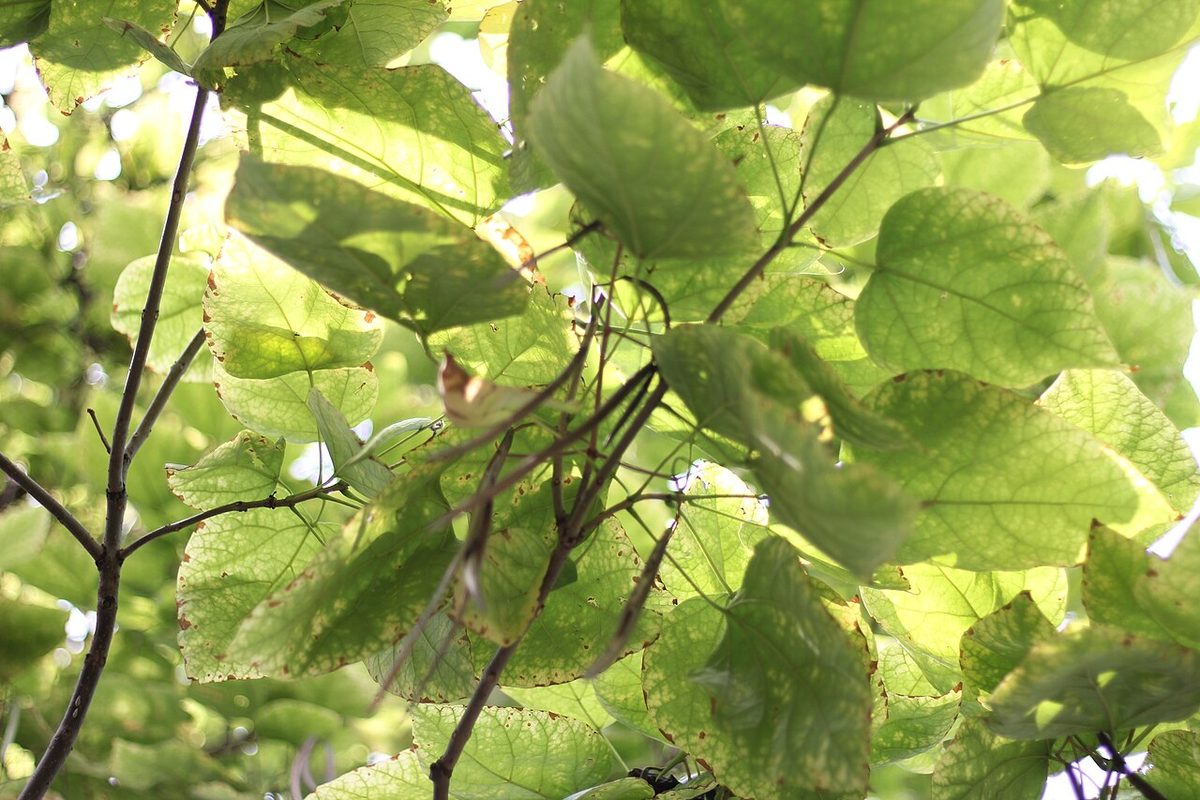
Photo: Zerocool.marko, CC BY-SA 4.0 via Wikimedia Commons

Quick facts
| Light: | Full sun and part shade (full sun preferred)12 |
|---|---|
| Water: | Dry31 source |
| Soil: | Well drained, moist, occasionally wet and occasionally dry; pH 5–8421 source |
| Hardiness: | Zones 4a–8b11 source |
| Size: | 75–100 ft (22.86–30.48 m) × 8–16 ft (2.44–4.88 m)511 source |
| Growth rate: | Moderate11 source |
| Bloom: | Apr–Jun, White, orange and purple511 source |
| Cats: | Not documented by major sources |
| Dogs: | Not documented by major sources |
| Native range: | ALA, ARK, CNT, GEO, ILL, INI, IOW, KAN, KTY, LOU, MAS, MIC, MSI, MSO, NCA, NDA, NEB, NWH, NWM, NWY, OHI, OKL, PEN, SCA, SDA, TEN, TEX, UTA, VER, VRG, WDC, WVA8 |
| Family: | Bignoniaceae |
How much light does a Northern Catalpa need?
Northern catalpa grows in full sun or part shade, and full sun is the preferred condition. Full sun here means six or more hours of direct sunlight a day. Part shade is also a listed growing condition for this tree. When you have a choice of sites, pick the sunnier one.
How often to water a Northern Catalpa
Expect low water use from northern catalpa. Dry is the recorded value at both the lower and upper end of its water range. Occasionally wet soil is listed as a condition it tolerates. Occasional periods of dry soil are listed as tolerated too. Moist, well drained soil is also on the same list.
- Water: Dry3
Best soil for a Northern Catalpa
Northern catalpa is listed for well drained and moist soil. The moisture conditions run from occasionally saturated, very wet soil at one end to occasional dry periods at the other. The listed pH range runs from 5 to 8, which covers acid to alkaline soil. A pH of 5.0 to 8.0 is the range given as tolerated. Acid soil and alkaline soil both fall inside that range.
Hardiness and temperature
Northern catalpa is listed for zones 4a to 8b. The listed zones are 4a, 4b, 5a, 5b, 6a, 6b, 7a, 7b, 8a and 8b. Zone 4a is the coldest zone listed and zone 8b the warmest. No cited source records a minimum temperature for this tree. Humidity is not documented here either.
- Hardiness: Zones 4a–8b1
How to plant a Northern Catalpa
Northern catalpa is listed for planting in zones 4a to 8b. Plan for a large tree, because the listed height is 75–100 ft (22.86–30.48 m). The listed spread is 8–16 ft (2.44–4.88 m). Full sun is the preferred light, and part shade is also listed. The tree is native in the lower 48 US states. Its growth rate is listed as moderate.
- Hardiness: Zones 4a–8b1
Winter care
Northern catalpa is a deciduous tree. It is listed as hardy from zone 4a to zone 8b. Zone 4a is the coldest zone listed. No cited source records a minimum temperature, so a specific cold limit is not documented here. Winter protection steps are not documented for this species either.
- Hardiness: Zones 4a–8b1
How to propagate a Northern Catalpa
Three propagation methods are listed for northern catalpa: seed, stem cuttings and root cuttings. The stem cuttings are semi-hardwood cuttings taken in late summer. Root cuttings are taken in late fall. The source says the tree will root from either kind of cutting. Seed is the third listed method, and the evidence on file gives no further detail for it.
- Propagation: Seed, stem cuttings and root cuttings5
Common problems
Catalpa worm and whitemarked tussock moth are the pests listed for northern catalpa. Four diseases are listed: leaf spot, powdery mildew, verticillium wilt and Texas root rot. Neither list says how common each problem is. No treatment advice is documented for any of them here.
| Problem | Kind |
|---|---|
| Catalpa worm | Pest |
| Whitemarked tussock moth | Pest |
| Leaf spot | Disease |
| Powdery mildew | Disease |
| Verticillium wilt | Disease |
| Texas root rot | Disease |
Is Northern Catalpa toxic to cats and dogs?
Recommended supplies
- Soil: a free-draining mix, and a pot with a drainage hole.
Questions and answers
- How much sun does northern catalpa need?
- Northern catalpa grows in full sun or part shade, and full sun is preferred. Full sun means six or more hours of direct sunlight a day. Part shade is the other listed condition for this tree.
- What color are northern catalpa flowers?
- The listed bloom colors are white, orange and purple. One description gives large, showy, bell-shaped flowers with frilled rims. Purple and lavender both appear as flower colors in one listing. The listed bloom season runs from April to June.
- How big does northern catalpa get?
- Northern catalpa reaches 75–100 ft (22.86–30.48 m) tall. The listed spread is 8–16 ft (2.44–4.88 m). Its growth rate is listed as moderate. It is a deciduous tree. It is native in the lower 48 US states.
Sources
- NC State Extension Gardener Plant Toolbox. https://plants.ces.ncsu.edu/plants/catalpa-speciosa/. Accessed 15 October 2026.
- Cornell University CALS Woody Plants Database. https://woodyplants.cals.cornell.edu/plant/47. Accessed 15 October 2026.
- Oregon State University Extension Service. https://extension.oregonstate.edu/gallery/fire-resistant-plant-profiles-trees. Accessed 15 October 2026.
- Cornell University CALS Woody Plants Database. https://woodyplants.cals.cornell.edu/plant/view?id=47. Accessed 31 October 2026.
- Lady Bird Johnson Wildflower Center. https://www.wildflower.org/plants/result.php?id_plant=casp8. Accessed 15 October 2026.
- EPPO Global Database. https://gd.eppo.int/taxon/CTLSP/pests. Accessed 15 October 2026.
- Penn State Extension. https://extension.psu.edu/catalpa-diseases. Accessed 15 October 2026.
- Royal Botanic Gardens, Kew (World Checklist of Vascular Plants). https://sftp.kew.org/pub/data-repositories/WCVP/wcvp.zip. Accessed 4 June 2026.
How this page was made
- Written with AI assistance from the sources listed on this page. AI is never the source of a fact.