Western Redcedar (Thuja plicata)
Formerly Thuja gigantea, Thuja wareana, Thuja menziesii
Western redcedar (Thuja plicata) is an evergreen tree that grows in full sun, part shade or full shade, with full sun preferred. Its water needs run from medium to wet, and it prefers soil that is moist and well drained. Pet toxicity for cats and dogs is not documented in the sources checked for this page.
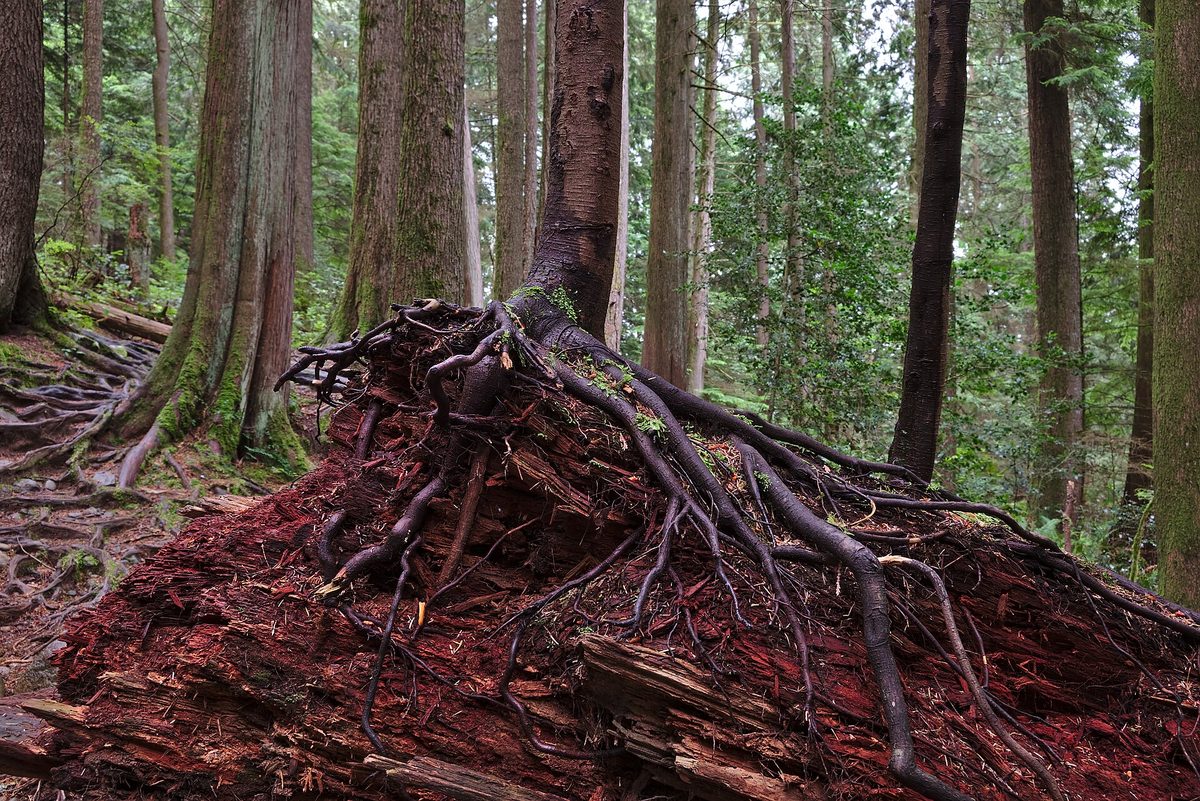
Photo: Trougnouf, CC BY 4.0 via Wikimedia Commons

Quick facts
| Light: | Full sun, part shade and full shade (full sun preferred)12 |
|---|---|
| Water: | Medium to wet21 source |
| Soil: | Well drained and moist; pH 5–813 |
| Hardiness: | Zones 5a–7b14 |
| Size: | Sources differ: USDA Forest Service Fire Effects Information System (FEIS) × 15–25 ft (4.57–7.62 m)1425Sources differ |
| Growth rate: | Moderate141 |
| Bloom: | , Red and purple121 source |
| Cats: | Not documented by major sources |
| Dogs: | Not documented by major sources |
| Native range: | ABT, ASK, BRC, CAL, IDA, MNT, ORE, WAS7 |
| Family: | Cupressaceae |
How much light does a Western Redcedar need?
Western redcedar grows in full sun, partial shade or dappled sunlight. Full sun is the preferred exposure for this tree, and part shade and full shade are also listed. Any of these three exposures suits the species. It is a large, native, long-lived evergreen tree in the cypress family, with needled foliage.
How often to water a Western Redcedar
Water needs for western redcedar run from medium to wet. Moist conditions and wet conditions are both listed for this species. The preferred soil is consistently moist, well drained and high in organic matter. Soil drainage is recorded as well drained and moist. Water ranges from medium at the drier end to wet at the other.
- Water: Medium to wet2
Best soil for a Western Redcedar
The soil should be consistently moist, well drained and high in organic matter. Both well drained and moist are recorded as drainage conditions for this tree. Western redcedar tolerates acid to alkaline soil, with a pH from 5.0 to 8.0. A pH of 5.0 is at the acid end of what the tree tolerates, and 8.0 is at the alkaline end. Organic matter is part of the preferred soil description, alongside moisture and drainage.
Hardiness and temperature
Western redcedar is listed for hardiness zones 5a to 7b. Zones 5a, 5b, 6a, 6b, 7a and 7b are all included in that range. Several cultivars may do well in zones 5 to 7. No cited source records a minimum temperature for this tree, so that figure is not documented here. Humidity needs are not documented either.
How to plant a Western Redcedar
Check that your site falls within hardiness zones 5a to 7b. Allow for a mature spread of 15 to 25 ft (4.57 to 7.62 m). The tree prefers full sun but also grows in part shade or full shade. Soil should be consistently moist, well drained and high in organic matter. The tolerated soil pH runs from 5.0 to 8.0. Its growth rate is moderate. Western redcedar is native to the lower 48 US states and Alaska.
Winter care
Western redcedar is an evergreen tree. The listed hardiness range is zones 5a to 7b. Several cultivars may do well in zones 5 to 7. No cited source records a minimum temperature, so a winter low figure is not documented here. Winter protection advice is also not documented.
How to propagate a Western Redcedar
You can propagate western redcedar by seed or by stem cuttings. Layering is also listed as a method. The listed methods are seed, stem cuttings and layering. Cuttings treated with rooting hormone root very well. Each of these three methods is named for western redcedar.
Common problems
Recorded pests include the brown marmorated stink bug, hemlock looper and velvet longhorned beetle. Recorded diseases include silver leaf disease, annosus root rot, phytophthora root rot, cypress canker and laminated root rot. Five diseases are recorded for this tree, and three pests. Phytophthora root rot is one of the five diseases.
| Problem | Kind |
|---|---|
| Brown marmorated stink bug | Pest |
| Hemlock looper | Pest |
| Velvet longhorned beetle | Pest |
| Silver leaf disease | Disease |
| Annosus root rot | Disease |
| Phytophthora root rot | Disease |
| Cypress canker | Disease |
| Laminated root rot | Disease |
Is Western Redcedar toxic to cats and dogs?
Recommended supplies
- Soil: a free-draining mix, and a pot with a drainage hole.
Questions and answers
- What light does western redcedar grow in?
- Western redcedar grows in full sun, partial shade or dappled sunlight. Full sun is the preferred exposure, and full shade is also listed. It is a needled evergreen tree in the cypress family.
- Which hardiness zones suit western redcedar?
- The tree is listed for zones 5a to 7b. Several cultivars may do well in zones 5 to 7. No cited source records a minimum temperature, so that figure is not documented here.
- What soil does western redcedar prefer?
- It prefers consistently moist, well-drained soil that is high in organic matter. It tolerates acid to alkaline soil, with a pH from 5.0 to 8.0. Its water range runs from medium to wet.
Sources
- NC State Extension Gardener Plant Toolbox. https://plants.ces.ncsu.edu/plants/thuja-plicata/. Accessed 14 October 2026.
- Lady Bird Johnson Wildflower Center. https://www.wildflower.org/plants/result.php?id_plant=thpl. Accessed 14 October 2026.
- Cornell University CALS Woody Plants Database. https://woodyplants.cals.cornell.edu/plant/256. Accessed 14 October 2026.
- Utah State University Extension. https://extension.usu.edu/treebrowser/catalog/redcedar-western. Accessed 14 October 2026.
- USDA Forest Service Fire Effects Information System (FEIS). https://www.fs.usda.gov/database/feis/plants/tree/thupli/all.html. Accessed 14 October 2026.
- EPPO Global Database. https://gd.eppo.int/taxon/THUPL/pests. Accessed 14 October 2026.
- Royal Botanic Gardens, Kew (World Checklist of Vascular Plants). https://sftp.kew.org/pub/data-repositories/WCVP/wcvp.zip. Accessed 4 June 2026.
How this page was made
- Written with AI assistance from the sources listed on this page. AI is never the source of a fact.