Cornelian Cherry (Cornus mas)
Formerly Cornus mascula, Macrocarpium mas, Cornus praecox
Grow cornelian cherry outdoors in full sun to part shade. Keep its soil medium moist to medium wet. It grows at a moderate pace outdoors. This tree is hardy in zones 4a to 8b. It reaches about 15-25 ft (4.6-7.6 m) tall. Part shade also works if full sun is not an option. No cited source here documents toxicity to cats or dogs for this plant.
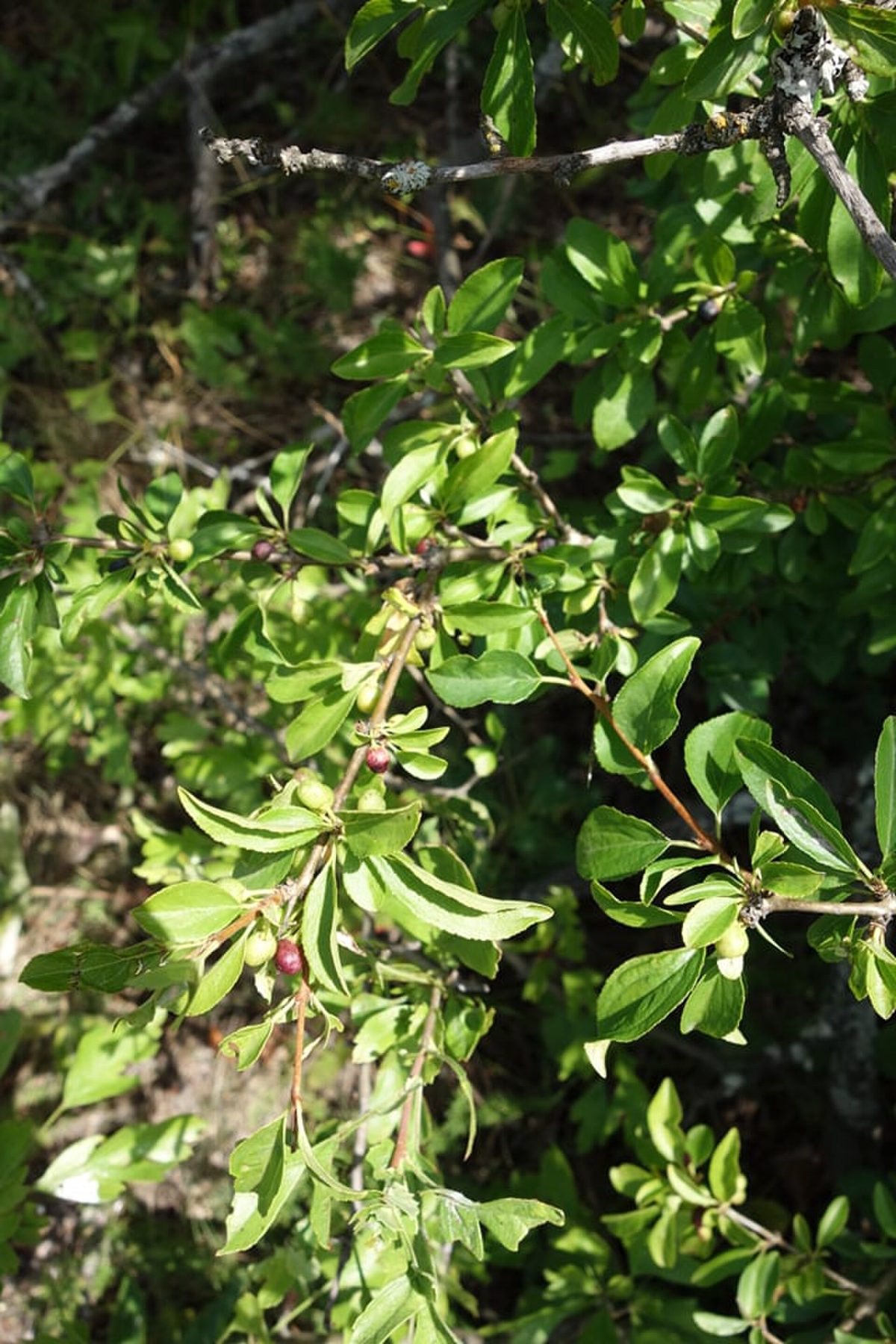
Photo: Milimidragan 92, CC BY-SA 4.0 via Wikimedia Commons

Quick facts
| Light: | Full sun and part shade (full sun preferred)12 |
|---|---|
| Water: | Medium to wet11 source |
| Soil: | Well drained and moist; pH 5–8123 |
| Hardiness: | Zones 4a–8b11 source |
| Size: | 15–25 ft (4.57–7.62 m) × 12–18 ft (3.66–5.49 m)21 source |
| Growth rate: | Moderate11 source |
| Bloom: | Yellow15 |
| Cats: | Not documented by major sources |
| Dogs: | Not documented by major sources |
| Native range: | ALB, AUT, BGM, BUL, CZE, EAI, FRA, GER, HUN, ITA, KRY, LBS, NCS, ROM, SWI, TCS, TUE, TUR, UKR, YUG6 |
| Family: | Cornaceae |
How much light does a Cornelian Cherry need?
Cornelian cherry flowers and fruits best with direct sun for most of the day outdoors. It also grows in part shade, though bloom and fruit set may be lighter there. Pick a spot where the tree gets at least a few hours of sun if full sun is not possible. Consistent light also supports the moderate growth rate this species keeps once it settles in. This light need holds across its full hardiness range, from USDA zones 4a to 8b.
How often to water a Cornelian Cherry
Soil moisture for cornelian cherry should stay medium moist to medium wet outdoors. It is not suited to soil that dries out for long stretches. Water on a regular basis so the root zone stays in that medium to medium-wet range. Soil that drains well while holding some moisture is the best match for this need. This watering need applies across the whole USDA zone range for this tree, 4a to 8b.
- Water: Medium to wet1
Best soil for a Cornelian Cherry
Cornelian cherry's roots need soil that drains well but holds some moisture. Soil that stays soggy for long periods does not match this preference. This species also tolerates a wide soil pH range, from about 5 to 8. That span covers soil from fairly acidic to slightly alkaline, which gives some flexibility in planting sites. Pick a planting site where water does not pool after rain, since standing water works against the well-drained part of this preference.
Hardiness and temperature
Cornelian cherry is rated for USDA hardiness zones 4a to 8b outdoors. That span runs from cold northern climates up through warm, mild winter regions. No cited source here gives an exact minimum temperature in degrees for this species. Gardeners outside zones 4a through 8b should check local conditions before planting outdoors. In the wild, this tree grows across parts of Europe and western Asia, consistent with that broad zone range. It also tolerates both full sun and part shade, which helps it adapt to different regional climates. Across that range, soil moisture needs stay in the medium to medium-wet band regardless of zone.
- Hardiness: Zones 4a–8b1
Pruning a Cornelian Cherry
Cornelian cherry takes well to light shaping, where you trim to control size and shape outdoors. It also tolerates hard renewal pruning, cutting back older growth harder to refresh the plant. Light shaping keeps the natural form, while hard renewal pruning works well if the tree has grown out of bounds.
- Pruning: Light shaping and Hard renewal pruning4
How to plant a Cornelian Cherry
Choose a planting site that gets full sun to part shade, since that outdoor exposure suits cornelian cherry best. This tree is hardy outdoors across USDA zones 4a to 8b. Pick soil that drains well but holds some moisture, with a pH between about 5 and 8. Keep new plantings in the medium to medium-wet moisture range while roots establish. Space new trees about 12-18 ft (3.7-5.5 m) apart to match their mature spread outdoors. This species is native to parts of Europe and western Asia and is considered introduced in the lower 48 United States.
- Hardiness: Zones 4a–8b1
Winter care
Winter survival for cornelian cherry depends on staying within USDA zones 4a to 8b outdoors. No cited source here gives an exact minimum winter temperature for this species. Outside that range, extra winter protection may be needed. Well-drained soil also helps roots avoid sitting in cold, wet ground over winter. In the wild, this tree grows across parts of Europe and western Asia, matching that hardiness range. Keep soil in the medium to medium-wet range through fall so roots enter winter well hydrated. Full sun exposure during the growing season also helps the tree build strength for winter.
- Hardiness: Zones 4a–8b1
How to propagate a Cornelian Cherry
Growers propagate cornelian cherry by grafting onto rootstock, by stem cuttings, or by root cuttings. Stem cuttings and root cuttings are two other ways to start new plants from a parent tree. Choose whichever method matches the tools and plant material you have on hand, since all three are documented options for this species.
- Propagation: Grafting, stem cuttings and root cuttings1
Common problems
Watch cornelian cherry outdoors for calico scale, Japanese maple scale, oyster-shell scale, dogwood sawfly, and leafhoppers. On the disease side, it can develop botrytis blight, crown canker, bacterial leaf scorch, powdery mildew, or septoria leaf spot. These are the pests and diseases documented for cornelian cherry outdoors.
| Problem | Kind |
|---|---|
| Calico scale | Pest |
| Dogwood sawfly | Pest |
| Japanese maple scale | Pest |
| Leafhoppers | Pest |
| Oyster shell scale | Pest |
| Botrytis blight | Disease |
| Crown canker | Disease |
| Bacterial leaf scorch | Disease |
| Powdery mildew | Disease |
| Septoria leaf spot | Disease |
Is Cornelian Cherry toxic to cats and dogs?
Recommended supplies
- Soil: a free-draining mix, and a pot with a drainage hole.
Questions and answers
- Does cornelian cherry need full sun?
- Cornelian cherry does best outdoors in full sun, though it also tolerates part shade. Full sun usually brings on better bloom and fruit set.
- How cold hardy is cornelian cherry?
- Cornelian cherry is hardy outdoors across USDA zones 4a to 8b. That range spans areas with cold northern winters down to milder, warm-winter regions.
- What pests and diseases affect cornelian cherry?
- Outdoors, this tree can attract calico scale, Japanese maple scale, oyster-shell scale, dogwood sawfly, and leafhoppers. It can also develop botrytis blight, crown canker, bacterial leaf scorch, powdery mildew, or septoria leaf spot.
Sources
- NC State Extension. https://plants.ces.ncsu.edu/plants/cornus-mas/. Accessed 14 October 2026.
- University of Florida IFAS Extension (EDIS). https://ask.ifas.ufl.edu/publication/ST195. Accessed 14 October 2026.
- Clemson Cooperative Extension Home & Garden Information Center. https://hgic.clemson.edu/a-beautiful-dogwood-with-edible-fruit/. Accessed 14 October 2026.
- Penn State Extension. https://extension.psu.edu/when-corneliancherry-dogwood-blooms-spring-is-not-far-behind. Accessed 14 October 2026.
- Chicago Botanic Garden. https://www.chicagobotanic.org/plant-information/plant-finder/cornus-mas-cornelian-cherry-dogwood. Accessed 14 October 2026.
- Royal Botanic Gardens, Kew (World Checklist of Vascular Plants). https://sftp.kew.org/pub/data-repositories/WCVP/wcvp.zip. Accessed 4 June 2026.
How this page was made
- Written with AI assistance from the sources listed on this page. AI is never the source of a fact.