European Cranberrybush (Viburnum opulus)
Formerly Viburnum oxycoccos, Opulus rosea, Opulus edulis
Give European cranberrybush (Viburnum opulus) full sun or part shade, and water it at a medium level. Full sun is preferred, and the recorded water range runs from dry to medium. Toxicity to cats is not documented here, and toxicity to dogs is not documented either.
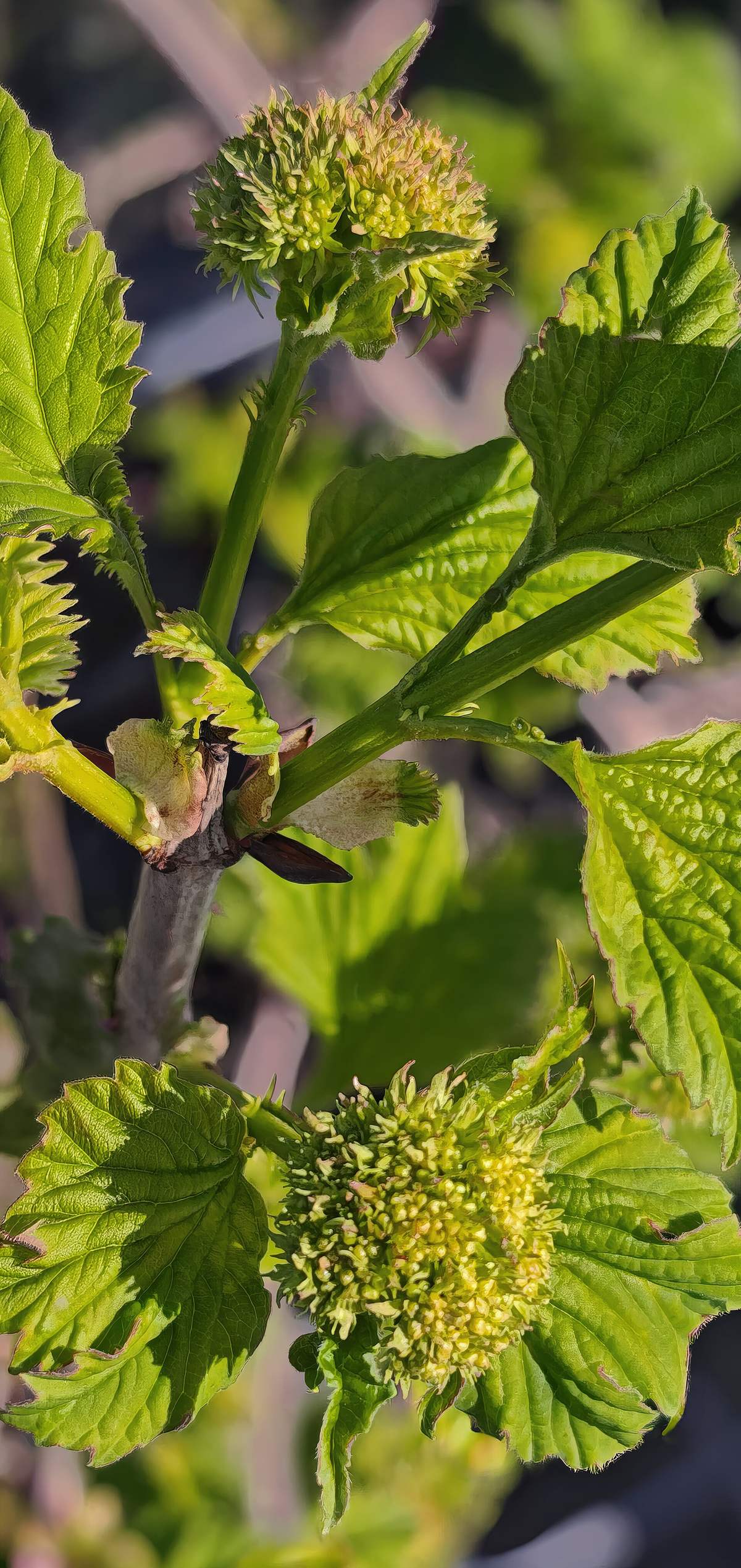
Photo: Didier Descouens, CC BY-SA 4.0 via Wikimedia Commons

Quick facts
| Light: | Full sun and part shade (full sun preferred)12 |
|---|---|
| Water: | Dry to medium31 source |
| Soil: | Well drained, moist and occasionally wet; pH 5–8124 |
| Hardiness: | Zones 2a–8b11 source |
| Size: | 10–16 ft (3.05–4.88 m) × 8–15 ft (2.44–4.57 m)12 |
| Bloom: | Apr–May and May–Jun, White511 source |
| Cats: | Not documented by major sources |
| Dogs: | Not documented by major sources |
| Native range: | ALB, ALG, ALT, AUT, BGM, BLR, BLT, BUL, CZE, DEN, FIN, FRA, GER, GRB, GRC, HUN, IRE, IRK, ITA, KAZ, KRA, KRY, NCS, NET, NOR, POL, ROM, RUC, RUE, RUN, RUS, RUW, SPA, SWE, SWI, TCS, TUR, UKR, WSB, YUG6 |
| Family: | Viburnaceae |
How much light does a European Cranberrybush need?
Full sun is the preferred light for European cranberrybush, and part shade is also listed. Full sun means six or more hours of direct sunlight a day. In the upper Piedmont region of the southeastern US, it grows best in full sun or part shade. Mature plants stand 10–16 ft (3.05–4.88 m) tall, a size to keep in mind when you choose a sunny spot.
How often to water a European Cranberrybush
Water use for this shrub is listed as medium, and the recorded range runs from dry to medium. The plant tolerates moist to wet soil, and it grows in moist, well-drained soils that are rich in humus. Its drainage record lists well drained, moist and occasionally wet conditions. No cited source gives a watering schedule, so this page does not state one.
- Water: Dry to medium3
Best soil for a European Cranberrybush
Moist, well-drained, humusy soil suits this shrub, and it is adaptable to various soils and pHs. The drainage conditions recorded for it are well drained, moist and occasionally wet. In the upper Piedmont, it also tolerates moist to wet soil. No cited source gives a soil pH range for this shrub, so that value is not documented. This page does not guess at a pH or at soil amendments.
Hardiness and temperature
This shrub is rated for hardiness zones 2a–8b. That range covers every half-zone step: 2a, 2b, 3a, 3b, 4a, 4b, 5a, 5b, 6a, 6b, 7a, 7b, 8a and 8b. Zone 2a is the cold end of the range, and zone 8b is the warm end. European cranberrybush is a deciduous shrub. No cited source records a minimum temperature for it, so that value is not documented. Humidity needs are not documented either.
- Hardiness: Zones 2a–8b1
How to plant a European Cranberrybush
Plant it in USDA zones 2a through 8b. Leave room for a shrub that reaches 8–15 ft (2.44–4.57 m) wide and 10–16 ft (3.05–4.88 m) tall. Those figures are mature sizes, not planting-day sizes. Choose a spot with full sun or part shade. The soil can be moist and well drained, or occasionally wet. This is a deciduous shrub with white flowers.
- Hardiness: Zones 2a–8b1
Winter care
Zones 2a through 8b are the recorded hardiness range for this shrub. If you garden in zone 2a, you are at the cold edge of that range, and in zone 8b you are at the warm edge. Zones colder than 2a or warmer than 8b fall outside the recorded range. European cranberrybush is a deciduous shrub. No cited source records a minimum temperature, so a lowest tolerated temperature is not documented. Winter protection methods are not documented either.
- Hardiness: Zones 2a–8b1
Common problems
Aphids, viburnum crown borer and viburnum leaf beetle are the pests recorded for this shrub. Aphids can be a problem, and viburnum crown borer can cause stem dieback. The diseases recorded are bacterial leaf spot, stem blight and powdery mildew. It has some susceptibility to each of them. Deer resistance is reported, and the plant is mildly resistant to damage by deer.
| Problem | Kind |
|---|---|
| Aphids | Pest |
| Viburnum crown borer | Pest |
| Viburnum leaf beetle | Pest |
| Bacterial leaf spot | Disease |
| Stem blight | Disease |
| Powdery mildew | Disease |
Is European Cranberrybush toxic to cats and dogs?
Recommended supplies
- Soil: a free-draining mix, and a pot with a drainage hole.
Questions and answers
- How much sun does European cranberrybush need?
- It grows in full sun or part shade, and full sun is preferred. Full sun means six or more hours of direct sunlight a day. In the upper Piedmont, it grows best in either full sun or part shade.
- How big does European cranberrybush get?
- Mature height is 10–16 ft (3.05–4.88 m), and mature spread is 8–15 ft (2.44–4.57 m). It is a deciduous shrub with white flowers. Deer resistance is reported as mild.
- Where is European cranberrybush native?
- The native range record lists region codes including FRA, GER, GRB and POL. The US native status record lists US-L48 as native. Those records state these values and nothing more.
Sources
- NC State Extension Gardener Plant Toolbox. https://plants.ces.ncsu.edu/plants/viburnum-opulus/. Accessed 15 October 2026.
- Clemson Cooperative Extension HGIC. https://hgic.clemson.edu/factsheet/viburnum/. Accessed 15 October 2026.
- Lady Bird Johnson Wildflower Center (Native Plant Database). https://www.wildflower.org/plants/result.php?id_plant=viop. Accessed 15 October 2026.
- Cornell University CALS Woody Plants Database. https://woodyplants.cals.cornell.edu/plant/274. Accessed 31 October 2026.
- Lady Bird Johnson Wildflower Center. https://www.wildflower.org/plants/result.php?id_plant=VIOP. Accessed 21 October 2026.
- Royal Botanic Gardens, Kew (World Checklist of Vascular Plants). https://sftp.kew.org/pub/data-repositories/WCVP/wcvp.zip. Accessed 4 June 2026.
How this page was made
- Written with AI assistance from the sources listed on this page. AI is never the source of a fact.