Giant Sequoia (Sequoiadendron giganteum)
Formerly Wellingtonia gigantea, Sequoia wellingtonia, Taxodium giganteum
Give giant sequoia full sun outdoors. Full sun is what it needs to grow well outdoors. Keep its soil moisture at a medium, steady level. Don't let the soil stay soggy or dry out for long. This tree needs medium water, not heavy or light watering. It also grows fast once it settles into the right spot. No cited source lists this tree's toxicity to cats or dogs.
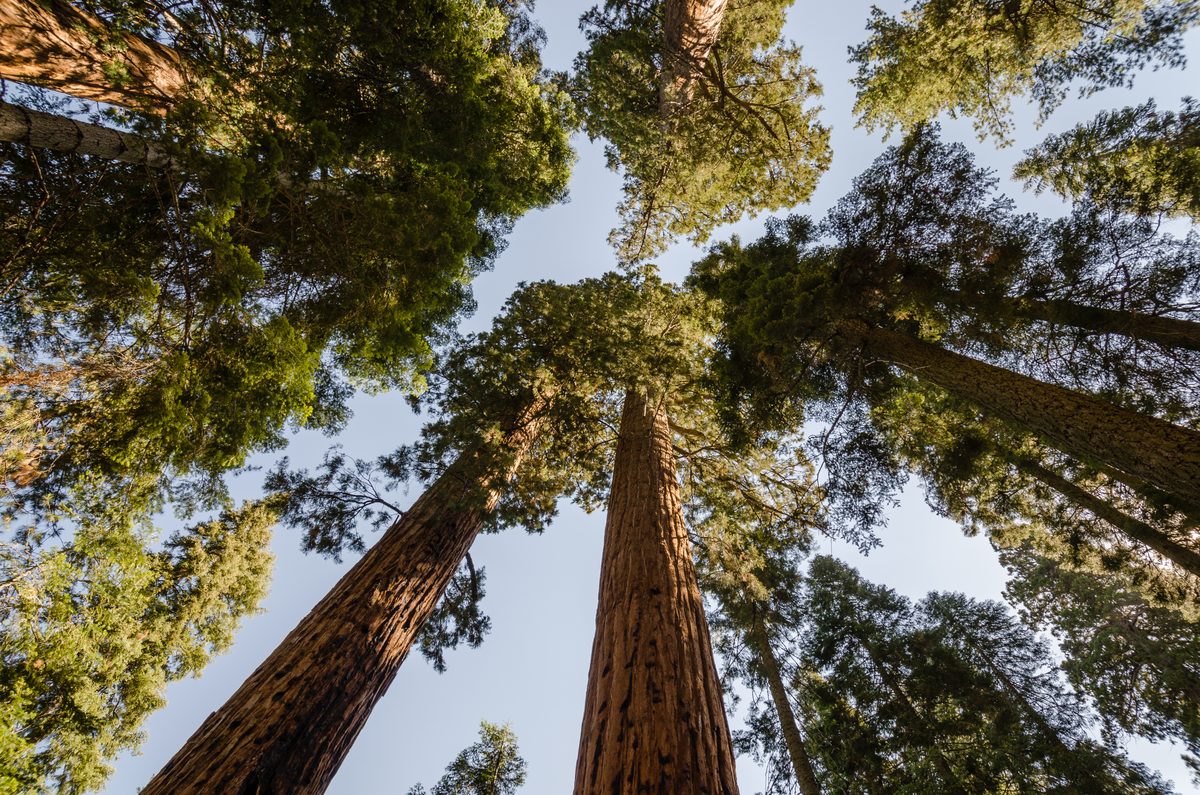
Photo: Tuxyso, CC BY-SA 3.0 via Wikimedia Commons

Quick facts
| Light: | Full sun12 |
|---|---|
| Water: | Medium21 source |
| Soil: | Well drained, moist and occasionally dry; pH 5–7.431 source |
| Hardiness: | Zones 6a–8b11 source |
| Size: | Sources differ: Oregon State University Extension Service; Lady Bird Johnson Wildflower Center; Utah State University Extension (Botanical Center); Utah State University Extension (Varga Arboretum); OSU Extension Service; Lady Bird Johnson Wildflower Center × 25–35 ft (7.62–10.67 m)352716Sources differ |
| Growth rate: | Rapid178 |
| Bloom: | Green21 source |
| Cats: | Not documented by major sources |
| Dogs: | Not documented by major sources |
| Native range: | CAL9 |
| Family: | Cupressaceae |
How much light does a Giant Sequoia need?
Plant giant sequoia in full sun outdoors, where it gets direct light most of the day. Full sun is the light level sources report as what this species needs to grow well. Pick a site clear of taller trees, walls, or buildings that block the sun for hours at a time. A young tree still needs the same full-sun exposure as a mature one. Sun exposure matters most in the tree's early years outdoors, since roots are still spreading and establishing. Once you find a bright, open spot, the tree keeps that same light need for its whole life. Give it room to grow, since a mature tree spreads 25-35 ft (7.6-10.7 m) wide and needs clear sun on every side.
How often to water a Giant Sequoia
Outdoors, giant sequoia needs medium, steady moisture, avoiding both waterlogged soil and long dry spells. Check the top few inches of soil, and water again once they start to feel dry. This tree needs a medium amount of water, not the heavy irrigation some conifers tolerate. It also does not handle soil that stays dry for a long stretch. A newly planted tree needs consistent moisture until its roots spread into the soil around it. Once established, water deeply and less often rather than giving it frequent, shallow drinks.
- Water: Medium2
Best soil for a Giant Sequoia
Well-drained soil that still holds some moisture suits giant sequoia best. It also tolerates soil that turns occasionally dry between waterings. Avoid heavy, waterlogged ground, since standing water around the roots works against this species. Soil pH between 5.0 and 7.4 suits this tree, covering acidic to mildly alkaline ground. Within that pH range, from acidic to mildly alkaline, the tree adapts well to most garden soils.
Hardiness and temperature
Giant sequoia is hardy outdoors in USDA zones 6a through 8b. That range covers much of the cooler mountain and coastal climates where this tree is planted. No cited source gives an exact minimum temperature this species can survive. Instead, rely on the zone range to judge whether your winters suit this tree. If you garden colder than zone 6a, expect more risk of winter damage to young trees. Gardeners in zone 8b and warmer sit at the tree's warm-end limit rather than its cold one. Zone 6a marks the coldest range where sources report this tree growing reliably outdoors.
- Hardiness: Zones 6a–8b1
Fertilizing a Giant Sequoia
A light feeding once a year is all giant sequoia needs outdoors. A single light annual feeding is what sources report for this species outdoors. Skip heavy or frequent fertilizing, since this tree does not need it to grow well outdoors. This light, once-a-year approach fits its naturally slow need for added nutrients in the ground.
- Fertilizer: Light, once a year4
Pruning a Giant Sequoia
Light shaping, not heavy pruning, is what giant sequoia needs to stay healthy outdoors. Sources report light shaping as the pruning this species calls for. Light shaping can include removing damaged or crossing branches as you notice them. Beyond that light touch, avoid cutting back this tree hard, since heavy pruning is not part of its documented care.
- Pruning: Light shaping5
How to plant a Giant Sequoia
USDA zones 6a through 8b tell you whether your climate suits giant sequoia outdoors. Choose a site with full sun and room for a tree that grows fast and spreads 25-35 ft (7.6-10.7 m) wide at maturity. Prepare soil that drains well but holds some moisture, within a pH range of 5.0 to 7.4. If you garden outside zone 6a through 8b, the tree is less likely to thrive long-term outdoors. Water it in well after planting, and keep watch for a medium, steady level of soil moisture as it settles in.
- Hardiness: Zones 6a–8b1
Winter care
Giant sequoia's winter needs depend on your USDA zone, from 6a through 8b. No cited source states its exact minimum cold tolerance, so use the zone range as your guide. In zone 6a, shield young trees from harsh wind and hard freezes. Near zone 8b, established trees need little extra winter protection. Mulch over the root zone helps buffer soil temperature in colder parts of the range. Newly planted trees stay more at risk from cold than established ones. Each spring, check young trees for damage and shape away any dead growth.
- Hardiness: Zones 6a–8b1
How to propagate a Giant Sequoia
Seed, root cuttings, and stem cuttings all work to start giant sequoia outdoors. Seed propagation is the method most sources describe in detail for this species. Root and stem cuttings offer a way to grow a genetic copy of an existing tree. Whichever method you choose, the young plant needs patient, steady care while it takes root. Cuttings and seed-grown plants both need a stable spot to root before you plant them outdoors.
Common problems
Scales and spider mites are the pests reported on giant sequoia. On the disease side, sources report botrytis blight, canker, needle blight, honey fungus, dieback, and butt rot. Butt rot and honey fungus attack roots and the base of the trunk, while canker and dieback damage wood and branches. Needle blight and botrytis blight show up on foliage rather than on roots or wood.
| Problem | Kind |
|---|---|
| Scales | Pest |
| Spider mites | Pest |
| Botrytis blight | Disease |
| Canker | Disease |
| Needle blight | Disease |
| Honey fungus | Disease |
| Dieback | Disease |
| Butt rot | Disease |
Is Giant Sequoia toxic to cats and dogs?
Recommended supplies
- Soil: a free-draining mix, and a pot with a drainage hole.
Questions and answers
- How much light does giant sequoia need?
- Giant sequoia needs full sun outdoors, not partial shade. Sources report this as the light level it needs to grow well. Pick an open site free of shade from taller trees or buildings.
- How cold can giant sequoia tolerate outdoors?
- Giant sequoia is hardy outdoors in USDA zones 6a through 8b. That range spans cooler mountain climates up through milder ones. If your winters fall colder than zone 6a, this tree is not a good match outdoors.
- How do you propagate giant sequoia?
- You can propagate giant sequoia from seed, root cuttings, or stem cuttings. Seed is the method most sources describe in detail. Cuttings let you grow a genetic copy of an existing tree instead.
Sources
- NC State Extension Gardener Plant Toolbox. https://plants.ces.ncsu.edu/plants/sequoiadendron-giganteum/. Accessed 23 September 2026.
- Lady Bird Johnson Wildflower Center. https://www.wildflower.org/plants/result.php?id_plant=segi2. Accessed 23 September 2026.
- Cornell University CALS Woody Plants Database. https://woodyplants.cals.cornell.edu/plant/306. Accessed 23 September 2026.
- Brooklyn Botanic Garden. https://www.bbg.org/article/growing_conifers. Accessed 27 September 2026.
- Oregon State University Extension Service. https://extension.oregonstate.edu/catalog/em-9475-growing-redwood-giant-sequoia-oregon. Accessed 23 September 2026.
- UC Statewide Integrated Pest Management Program. https://ipm.ucanr.edu/home-and-landscape/giant-sequoia/. Accessed 23 September 2026.
- Utah State University Extension (Botanical Center). https://extension.usu.edu/botanicalcenter/trees-of-varga-arboretum/giant-sequoia. Accessed 11 October 2026.
- Utah State University Extension. https://extension.usu.edu/treebrowser/catalog/sequoia-giant. Accessed 30 October 2026.
- Royal Botanic Gardens, Kew (World Checklist of Vascular Plants). https://sftp.kew.org/pub/data-repositories/WCVP/wcvp.zip. Accessed 4 June 2026.
How this page was made
- Written with AI assistance from the sources listed on this page. AI is never the source of a fact.