Redwood (Sequoia sempervirens)
Formerly Taxodium sempervirens, Schubertia sempervirens, Steinhauera sempervirens
Give this tree full sun, with part shade as the other option. It likes medium to wet soil and does not tolerate dry soil. It is hardy in USDA zones 7a to 9b. It grows rapidly. It is an evergreen conifer tree. It needs high humidity. No cited source documents toxicity for cats or dogs.
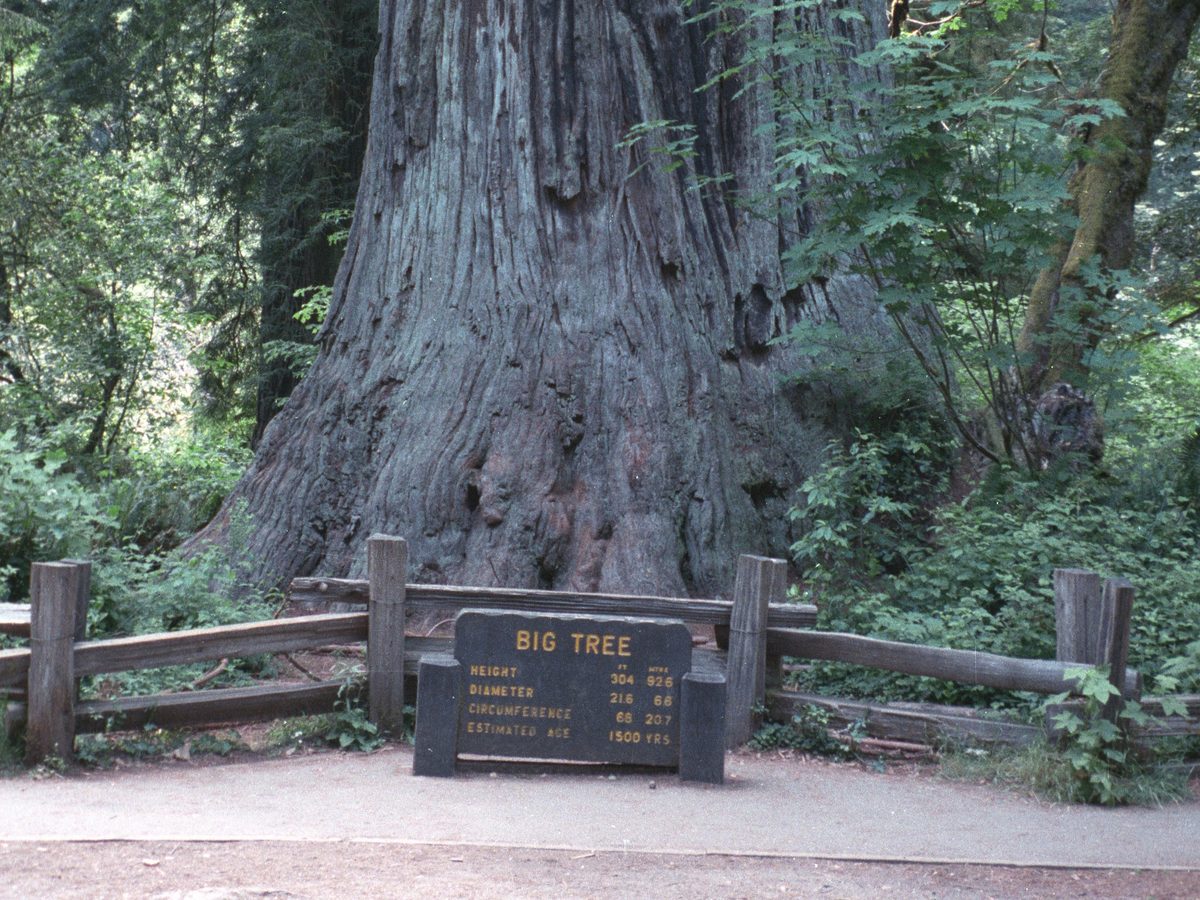
Photo: Grossbildjaeger, CC BY-SA 3.0 via Wikimedia Commons

Quick facts
| Light: | Full sun and part shade (full sun preferred)11 source |
|---|---|
| Water: | Medium to wet11 source |
| Soil: | Well drained, moist and occasionally wet11 source |
| Hardiness: | Zones 7a–9b11 source |
| Size: | 299.9 ft (91.4 m) × 15–25 ft (4.57–7.62 m)511 source |
| Growth rate: | Rapid161 |
| Bloom: | , Brown, red and yellow171 source |
| Cats: | Not documented by major sources |
| Dogs: | Not documented by major sources |
| Native range: | CAL, ORE8 |
| Family: | Cupressaceae |
How much light does a Redwood need?
Full sun is the preferred exposure for coast redwood, and part shade is also listed. The source describes full sun as six or more hours of direct sunlight a day. A site with high humidity, protected from direct wind, is the setting described for the tree. It is an evergreen conifer.
- Light: Full sun and part shade (full sun preferred)1
How often to water a Redwood
Redwood tolerates wet soil, but it does not tolerate dry soil. Its water range runs from medium at the low end to wet at the high end. The soil it grows in can be well drained, moist or occasionally wet. The humidity listed for this tree is high.
- Water: Medium to wet1
Best soil for a Redwood
Redwood grows in soil that is well drained, moist or occasionally wet. Good drainage is among the listed conditions. Wet soil is tolerated, while dry soil is not. Moisture in the soil should sit between medium and wet. This evergreen conifer grows rapidly, averaging 3 feet (0.9 m) a year. It also needs high humidity around it. No cited source gives a soil pH range for this tree.
- Soil drainage: Well drained, moist and occasionally wet1
Hardiness and temperature
Zones 7a to 9b are the range listed for redwood. The listed zones are 7a, 7b, 8a, 8b, 9a and 9b. Humidity is listed as high. The source describes a humid environment, protected from direct wind, in a coastal fog belt. It is an evergreen conifer. The tree can reach a height of 60 to 200 feet (18–61 m) or more. No cited source records a minimum temperature for this tree.
- Hardiness: Zones 7a–9b1
Pruning a Redwood
Redwood is listed as needing no pruning. A source notes that it self-prunes well in dense stands. It grows rapidly, averaging about 3 feet (0.9 m) a year. It can reach up to about 300 feet (91 m), sometimes taller. Its spread is 15 to 25 ft (4.6–7.6 m).
- Pruning: No pruning needed2
How to plant a Redwood
Choose a site in USDA zones 7a to 9b. Leave room for a spread of 15 to 25 ft (4.6–7.6 m). The tree can reach about 300 feet (91 m), sometimes taller. Full sun is preferred, and part shade is also listed. Soil can be well drained, moist or occasionally wet. Dry soil is not tolerated. High humidity is the condition recorded.
- Hardiness: Zones 7a–9b1
Winter care
Redwood is an evergreen conifer. Zone 7a is the coldest zone listed, and zone 9b is the warmest. No cited source records a minimum temperature. Wet soil is tolerated and dry soil is not. High humidity is listed for this tree. Branch canker may girdle stems and branches. No pruning is needed.
- Hardiness: Zones 7a–9b1
How to propagate a Redwood
The propagation methods listed for redwood are seed, root cuttings and stem cuttings. Each of the three methods is recorded for this species. The species is native to California and Oregon. In the lower 48 United States its native status is native. Redwood is a fast grower, averaging 3 feet (0.9 m) per year. It is an evergreen conifer tree.
- Propagation: Seed, root cuttings and stem cuttings1
Common problems
Cedar bark beetle, cypress bark beetle and ambrosia beetle are the pests listed for redwood. The diseases listed are phytophthora ramorum, butt rot, branch canker and heart rot. Branch canker may girdle stems and branches. Heart rots can cause extensive damage. Phytophthora ramorum has been reported on coast redwood in California.
| Problem | Kind |
|---|---|
| Cedar bark beetle | Pest |
| Cypress bark beetle | Pest |
| Ambrosia beetle | Pest |
| Phytophthora ramorum | Disease |
| Butt rot | Disease |
| Branch canker | Disease |
| Heart rot | Disease |
Is Redwood toxic to cats and dogs?
Recommended supplies
- Soil: a free-draining mix, and a pot with a drainage hole.
- Humidity: it wants humid air; a pebble tray or a humidifier is the usual fix.
Questions and answers
- How much sun does a redwood tree need?
- Full sun is preferred, and part shade is also listed. Full sun means six or more hours of direct sunlight a day.
- Does redwood tolerate dry soil?
- Redwood tolerates wet soil, but it does not tolerate dry soil. Water needs fall between medium and wet. Soil can be well drained, moist or occasionally wet.
- Where is redwood hardy?
- Redwood is listed for USDA zones 7a to 9b. It is native to California and Oregon. In the lower 48 states its native status is native.
Sources
- NC State Extension Gardener Plant Toolbox. https://plants.ces.ncsu.edu/plants/sequoia-sempervirens/. Accessed 23 September 2026.
- USDA Forest Service Fire Effects Information System. https://www.fs.usda.gov/database/feis/plants/tree/seqsem/all.html. Accessed 28 October 2026.
- EPPO Global Database. https://gd.eppo.int/taxon/SEQSE/pathwayspests. Accessed 23 September 2026.
- EPPO Global Database. https://gd.eppo.int/taxon/SEQSE/pests. Accessed 23 September 2026.
- Lady Bird Johnson Wildflower Center. https://www.wildflower.org/plants/result.php?id_plant=sese3. Accessed 24 September 2026.
- Oregon State University Extension Service. https://extension.oregonstate.edu/catalog/em-9475-growing-redwood-giant-sequoia-oregon. Accessed 28 October 2026.
- Lady Bird Johnson Wildflower Center. https://www.wildflower.org/plants/result.php?id_plant=SESE3. Accessed 23 September 2026.
- Royal Botanic Gardens, Kew (World Checklist of Vascular Plants). https://sftp.kew.org/pub/data-repositories/WCVP/wcvp.zip. Accessed 4 June 2026.
How this page was made
- Written with AI assistance from the sources listed on this page. AI is never the source of a fact.