Deodar Cedar (Cedrus deodara)
Formerly Pinus deodara, Abies deodara, Larix deodara
Give Deodar cedar full sun, or part shade, and expect water needs from dry to medium. The tree is hardy in USDA zones 7a to 9b. Pet toxicity for cats and dogs is not documented in the facts checked for this page.
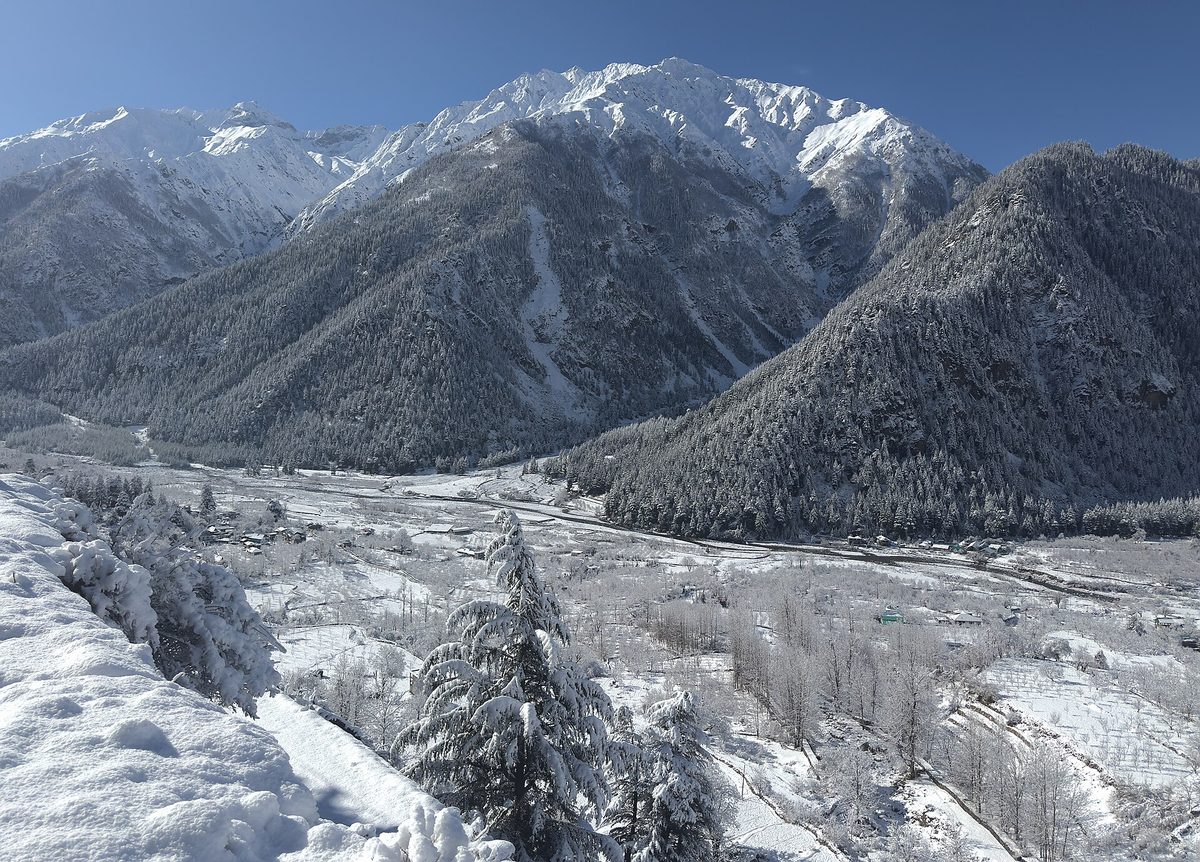
Photo: UnpetitproleX, CC BY-SA 4.0 via Wikimedia Commons

Quick facts
| Light: | Full sun and part shade (full sun preferred)11 source |
|---|---|
| Water: | Dry to medium21 source |
| Soil: | Well drained, moist and occasionally dry11 source |
| Hardiness: | Zones 7a–9b13 |
| Size: | 30–50 ft (9.14–15.24 m) × 30–40 ft (9.14–12.19 m)11 source |
| Growth rate: | Moderate11 source |
| Bloom: | , 11 source |
| Cats: | Not documented by major sources |
| Dogs: | Not documented by major sources |
| Native range: | AFG, CHT, IND, NEP, PAK, WHM6 |
| Family: | Pinaceae |
How much light does a Deodar Cedar need?
Deodar cedar prefers full sun, which the source describes as six or more hours of direct sunlight a day. Full sun is the preferred setting, with part shade as the other listed condition. It is a finely textured, needled evergreen tree. At maturity it reaches 30 to 50 ft (9.14–15.24 m) in height.
- Light: Full sun and part shade (full sun preferred)1
How often to water a Deodar Cedar
Deodar cedar has a water need that runs from dry to medium. Its soil is described as rich and well drained. Its listed drainage conditions are well drained, moist and occasionally dry. Medium is the upper end of its water range. No watering schedule in days is documented for this tree.
- Water: Dry to medium2
Best soil for a Deodar Cedar
Plant Deodar cedar where the soil is rich and well drained, since the listing also accepts moist or occasionally dry ground. No soil pH range is documented for this tree. No cited source names a soil texture or an amendment for it. In the lower 48 states its native status is recorded as introduced.
- Soil drainage: Well drained, moist and occasionally dry1
Hardiness and temperature
Deodar cedar is listed for USDA zones 7a, 7b, 8a, 8b, 9a and 9b. That range runs from 7a at the cold end to 9b at the warm end. It is also reported to do well in several Salt Lake City locations. No minimum temperature is documented for this tree. No humidity range is documented either.
Pruning a Deodar Cedar
Pruning requirement for Deodar cedar is listed as little required. The pruning type on file is light shaping. Mature height is 30 to 50 ft (9.14–15.24 m), with a spread of 30 to 40 ft (9.14–12.19 m). No pruning season or tool is documented for this tree.
- Pruning: Light shaping4
How to plant a Deodar Cedar
Plant Deodar cedar in USDA zones 7a to 9b. Leave room for a mature spread of 30 to 40 ft (9.14–12.19 m) and a height of 30 to 50 ft (9.14–15.24 m). Choose a spot with full sun, six or more hours of direct light a day, or part shade. Look for rich, well-drained soil that is moist or occasionally dry. No planting depth is documented for this tree.
Winter care
Winter hardiness for Deodar cedar is recorded as USDA zones 7a to 9b. The records on file give no minimum temperature for Deodar cedar. As an evergreen, it keeps its foliage in winter. The tree is rated hardy to zone 7a at the cold end of that range. No winter protection method is documented for this tree.
How to propagate a Deodar Cedar
You propagate Deodar cedar by seed. Seed is the only propagation method on file for this tree. It produces no flowers, and each tree has separate male and female reproductive parts. No source on file describes seed treatment, sowing depth or timing. No cutting or grafting method is documented.
- Propagation: Seed1
Common problems
Pests recorded for Deodar cedar include beetle borers, pine needle scale, red headed pine sawfly, aphids and pine wood nematode. Others recorded are western conifer seed bug, Japanese pine sawyer beetle, weevils and pine lappet moth. Diseases recorded are armillaria root rot, phytophthora root rot, sooty mold, dothistroma needle blight and sirococcus shoot blight. No treatment is documented for these problems.
- Common pests: beetle borers, pine needle scale, red headed pine sawfly, aphids, pine wood nematode, western conifer seed bug, japanese pine sawyer beetle, weevils and pine lappet moth15
- Common diseases: armillaria root rot, phytophthora root rot, sooty mold, dothistroma needle blight and sirococcus shoot blight15
| Problem | Kind |
|---|---|
| Beetle borers | Pest |
| Pine needle scale | Pest |
| Red headed pine sawfly | Pest |
| Aphids | Pest |
| Pine wood nematode | Pest |
| Western conifer seed bug | Pest |
| Japanese pine sawyer beetle | Pest |
| Weevils | Pest |
| Pine lappet moth | Pest |
| Armillaria root rot | Disease |
| Phytophthora root rot | Disease |
| Sooty mold | Disease |
| Dothistroma needle blight | Disease |
| Sirococcus shoot blight | Disease |
Is Deodar Cedar toxic to cats and dogs?
Recommended supplies
- Soil: a free-draining mix, and a pot with a drainage hole.
Questions and answers
- What sun does Deodar cedar need?
- Deodar cedar prefers full sun, meaning six or more hours of direct sunlight a day. Part shade is also listed as a condition it grows in. It is a needled evergreen tree.
- How big does Deodar cedar get?
- At maturity it reaches 30 to 50 ft (9.14–15.24 m) in height and 30 to 40 ft (9.14–12.19 m) in spread. Its growth rate is moderate.
- Which zones suit Deodar cedar?
- Deodar cedar is listed for USDA zones 7a to 9b. It is also reported to do well in several Salt Lake City locations. A minimum temperature is not documented.
Sources
- NC State Extension Gardener Plant Toolbox. https://plants.ces.ncsu.edu/plants/cedrus-deodara/. Accessed 12 October 2026.
- Utah State University Extension. https://extension.usu.edu/botanicalcenter/trees-of-varga-arboretum/deodar-cedar. Accessed 12 October 2026.
- Utah State University Extension. https://extension.usu.edu/treebrowser/catalog/cedar-deodar. Accessed 12 October 2026.
- University of Florida IFAS Extension (EDIS). https://ask.ifas.ufl.edu/publication/st135. Accessed 27 October 2026.
- EPPO Global Database. https://gd.eppo.int/taxon/CEUDE/pests. Accessed 12 October 2026.
- Royal Botanic Gardens, Kew (World Checklist of Vascular Plants). https://sftp.kew.org/pub/data-repositories/WCVP/wcvp.zip. Accessed 4 June 2026.
How this page was made
- Written with AI assistance from the sources listed on this page. AI is never the source of a fact.