Elephant Bush (Portulacaria afra)
Formerly Crassula portulacaria, Claytonia portulacaria, Crassula portulacastrum
Elephant bush (Portulacaria afra) does best in full sun with water needs from dry to medium, and this page documents no toxicity position for cats or dogs. Avoid overwatering, because the plant is susceptible to root rot in consistently moist soil. It is hardy in zones 9a through 11b.
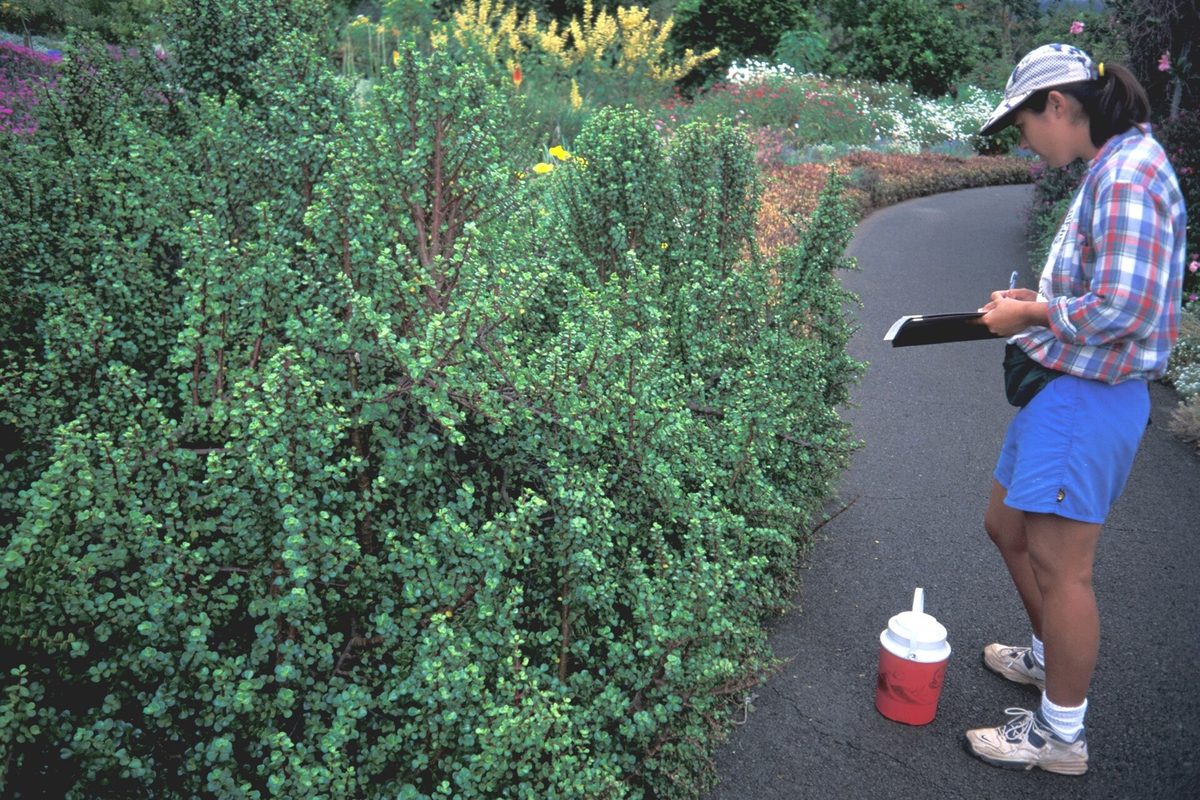
Photo: Forest & Kim Starr, CC BY 3.0 via Wikimedia Commons

Quick facts
| Light: | Full sun11 source |
|---|---|
| Water: | Dry to medium11 source |
| Soil: | Well drained11 source |
| Hardiness: | Zones 9a–11b11 source |
| Size: | 7.9–15.1 ft (2.4–4.6 m)11 source |
| Bloom: | May–Jun, Pink and white11 source |
| Cats: | Not documented by major sources |
| Dogs: | Not documented by major sources |
| Native range: | CPP, KEN, MOZ, NAT, SWZ, TVL2 |
| Family: | Didiereaceae |
How much light does an Elephant Bush need?
Elephant bush takes full sun when it grows outdoors. Full sun is the preferred outdoor light level, and no other outdoor light level is recorded for the species. The compact form 'Aurea' has new leaves that turn a bright yellow in full sun. Put the plant where it receives that full sun if you grow it outside.
- Light: Full sun1
How often to water an Elephant Bush
Your elephant bush needs water somewhere in the range from dry to medium. Be careful not to overwater it, since it is susceptible to root rot in consistently moist soil. The soil it grows in should also be very well-drained. The recorded range stops at medium, and wetter conditions are not listed for this plant.
- Water: Dry to medium1
Best soil for an Elephant Bush
Choose very well-drained soil for elephant bush. Well drained is the only drainage class recorded for the species. Soil that stays consistently moist leaves the plant susceptible to root rot. Root rot is the one disease recorded for it. The moisture range recorded for the plant runs from dry to medium.
- Soil drainage: Well drained1
Hardiness and temperature
In USDA terms, elephant bush is hardy in zones 9a through 11b. Zone 9a is the coldest zone in that range, and zone 11b is the warmest zone in that same range. The minimum temperature on record for the plant is 39.2 °F, which is 4 °C. The source says to move the plant back indoors when night temperatures drop below 40 °F (4 °C).
Fertilizing an Elephant Bush
Container-grown elephant bush needs fertilizer monthly during the growing season. Monthly in the growing season is the only fertilizer frequency recorded for the species. The source gives this advice for plants in containers, and it names no fertilizer type, strength or routine for plants in the ground. Feeding is not recorded for any other part of the year.
- Fertilizer: Monthly in the growing season1
How to plant an Elephant Bush
Gardeners in zones 9a through 11b can plant elephant bush in the ground. In the ground in mild climates, it can grow 7.9–15.1 ft (2.4–4.6 m) tall. Choose a spot with full sun and very well-drained soil. The plants produce a great many tiny, inconspicuous pink or white flowers in late spring or early summer. The native range is recorded as the region codes CPP, KEN, MOZ, NAT, SWZ and TVL.
- Hardiness: Zones 9a–11b1
Winter care
When night temperatures drop below 40 °F (4 °C), the source says to bring the plant back inside. Its recorded minimum temperature is 39.2 °F, which is 4 °C. The hardiness range given is zones 9a through 11b, and colder zones are outside that range. Indoors is also where mealybugs can be a problem for this plant.
Common problems
Mealybugs are the pest recorded for elephant bush, and they can be a problem, especially indoors. The source describes the plant as having few pests overall. Root rot is the disease recorded for it. The plant is susceptible to root rot in consistently moist soil, so avoid overwatering it.
| Problem | Kind |
|---|---|
| Mealybugs | Pest |
| Root rot | Disease |
Is Elephant Bush toxic to cats and dogs?
Recommended supplies
- Soil: a free-draining mix, and a pot with a drainage hole.
Questions and answers
- Does elephant bush need full sun?
- Outdoors, the preferred light level for elephant bush is full sun. No other outdoor light level is recorded for it. It is hardy in zones 9a through 11b, so those are the zones where it can grow outside.
- How much should I water elephant bush?
- Its water needs run from dry to medium. Be careful not to overwater, because it is susceptible to root rot in consistently moist soil. It also needs very well-drained soil.
- What color are the flowers of elephant bush?
- The flowers are pink or white. They are tiny and inconspicuous, and the plants produce a great many of them in late spring or early summer. Fertilizing monthly during the growing season is the feeding advice recorded for container plants.
Sources
- University of Wisconsin-Madison Division of Extension (Wisconsin Horticulture). https://hort.extension.wisc.edu/articles/elephant-bush-portulacaria-afra/. Accessed 21 October 2026.
- Royal Botanic Gardens, Kew (World Checklist of Vascular Plants). https://sftp.kew.org/pub/data-repositories/WCVP/wcvp.zip. Accessed 4 June 2026.
How this page was made
- Written with AI assistance from the sources listed on this page. AI is never the source of a fact.