Little Hogweed (Portulaca oleracea)
Formerly Portulaca fosbergii, Portulaca aurea, Portulaca retusa
Keep little hogweed alive with full sun and soil that dries out between waterings. This fast-growing succulent spreads low across the ground and tolerates heat and dry spells well. It is toxic to cats and toxic to dogs, so keep pets away from it.
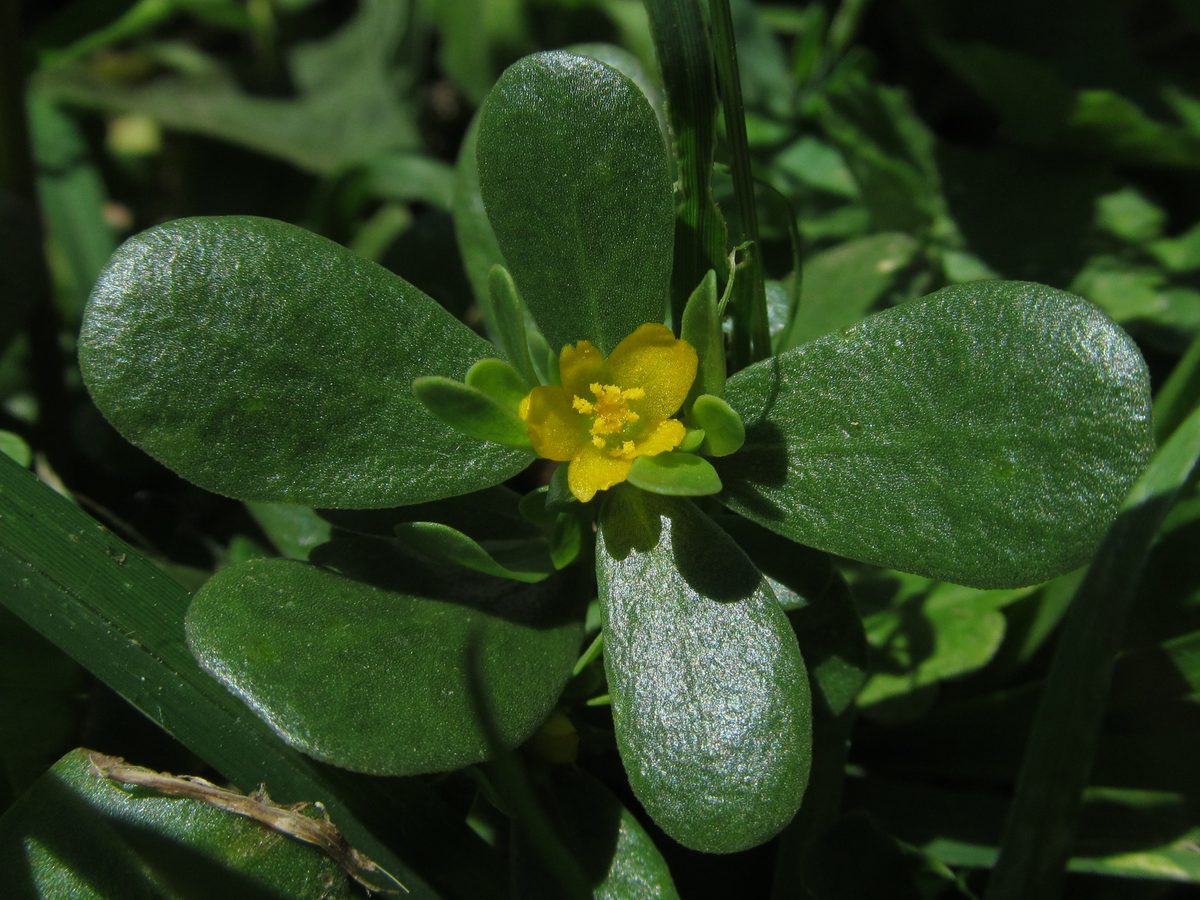
Photo: Cbaile19, CC0 via Wikimedia Commons

Quick facts
| Light: | Full sun11 source |
|---|---|
| Water: | Dry to medium21 source |
| Soil: | Well drained and occasionally dry31 source |
| Hardiness: | Zones 2a–11b31 source |
| Size: | 0.7 ft (0.22 m) × 3 ft (0.91 m)671 source |
| Growth rate: | Rapid331 source |
| Bloom: | Yellow381 |
| Cats: | Toxic to cats 53 |
| Dogs: | Toxic to dogs 53 |
| Native range: | AFG, ALB, ALD, ALG, ANG, ASC, AUT, AZO, BAL, BEN, BGM, BKN, BUL, BUR, CAF, CGS, CHA, CMN, CNY, COM, CON, COR, CVI, CZE, EGY, ERI, ETH, FRA, GAB, GAM, GER, GGI, GNB, GRC, GST, GUI, HUN, IRN, IRQ, ITA, IVO, KEN, KRI, KRY, KUW, LBR, LBS, LBY, MCI, MDR, MLI, MOR, MTN, NCS, NET, NGA, NGR, OMA, PAK, PAL, POL, POR, REU, ROM, SAR, SAU, SEN, SEY, SIC, SIE, SIN, SOC, SOM, SPA, STH, SUD, SWI, TAN, TCS, TOG, TUE, TUN, TUR, UGA, YEM, YUG, ZAI9 |
| Family: | Portulacaceae |
How much light does a Little Hogweed need?
Full sun is the light this plant needs to thrive outdoors. It wants at least six hours of direct sun a day, and more sun supports fuller growth. Pick a bed, border, or container spot that gets sun most of the day, without shade from taller plants or structures. Full sun also supports this succulent's yellow flowers, which open best in bright conditions. A spot against a south-facing wall or in an open bed usually gives it the sun it needs.
- Light: Full sun1
How often to water a Little Hogweed
This plant needs moderate moisture, not constant dampness, to grow well. Water it well, then wait until the soil surface is dry before you water again. Its thick, fleshy leaves hold water, which is part of why the soil can dry out some between waterings. Soil that stays wet for long periods raises the risk of stem rot and root rot. In containers, choose a pot with drainage holes, since that helps the soil dry out the way this plant prefers. Water less in cool weather and more during hot, dry spells, but always check the soil first.
- Water: Dry to medium2
Best soil for a Little Hogweed
Well-drained soil that dries out between waterings suits this plant best. It grows fine in soil that is light, sandy, or rocky, as long as water drains away quickly. Heavy clay or soil that stays wet raises the risk of root and stem problems. A raised bed or mound helps water move through the soil instead of pooling around the roots. Containers need drainage holes so the soil can dry out between waterings the way this plant prefers. No cited source records a preferred soil pH for this plant. Ordinary garden soil usually works, since the drainage matters more than the exact mix for this plant.
- Soil drainage: Well drained and occasionally dry3
Hardiness and temperature
This plant grows as an annual across USDA zones 2a through 11b, an unusually wide span. That range is wide because gardeners regrow it from seed each year instead of overwintering a single plant. In the coldest zones, plant it after the last frost and expect it to finish its life cycle by fall. In the warmest zones, it can grow and reseed for most of the year. No cited source records a minimum temperature this plant can tolerate. Warm soil and warm air both help it grow fast and flower. It is not grown for cold hardiness, but for how fast it fills in during warm weather.
- Hardiness: Zones 2a–11b3
Pruning a Little Hogweed
Pruning stays minimal for this plant, since the only real task is removing spent flowers. Deadheading spent blooms keeps the plant tidy and can encourage more flowers to open. Beyond that, no regular pruning is needed to keep it healthy. You can also trim back scraggly stems any time without harming the plant, though it is not required.
- Pruning: No pruning needed and Deadheading4
How to plant a Little Hogweed
Wait until the soil has warmed and your last frost date has passed before direct-sowing seed outdoors. Space plants about 3 ft (0.9 m) apart to give each one room to spread. In the coolest zones, plant after the frost-free date and expect one season of growth before the plant finishes its cycle. In the warmest zones, it often reseeds itself and can keep appearing year after year without replanting.
- Hardiness: Zones 2a–11b3
Winter care
Frost ends this plant's season in most zones, since it is a warm-season annual. In zones 2a through about 9, it dies back at the first hard frost. In the mildest zones, up to 11b, winters can stay warm enough to keep it growing. No cited source records a minimum temperature this plant can tolerate. It is grown fresh from seed each year rather than kept alive through winter. No winter protection step is needed outdoors, since the plant finishes its cycle at frost. A potted plant can move indoors to a bright, warm spot to outlast frost.
- Hardiness: Zones 2a–11b3
How to propagate a Little Hogweed
Seeds and stem cuttings both work well for growing new plants. Scatter seed directly in the bed once the soil has warmed, since this plant germinates fast in warm conditions. For cuttings, snip a few inches of stem, let the cut end dry for a day, then set it in soil. Because the stems are fleshy and store water, cuttings often root without extra misting or a humidity dome. Either method benefits from this plant's fast growth, which helps new roots and shoots establish quickly.
- Propagation: Seed and stem cuttings2
Common problems
Aphids, gnats, snails, and slugs are the pests most often reported on this plant. Stem rot and root rot are the main diseases to watch for, and both usually trace back to soil that stays too wet. Check new growth and the soil surface for pests, and act early if you spot them. Good drainage and letting the soil dry between waterings help prevent both diseases.
| Problem | Kind |
|---|---|
| Aphids | Pest |
| Gnats | Pest |
| Snails | Pest |
| Slugs and snails | Pest |
| Stem rot | Disease |
| Root rot | Disease |
Is Little Hogweed toxic to cats and dogs?
Cats and dogs are both at risk from this plant, which carries a toxic rating for each. For cats, the listed position is toxic, so do not let a cat chew on it. For dogs, the listed position is also toxic, so the same caution applies. If a cat or dog eats any part of it, call your vet or a pet poison line right away.
Pet-safe alternatives
Recommended supplies
- Soil: a free-draining mix, and a pot with a drainage hole.
Questions and answers
- Is Portulaca oleracea toxic to cats and dogs?
- This plant carries a toxic rating for both cats and dogs, so keep pets away from it. If a cat or dog eats part of it, contact your vet or a pet poison line right away.
- How much light does little hogweed need?
- It needs full sun outdoors, ideally at least six hours of direct sun a day. A spot shaded by taller plants or structures is not enough for it to grow well.
- What zones can I grow little hogweed in?
- You can grow it outdoors as an annual from USDA zone 2a through zone 11b. In the coolest zones it completes its cycle in one warm season, while in the warmest zones it may reseed and keep growing.
Sources
- Penn State Extension. https://extension.psu.edu/lawn-and-turfgrass-weeds-common-purslane-portulaca-oleracea-l. Accessed 24 September 2026.
- UF/IFAS Extension (EDIS). https://ask.ifas.ufl.edu/hs1238. Accessed 24 September 2026.
- North Carolina Extension Gardener Plant Toolbox. https://plants.ces.ncsu.edu/plants/portulaca-oleracea/. Accessed 24 September 2026.
- Clemson Cooperative Extension Home & Garden Information Center. https://hgic.clemson.edu/mailbox-planters-can-be-a-challenge/. Accessed 11 October 2026.
- ASPCA Animal Poison Control Center. https://www.aspca.org/pet-care/aspca-poison-control/toxic-and-non-toxic-plants/purslane. Accessed 23 September 2026.
- University of Florida IFAS Extension (EDIS). https://ask.ifas.ufl.edu/publication/FR459. Accessed 24 September 2026.
- University of Wisconsin-Madison Division of Extension (Wisconsin Horticulture). https://hort.extension.wisc.edu/articles/common-purslane-portulaca-oleracea/. Accessed 24 September 2026.
- Penn State Extension. https://extension.psu.edu/purslane. Accessed 30 October 2026.
- Royal Botanic Gardens, Kew (World Checklist of Vascular Plants). https://sftp.kew.org/pub/data-repositories/WCVP/wcvp.zip. Accessed 4 June 2026.
How this page was made
- Written with AI assistance from the sources listed on this page. AI is never the source of a fact.