Great Basin Bristlecone Pine (Pinus longaeva)
Formerly Pinus aristata var. longaeva, Pinus aristata subsp. longaeva, Pinus balfouriana subsp. longaeva
Give Great Basin bristlecone pine full sun. It needs little or no supplemental water once established. It is a slow-growing evergreen tree. Its hardiness range is zones 5a–7b. It is native to California, Nevada and Utah. Its soil drainage is well drained and occasionally dry. No toxicity position for cats or dogs is documented for this tree.
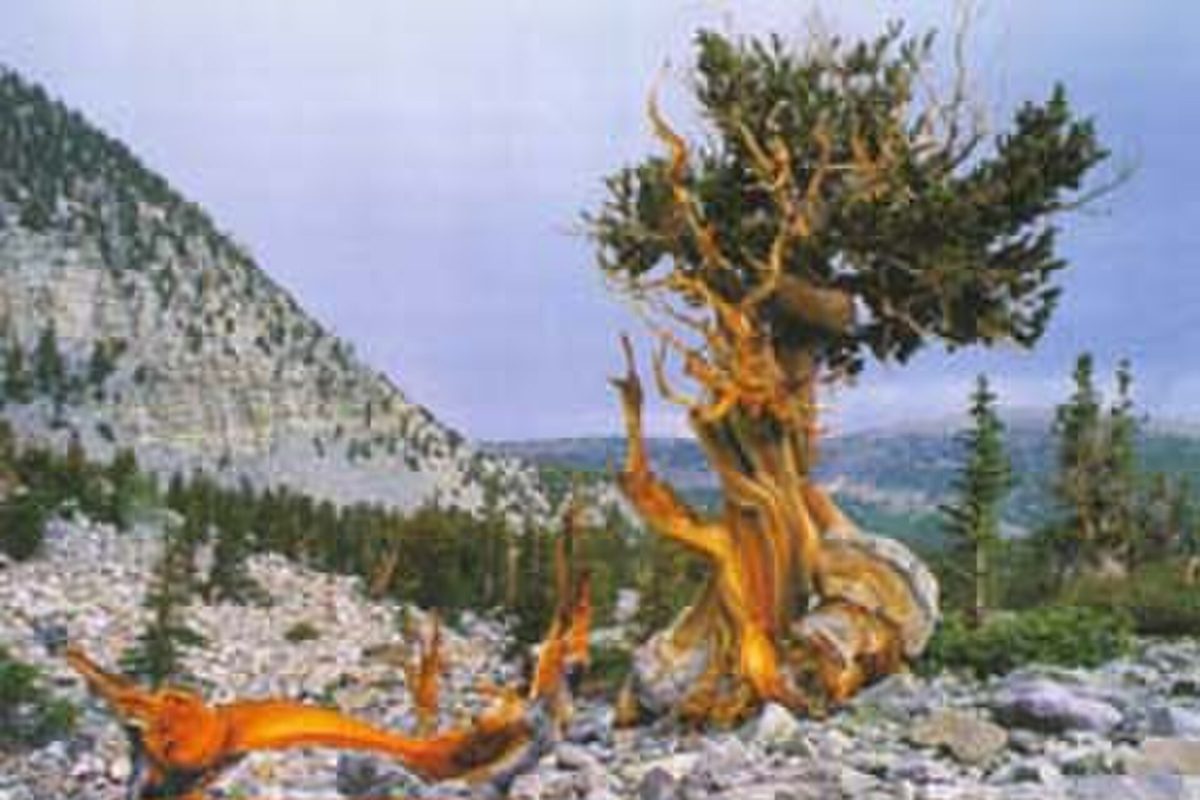
Photo: U.S. National Park Service, Public domain via Wikimedia Commons

Quick facts
| Light: | Full sun11 source |
|---|---|
| Water: | Dry11 source |
| Soil: | Well drained and occasionally dry21 source |
| Hardiness: | Zones 5a–7b11 source |
| Size: | 50 ft (15.24 m)21 source |
| Growth rate: | Slow111 source |
| Bloom: | Mar–May, Red, purple and brown21 source |
| Cats: | Not documented by major sources |
| Dogs: | Not documented by major sources |
| Native range: | CAL, NEV, UTA5 |
| Family: | Pinaceae |
How much light does a Great Basin Bristlecone Pine need?
The source describes this tree as shade intolerant, and the recorded light preference is full sun. Full sun is the only outdoor light level on record for Great Basin bristlecone pine. Its recorded habitat is exposed, dry, rocky slopes and ridges of high mountains.
- Light: Full sun1
How often to water a Great Basin Bristlecone Pine
Dry is the recorded water category for this tree. The recorded range has the same dry value at both ends. The source says it needs little or no supplemental water once established. Its recorded soil drainage is well drained and occasionally dry. In the wild it grows on dry, rocky slopes and ridges of high mountains.
- Water: Dry1
Best soil for a Great Basin Bristlecone Pine
Well drained and occasionally dry soil is the recorded drainage for this species. In the wild it grows from the subalpine zone up to timberline. It often grows in pure stands. The water category recorded for it is dry. On dry, tough sites the tree is slow growing and very long-lived, over 4,000 years old. Rocky ground is part of that recorded habitat. Soil pH and soil amendments are not documented for this tree.
- Soil drainage: Well drained and occasionally dry2
Hardiness and temperature
Zones 5a–7b is the hardiness range on record for Great Basin bristlecone pine. Zone 5a is the coldest end of that range, and zone 7b is the warmest end. Its recorded habitat is high mountains, from the subalpine zone to timberline. The mature height on record is up to about 50 ft (15.24 m).
- Hardiness: Zones 5a–7b1
How to plant a Great Basin Bristlecone Pine
Full sun is the recorded outdoor light level for this tree. Its hardiness range on record is zones 5a–7b. The source calls the tree shade intolerant. Well drained and occasionally dry soil matches its recorded drainage. Up to about 50 ft (15.24 m) tall is the recorded mature height. The growth rate is slow.
- Hardiness: Zones 5a–7b1
Winter care
The recorded hardiness range for this tree is zones 5a–7b. It is an evergreen, and its needles may be retained for 35 or more years. Timberline slopes and ridges in the subalpine zone are where it grows in the wild. Its light preference is full sun, and the source calls it shade intolerant.
- Hardiness: Zones 5a–7b1
How to propagate a Great Basin Bristlecone Pine
Great Basin bristlecone pine reproduces from seed. The recorded propagation method list for this tree contains seed alone and nothing else. The source describes the tree as very slow-growing. It is also long-lived, over 4,000 years old on dry, tough sites. It is native to California, Nevada and Utah.
- Propagation: Seed3
Common problems
Two pests are recorded for this tree: mountain pine beetle and dwarf mistletoe. Phytophthora root rot is the disease recorded for it. Mountain pine beetle appears in the record as Dendroctonus ponderosae. Dwarf mistletoe is the second pest recorded. Phytophthora cinnamomi is the organism named in the disease record.
| Problem | Kind |
|---|---|
| Mountain pine beetle | Pest |
| Dwarf mistletoe | Pest |
| Phytophthora root rot | Disease |
Is Great Basin Bristlecone Pine toxic to cats and dogs?
Recommended supplies
- Soil: a free-draining mix, and a pot with a drainage hole.
Questions and answers
- How much sun does Great Basin bristlecone pine need?
- Give it full sun. The recorded outdoor light is full sun and nothing else, and the tree is described as shade intolerant. In the wild it grows in exposed places.
- How much water does a bristlecone pine need?
- The recorded water level is dry. It needs little or no supplemental water once established. Its soil drainage is recorded as well drained and occasionally dry.
- Where is Great Basin bristlecone pine native?
- It is native to California, Nevada and Utah. Its US native status is native in the lower 48 states. It is a tree that grows up to about 50 ft (15.24 m) tall.
Sources
- Utah State University Extension. https://extension.usu.edu/forestry/tree-identification/pines/bristlecone-pine. Accessed 21 October 2026.
- Lady Bird Johnson Wildflower Center. https://www.wildflower.org/plants/result.php?id_plant=PILO. Accessed 21 October 2026.
- USDA Forest Service Fire Effects Information System. https://www.fs.usda.gov/database/feis/plants/tree/pinlon/all.html. Accessed 21 October 2026.
- EPPO Global Database. https://gd.eppo.int/taxon/PIUAL/pests. Accessed 21 October 2026.
- Royal Botanic Gardens, Kew (World Checklist of Vascular Plants). https://sftp.kew.org/pub/data-repositories/WCVP/wcvp.zip. Accessed 4 June 2026.
How this page was made
- Written with AI assistance from the sources listed on this page. AI is never the source of a fact.