Ground Ivy (Glechoma hederacea)
Formerly Nepeta hederacea, Nepeta glechoma, Calamintha hederacea
Full sun suits ground ivy (Glechoma hederacea) best, though it also grows in part shade and in full shade. Its water need runs from medium to wet. It is a herbaceous perennial that grows rapidly and reaches 0.2 to 1 ft (0.05 to 0.3 m) tall. Toxicity to cats and to dogs is not documented on this page.
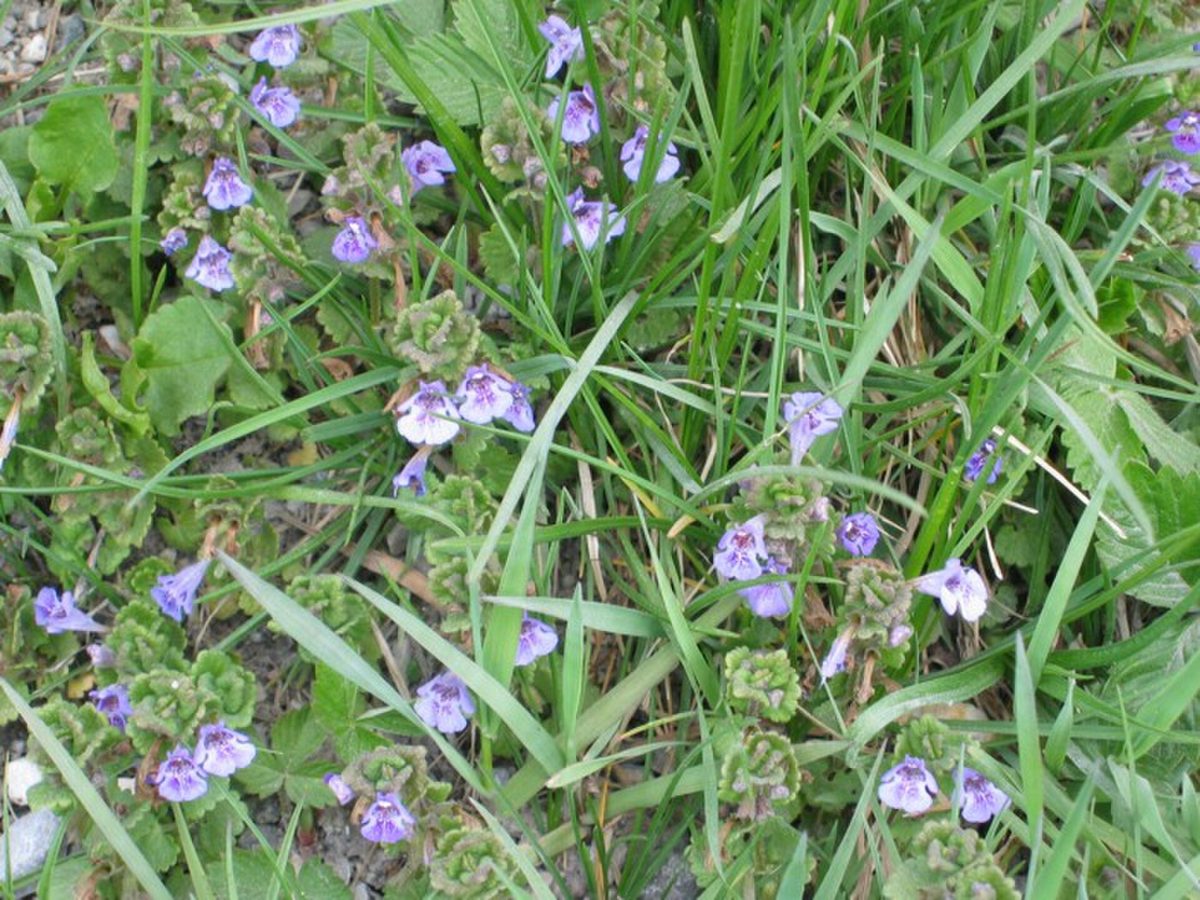
Photo: Michael Kurz, CC BY-SA 3.0 via Wikimedia Commons

Quick facts
| Light: | Full sun, part shade and full shade (full sun preferred)123 |
|---|---|
| Water: | Medium to wet21 source |
| Soil: | Moist24 |
| Size: | 0.2–1 ft (0.05–0.3 m) × 1–3 ft (0.3–0.9 m)154 |
| Growth rate: | Rapid111 source |
| Bloom: | Apr–Jun, Mar–Aug (Great Britain), May–Jul (New England), Mar–Jun (Carolinas) and Sep–Nov (Canada (Manitoba)), Purple and blue141 source |
| Cats: | Not documented by major sources |
| Dogs: | Not documented by major sources |
| Native range: | ALB, ALT, AUT, BGM, BLR, BLT, BUL, CHX, COR, CZE, DEN, FIN, FRA, GER, GRB, GRC, HUN, IRE, IRK, ITA, KAZ, KGZ, KRA, KRY, NCS, NET, NOR, POL, POR, ROM, RUC, RUE, RUN, RUS, RUW, SPA, SWE, SWI, TCS, TUE, TUR, TVA, UKR, WSB, YAK, YUG6 |
| Family: | Lamiaceae |
How much light does a Ground Ivy need?
Full sun is the preferred light for this plant. It also grows in part shade and in full shade. The dappled sunlight category means shade through the upper canopy all day. Ground ivy is often found growing in shade or in full sun, and where turf is thin.
How often to water a Ground Ivy
Medium to wet conditions suit ground ivy, according to the water record for the plant. The recorded range starts at medium and ends at wet. Moist soil is the drainage condition listed for the plant, and it is often found growing in moist soils, in shade or in full sun.
- Water: Medium to wet2
Best soil for a Ground Ivy
Moist is the soil drainage class recorded for ground ivy. It is often found growing in moist soils, whether in shade or in full sun, and where turf is thin. A university extension description says it thrives in shaded, moist, nutrient-poor soil. Thin turf is one setting where it turns up, alongside moist soil. No soil pH range is documented for this page.
How to propagate a Ground Ivy
Seed and division are the two propagation methods recorded for ground ivy. Penn State Extension says plants are produced from seed or from nodes, the growing points, on stolons. The plant is a low-growing perennial herb that spreads by branched horizontal stolons that root at their nodes. Its evergreen mats spread 1 to 3 ft (0.3 to 0.9 m).
- Propagation: Division and seed2
Common problems
Neither pests nor diseases are recorded as common for ground ivy. The NC State Extension Gardener Plant Toolbox says it has no known diseases or insect problems. Growth is the trait on record instead, and the rate is rapid.
Is Ground Ivy toxic to cats and dogs?
Recommended supplies
- Soil: a mix that holds moisture without staying wet.
Questions and answers
- How much sun does ground ivy need?
- Full sun is its preferred light. It also grows in part shade and in full shade. Dappled sunlight, meaning shade through the upper canopy all day, is also listed. It is often found in shade or full sun, and where turf is thin.
- What color are ground ivy flowers?
- The flowers are purple and blue. NC State Extension describes them as bluish-purple to light blue, and University of Minnesota Extension calls them purple or blue tubular flowers. NC State Extension says they bloom from April to June, while a Great Britain record gives March to August.
- How big does ground ivy get?
- This herbaceous perennial usually grows to 1 ft (0.3 m) or less in height. The recorded range is 0.2 to 1 ft (0.05 to 0.3 m). It forms evergreen mats that spread 1 to 3 ft (0.3 to 0.9 m).
Sources
- NC State Extension Gardener Plant Toolbox. https://plants.ces.ncsu.edu/plants/glechoma-hederacea/. Accessed 14 October 2026.
- Penn State Extension. https://extension.psu.edu/lawn-and-turfgrass-weeds-ground-ivy-glechoma-hederacea-l. Accessed 14 October 2026.
- Penn State Extension. https://extension.psu.edu/dead-nettle-henbit-and-ground-ivy-three-look-alike-weeds. Accessed 14 October 2026.
- University of Minnesota Extension. https://extension.umn.edu/garden-and-home/yard-and-garden/gardening-in-minnesota/yard-and-garden-problems/ground-ivy. Accessed 1 November 2026.
- University of Minnesota Extension. https://extension.umn.edu/weeds/ground-ivy. Accessed 14 October 2026.
- Royal Botanic Gardens, Kew (World Checklist of Vascular Plants). https://sftp.kew.org/pub/data-repositories/WCVP/wcvp.zip. Accessed 4 June 2026.
How this page was made
- Written with AI assistance from the sources listed on this page. AI is never the source of a fact.