Common Filbert (Corylus avellana)
Formerly Corylus pontica, Corylus alba, Corylus ardua
Give common filbert, *Corylus avellana*, full sun, though part shade is also listed. It grows as a shrub or tree and is listed for hardiness zones 4a to 8b. Watering needs are not documented on this page. Pet toxicity for cats and dogs is not documented here either.
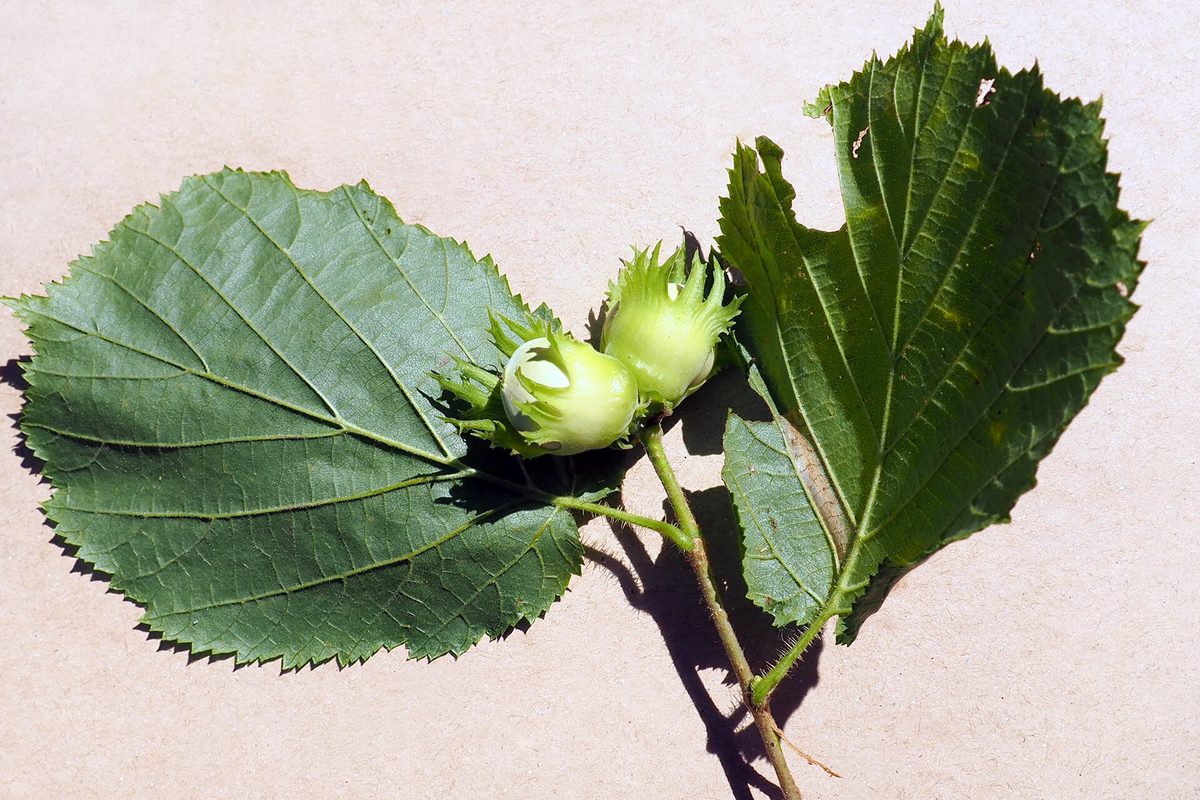
Photo: Hladac, CC BY-SA 4.0 via Wikimedia Commons

Quick facts
| Light: | Full sun and part shade (full sun preferred)11 source |
|---|---|
| Soil: | Well drained, moist and occasionally dry; pH 6–8121 source |
| Hardiness: | Zones 4a–8b11 source |
| Size: | 10–15 ft (3.05–4.57 m) × 8–15 ft (2.44–4.57 m)411 source |
| Growth rate: | Slow51 source |
| Bloom: | Mar–Apr, Yellow and green611 source |
| Cats: | Not documented by major sources |
| Dogs: | Not documented by major sources |
| Native range: | ALB, AUT, BGM, BLR, BLT, BUL, COR, CZE, DEN, EAI, FIN, FOR, FRA, GER, GRB, GRC, HUN, IRE, ITA, KRY, NCS, NET, NOR, POL, POR, ROM, RUC, RUE, RUN, RUS, RUW, SAR, SIC, SPA, SWE, SWI, TCS, TUR, UKR, YUG7 |
| Family: | Betulaceae |
How much light does a Common Filbert need?
Six or more hours of direct sunlight a day counts as full sun, and common filbert prefers it. Part shade is also listed as an accepted condition. The light range on file covers those two conditions: full sun and part shade. Full sun is the preferred exposure, and part shade is the other one listed.
- Light: Full sun and part shade (full sun preferred)1
Best soil for a Common Filbert
Well drained soil is listed for common filbert. The same listing also includes moist soil and soil that is occasionally dry. The plant accepts a soil pH from 6.0 to 8.0, which the source calls neutral. Aim to keep your soil within that band. Drainage and pH are the two soil conditions on file, and no other soil requirement is documented here.
Hardiness and temperature
USDA hardiness zones 4a to 8b are listed for common filbert. That range includes zones 4a, 4b, 5a, 5b, 6a, 6b, 7a, 7b, 8a and 8b. Check your own zone against that range before you plant. No cited source records a minimum temperature for this plant. Humidity needs are not documented either.
- Hardiness: Zones 4a–8b1
How to plant a Common Filbert
Allow for a mature height of 10–15 ft (3.05–4.57 m). The mature spread is 8–15 ft (2.44–4.57 m), so give it that much room in width. It is a slow grower. Choose a spot in USDA zones 4a to 8b, the range listed for this plant. In the lower 48 US states it has introduced status.
- Hardiness: Zones 4a–8b1
Winter care
Common filbert is deciduous. Its listed hardiness range runs from zone 4a to zone 8b. A garden in zone 3 or colder, or in zone 9 or warmer, falls outside that listed range. No cited source records a minimum temperature for it. Winter protection steps are not documented on this page.
- Hardiness: Zones 4a–8b1
How to propagate a Common Filbert
Five propagation methods are listed for common filbert: layering, root cuttings, seed, grafting and stem cuttings. One extension source says it is now more common to use tie-off layering, grafting, softwood cuttings and microcuttings from micropropagation. Seed and root cuttings are also on the list, alongside the stem cuttings. The list on file does not rank the methods.
- Propagation: Layering, root cuttings, seed, grafting and stem cuttings3
Common problems
The Japanese beetle is the most common insect listed for this plant, and it devours the leaves. Diseases listed include eastern filbert blight, black knot, crown gall, apple mosaic virus and leaf spot. The source describes these diseases as something of an issue. No other pest is recorded on this page.
| Problem | Kind |
|---|---|
| Japanese beetle | Pest |
| Eastern filbert blight | Disease |
| Black knot | Disease |
| Crown gall | Disease |
| Apple mosaic virus | Disease |
| Leaf spot | Disease |
Is Common Filbert toxic to cats and dogs?
Recommended supplies
- Soil: a free-draining mix, and a pot with a drainage hole.
Questions and answers
- How big does common filbert get?
- Mature height is listed as 10–15 ft (3.05–4.57 m). Mature spread is listed as 8–15 ft (2.44–4.57 m). The growth rate is slow.
- What color are common filbert flowers?
- The bloom color is listed as yellow and green. One source describes the color as gold or yellow. The plant itself is listed as a shrub and a tree, and it is deciduous.
- Can I grow common filbert in my area?
- It is listed for USDA zones 4a to 8b. It prefers full sun, and part shade is also listed. Its soil should be well drained, with a pH from 6.0 to 8.0.
Sources
- NC State Extension Gardener Plant Toolbox. https://plants.ces.ncsu.edu/plants/corylus-avellana/. Accessed 11 October 2026.
- NC State Extension Gardener Plant Toolbox. https://plants.ces.ncsu.edu/plants/corylus-avellana-contorta/. Accessed 11 October 2026.
- Oregon State University Extension Service. https://extension.oregonstate.edu/catalog/em-9075-growing-hazelnuts-pacific-northwest-plant-propagation. Accessed 11 October 2026.
- University of Illinois Extension. https://web.extension.illinois.edu/shrubselector/detail_plant.cfm?PlantID=375. Accessed 28 October 2026.
- Utah State University Extension. https://extension.usu.edu/treebrowser/catalog/filbert-european. Accessed 11 October 2026.
- Chicago Botanic Garden. https://www.chicagobotanic.org/plant-information/plant-finder/corylus-avellana-contorta-contorted-european-hazel. Accessed 21 October 2026.
- Royal Botanic Gardens, Kew (World Checklist of Vascular Plants). https://sftp.kew.org/pub/data-repositories/WCVP/wcvp.zip. Accessed 4 June 2026.
How this page was made
- Written with AI assistance from the sources listed on this page. AI is never the source of a fact.