Flowering Dogwood (Cornus florida)
Formerly Benthamidia florida, Cynoxylon floridum, Benthamia florida
Flowering dogwood (Cornus florida) grows outdoors in full sun to part shade, with full sun as the preferred spot. It needs medium water, with deep soakings during dry periods. This deciduous tree or shrub is native to the US-L48 region.
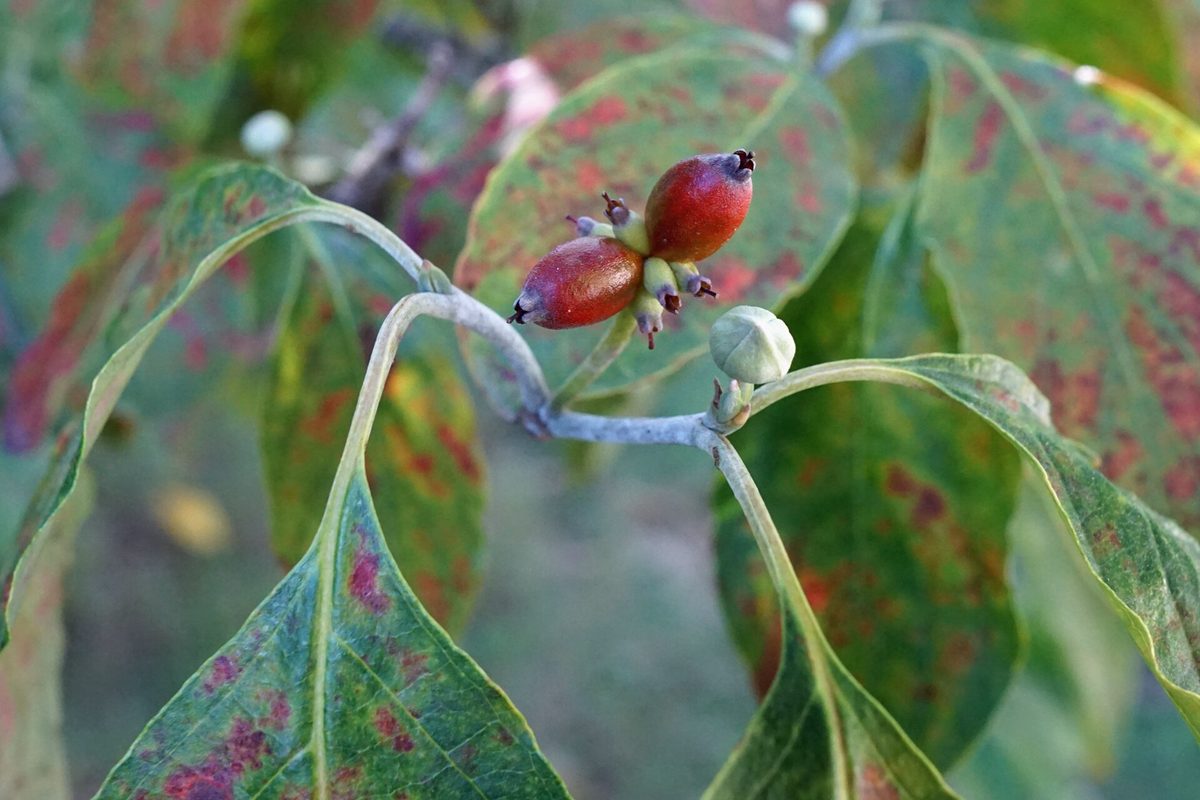
Photo: Plant Image Library from Boston, USA, CC BY-SA 2.0 via Wikimedia Commons

Quick facts
| Light: | Full sun and part shade (full sun preferred)11 source |
|---|---|
| Water: | Medium21 source |
| Soil: | Well drained, moist and occasionally dry; pH 5.5–6312 |
| Hardiness: | Zones 5a–9a11 source |
| Size: | Sources differ: University of Florida IFAS Extension (EDIS); University of Florida IFAS Extension (EDIS); Lady Bird Johnson Wildflower Center (Native Plant Database) × Sources differ: Clemson Cooperative Extension HGIC3142Sources differ |
| Growth rate: | Moderate32131 |
| Bloom: | Mar–May, White, yellow, green, pink and red3421 source |
| Cats: | Not documented by major sources |
| Dogs: | Not documented by major sources |
| Native range: | ALA, ARK, CNT, DEL, FLA, GEO, ILL, INI, KAN, KTY, LOU, MAI, MAS, MIC, MRY, MSI, MSO, MXE, MXG, NCA, NWH, NWJ, NWY, OHI, OKL, ONT, PEN, RHO, SCA, TEN, TEX, VER, VRG, WDC, WVA5 |
| Family: | Cornaceae |
How much light does a Flowering Dogwood need?
Grow your dogwood where it gets full sun for at least part of the day. It also tolerates part shade, and is considered shade tolerant in that setting. Among the light levels it accepts outdoors, from full sun to part shade, full sun is the preferred one. Part shade still gives the tree enough light to grow outdoors, even though full sun is better.
- Light: Full sun and part shade (full sun preferred)1
How often to water a Flowering Dogwood
This tree needs medium water overall. During dry periods, water it deeply, about 1 to 2 inches (2.5 to 5 cm) a week. This matters most for trees planted in full sun. The soil should stay moist but well drained, with some tolerance for occasional dryness.
- Water: Medium2
Best soil for a Flowering Dogwood
Give it soil that drains well but stays moist. It also tolerates soil that runs occasionally dry. This tree tolerates clay, sand and loam soils, as well as pH levels that range from acidic to slightly alkaline. For best results, keep soil pH between 5.5 and 6, which is acidic. The soil there should also be high in organic matter.
Hardiness and temperature
Outdoors, flowering dogwood is hardy in USDA hardiness zones 5a through 9a. That range runs from zone 5a, its coldest hardiness zone, to zone 9a, its warmest. Gardens that are colder than zone 5a or warmer than zone 9a fall outside its rated hardiness range. Zones 5a and 9a together set the boundaries for growing it outdoors year to year.
- Hardiness: Zones 5a–9a1
Fertilizing a Flowering Dogwood
Fertilize your flowering dogwood only lightly, just once a year. Apply that single feeding in March or April, after the last frost has passed. Spring, once the frost risk has passed, is the right time of year for this light, yearly feeding.
- Fertilizer: Light, once a year (Mar–Apr)2
How to plant a Flowering Dogwood
Plant flowering dogwood outdoors in USDA hardiness zones 5a through 9a. It is a tree or shrub, and it is deciduous. It is native to the US-L48 region. Its growth rate is listed as moderate. Choose a planting site with soil that drains well. Aim for soil pH between 5.5 and 6 there.
- Hardiness: Zones 5a–9a1
Winter care
USDA hardiness zones 5a through 9a mark the winter range this tree is rated for outdoors. Winters colder than zone 5a are outside the range it is rated to survive. Zone 9a marks the warm edge of that same rated range. That range covers everywhere from zone 5a's coldest winters to zone 9a's warmest ones.
- Hardiness: Zones 5a–9a1
Care calendar
| Task | Jan | Feb | Mar | Apr | May | Jun | Jul | Aug | Sep | Oct | Nov | Dec |
|---|---|---|---|---|---|---|---|---|---|---|---|---|
| Fertilize | Fertilize in Mar | Fertilize in Apr | ||||||||||
| Bloom | Bloom in Mar | Bloom in Apr | Bloom in May |
How to propagate a Flowering Dogwood
You can propagate flowering dogwood from seed. Sow seeds outdoors right after you collect them from the tree. You can also stratify the seeds and sow them the following spring instead of right away. Seed is the only propagation method that is documented for this tree.
- Propagation: Seed4
Common problems
Watch for calico scale, dogwood borer, dogwood sawfly, Japanese maple scale, leafhoppers, oyster shell scale and aphids. You can spray aphids off with a strong stream of water from a hose. Dogwood anthracnose is the biggest disease concern, though it is uncommon and mainly found above 1800 feet (549 m). Other recorded diseases include powdery mildew, leaf spot and canker.
- Common pests: calico scale, dogwood borer, dogwood sawfly, japanese maple scale, leafhoppers, oyster shell scale and aphids31
- Common diseases: dogwood anthracnose, spot anthracnose, powdery mildew, leaf spot, canker, root rot, twig blight, crown canker, bacterial leaf scorch and septoria leaf spot31
| Problem | Kind |
|---|---|
| Calico scale | Pest |
| Dogwood borer | Pest |
| Dogwood sawfly | Pest |
| Japanese maple scale | Pest |
| Leafhoppers | Pest |
| Oyster shell scale | Pest |
| Aphids | Pest |
| Dogwood anthracnose | Disease |
| Spot anthracnose | Disease |
| Powdery mildew | Disease |
| Leaf spot | Disease |
| Canker | Disease |
| Root rot | Disease |
| Twig blight | Disease |
| Crown canker | Disease |
| Bacterial leaf scorch | Disease |
| Septoria leaf spot | Disease |
Is Flowering Dogwood toxic to cats and dogs?
Recommended supplies
- Soil: a free-draining mix, and a pot with a drainage hole.
Questions and answers
- How much water does flowering dogwood need?
- Flowering dogwood needs only medium water outdoors. During dry periods, water it deeply, about 1 to 2 inches (2.5 to 5 cm) a week.
- When should you fertilize flowering dogwood?
- Fertilize it only lightly, just once a year. Do this once in March or April, after the last frost of the spring season has passed.
- Is flowering dogwood native to the US?
- Yes, flowering dogwood is native to the US-L48 region. It grows outdoors in USDA hardiness zones 5a through 9a. Its growth rate is moderate.
Sources
- University of Florida IFAS Extension (EDIS). https://ask.ifas.ufl.edu/publication/ST185. Accessed 14 October 2026.
- Clemson Cooperative Extension Home & Garden Information Center. https://hgic.clemson.edu/factsheet/dogwood/. Accessed 14 October 2026.
- NC State Extension Gardener Plant Toolbox. https://plants.ces.ncsu.edu/plants/cornus-florida/. Accessed 14 October 2026.
- Lady Bird Johnson Wildflower Center (Native Plant Database). https://www.wildflower.org/plants/result.php?id_plant=cofl2. Accessed 14 October 2026.
- Royal Botanic Gardens, Kew (World Checklist of Vascular Plants). https://sftp.kew.org/pub/data-repositories/WCVP/wcvp.zip. Accessed 4 June 2026.
How this page was made
- Written with AI assistance from the sources listed on this page. AI is never the source of a fact.