Littleleaf Linden (Tilia cordata)
Formerly Tilia parvifolia, Tilia rugosa, Tilia foemina
Littleleaf linden, Tilia cordata, grows best in full sun. It also tolerates part shade. It is hardy in USDA zones 3b to 7b. This deciduous tree reaches 50–80 ft (15.24–24.38 m) tall at maturity. Its flowers are creamy yellow. Watering needs and pet toxicity are not documented for it on this page.
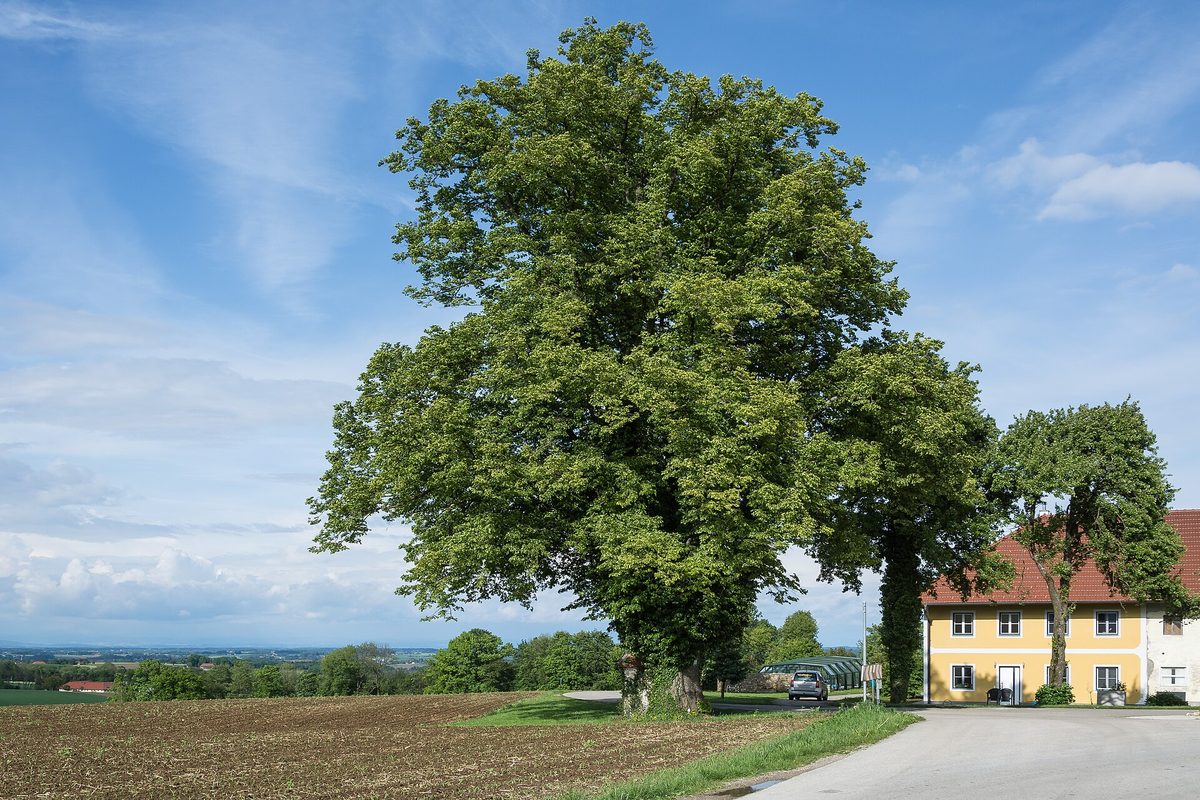
Photo: Isiwal, CC BY-SA 3.0 via Wikimedia Commons

Quick facts
| Light: | Full sun and part shade (full sun preferred)12 |
|---|---|
| Soil: | Well drained, moist and occasionally dry; pH 5–812 |
| Hardiness: | Zones 3b–7b11 source |
| Size: | 50–80 ft (15.24–24.38 m) × 50 ft (15.24 m)12 |
| Growth rate: | Moderate11 source |
| Bloom: | Jun–Jul, Yellow11 source |
| Cats: | Not documented by major sources |
| Dogs: | Not documented by major sources |
| Native range: | ALB, ALT, AUT, BGM, BLR, BLT, BUL, COR, CZE, DEN, FIN, FRA, GER, GRB, GRC, HUN, IRN, ITA, KAZ, KRA, KRY, NCS, NET, NOR, POL, ROM, RUC, RUE, RUN, RUS, RUW, SPA, SWE, SWI, TCS, TUE, UKR, WSB, YUG6 |
| Family: | Malvaceae |
How much light does a Littleleaf Linden need?
Full sun is the preferred exposure for littleleaf linden, and the source describes that as 6 or more hours of direct sunlight a day. The tree also grows in part shade. A site with 6 or more hours of direct sun matches the preferred condition. Leave room overhead and to the sides, because it reaches 50–80 ft (15.24–24.38 m) tall and spreads about 50 ft (15.24 m).
Best soil for a Littleleaf Linden
Soil for littleleaf linden can be well drained, moist or occasionally dry. Good drainage is the first condition listed by one source. Another source describes consistently moist, well-drained soil with occasional periods of dry soil. The tree tolerates soil from acid to alkaline, with a pH of 5 to 8. Any soil inside that band is within the range listed for this species.
Hardiness and temperature
Littleleaf linden is rated hardy in USDA zones 3b to 7b. That range runs through zones 3b, 4a, 4b, 5a, 5b, 6a, 6b, 7a and 7b. Zone 3b is the cold end of the listing. Zone 7b is the warm end. A garden in zone 3a, or in zone 8 and warmer, falls outside the listed range. No cited source records a minimum temperature or a humidity need for this tree. Compare your own zone with the listed range before you plant.
- Hardiness: Zones 3b–7b1
Fertilizing a Littleleaf Linden
Light feeding once a year is the fertilizer pattern listed for littleleaf linden. Penn State Extension describes a light application of slow-release fertilizer as sufficient. The source places that application in the fall, after leaf color. The fertilizer it names is a slow-release type.
- Fertilizer: Light, once a year3
Pruning a Littleleaf Linden
Hard renewal pruning is the type listed for littleleaf linden. The source says the tree can tolerate heavy pruning. It is a deciduous tree with a moderate growth rate. At maturity it stands 50–80 ft (15.24–24.38 m) tall and about 50 ft (15.24 m) wide.
- Pruning: Hard renewal pruning1
How to plant a Littleleaf Linden
Check that your site falls in USDA zones 3b to 7b before planting littleleaf linden. Choose a spot with full sun, and allow for a spread of about 50 ft (15.24 m). The tree reaches 50–80 ft (15.24–24.38 m) tall, so look at the space above the spot as well as around it. Good drainage is listed for the site, and soil with a pH from 5 to 8 is tolerated. In the lower 48 US states this tree has introduced status.
- Hardiness: Zones 3b–7b1
Winter care
Hardiness for this tree runs from zone 3b to zone 7b. In zone 3b, the cold end of that range, it is still listed as hardy. In zone 7b, the warm end, it is listed as well. The tree is deciduous. No cited source gives a minimum temperature or any winter protection steps. Outside zones 3b to 7b, the listing offers no guidance. Your own zone is the first thing to check.
- Hardiness: Zones 3b–7b1
How to propagate a Littleleaf Linden
Grafting and stem cuttings are the propagation methods listed for this tree. One source says propagation is mostly done by grafting stem cuttings onto rootstock. Another source lists linden among the trees that can be propagated from softwood cuttings. Rootstock belongs to the grafting method, and softwood is the cutting type that source names.
Common problems
Eight pests are listed: Japanese beetles, borers, scale, leaf miners, lace bugs, caterpillars, aphids and spider mites. The diseases listed are powdery mildew, leaf spot, canker and verticillium wilt. One source says powdery mildew, leaf spots and canker are possible. It describes borers, scale, leaf miners, lace bugs, caterpillars and aphids as insects that may be seen.
| Problem | Kind |
|---|---|
| Japanese beetles | Pest |
| Borers | Pest |
| Scale insects | Pest |
| Leaf miners | Pest |
| Lace bugs | Pest |
| Caterpillars | Pest |
| Aphids | Pest |
| Spider mites | Pest |
| Powdery mildew | Disease |
| Leaf spot | Disease |
| Canker | Disease |
| Verticillium wilt | Disease |
Is Littleleaf Linden toxic to cats and dogs?
Recommended supplies
- Soil: a free-draining mix, and a pot with a drainage hole.
Questions and answers
- What zones can littleleaf linden grow in?
- Littleleaf linden is listed for USDA zones 3b to 7b. Zone 3b is the coldest zone in that range, and zone 7b is the warmest. At maturity the tree reaches 50–80 ft (15.24–24.38 m) tall.
- How big does a littleleaf linden get?
- The tree grows 50–80 ft (15.24–24.38 m) tall at maturity. It spreads about 50 ft (15.24 m) wide. Its growth rate is moderate, and the source calls it a medium growth rate.
- What do littleleaf linden flowers look like?
- The flowers are fragrant and creamy yellow. They hang from pendulous clusters with 5 to 7 flowers per cluster.
Sources
- NC State Extension Gardener Plant Toolbox. https://plants.ces.ncsu.edu/plants/tilia-cordata/. Accessed 21 October 2026.
- Cornell University CALS Woody Plants Database. https://woodyplants.cals.cornell.edu/plant/258. Accessed 21 October 2026.
- Penn State Extension. https://extension.psu.edu/planting-ornamentals. Accessed 21 October 2026.
- Iowa State University Extension and Outreach (Yard and Garden). https://yardandgarden.extension.iastate.edu/how-to/propagation-deciduous-trees-and-shrubs-softwood-cuttings. Accessed 21 October 2026.
- EPPO Global Database. https://gd.eppo.int/taxon/TILCO/pests. Accessed 21 October 2026.
- Royal Botanic Gardens, Kew (World Checklist of Vascular Plants). https://sftp.kew.org/pub/data-repositories/WCVP/wcvp.zip. Accessed 4 June 2026.
How this page was made
- Written with AI assistance from the sources listed on this page. AI is never the source of a fact.