Camphortree (Camphora officinarum)
Formerly Cinnamomum camphora, Camphora neesii, Camphora rougieri
Give camphortree full sun, though part shade is also an option. Its water needs range from dry to medium. Ensure the soil does not stay wet, since the tree is susceptible to root rot. Camphortree is listed as toxic to cats. Toxicity for dogs is not documented here.
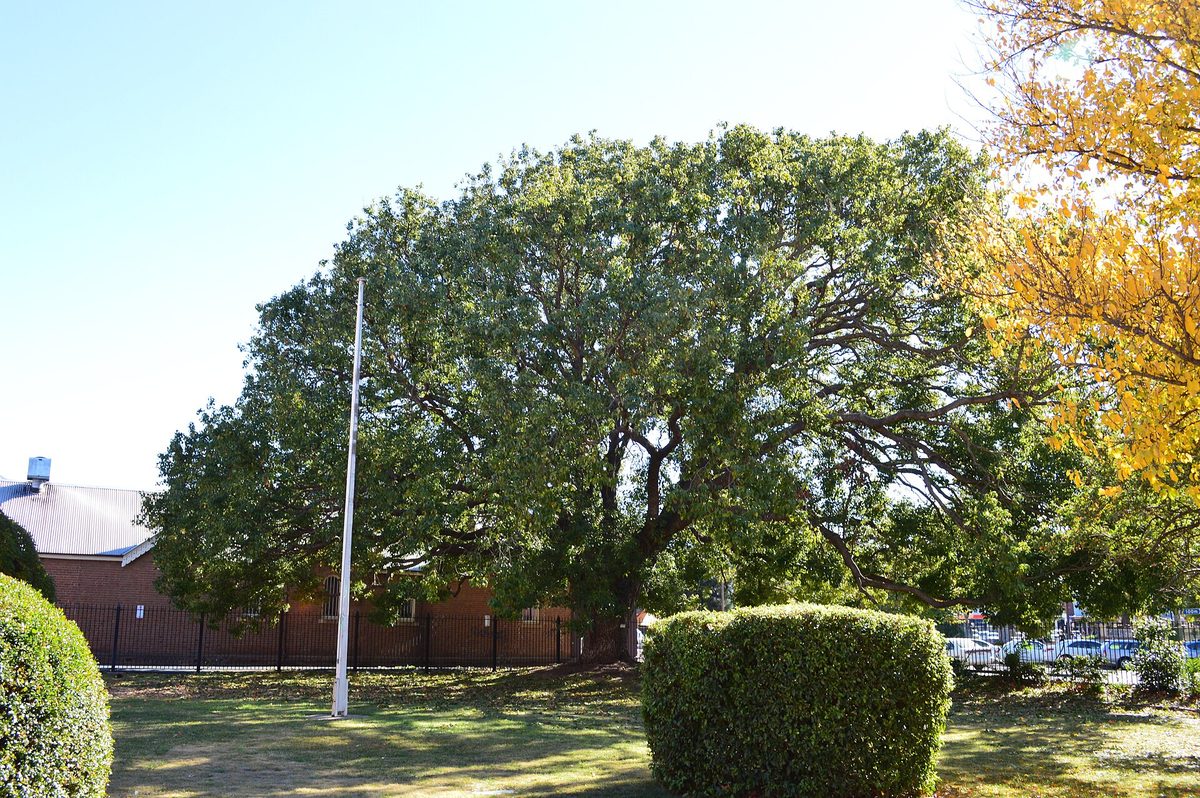
Photo: Mattinbgn, CC BY 3.0 via Wikimedia Commons

Quick facts
| Light: | Full sun and part shade (full sun preferred)12 |
|---|---|
| Water: | Dry to medium11 source |
| Soil: | Well drained and occasionally dry13 |
| Hardiness: | Zones 9b–11b11 source |
| Size: | 40–50 ft (12.19–15.24 m) × 50–70 ft (15.24–21.34 m)123 |
| Growth rate: | Rapid12121 |
| Bloom: | White, green and yellow21 |
| Cats: | Toxic to cats (1 source) 4 |
| Dogs: | Not documented by major sources |
| Native range: | JAP, KOR, NNS, TAI5 |
| Family: | Lauraceae |
How much light does a Camphortree need?
Full sun is the preferred exposure for camphortree, which means six or more hours of direct sunlight a day. Part shade is the other listed option. Descriptions of its light range run from full sun to partial shade. Aim for the sunny end of that range when you have the choice.
How often to water a Camphortree
Camphortree's water needs run from dry to medium. Make sure the soil does not remain wet, as the tree is susceptible to root rot. It will not tolerate water-logged soils. Good drainage is listed for this tree, and the soil is described as well drained and occasionally dry. Check whether the soil is staying wet before you add more water.
- Water: Dry to medium1
Best soil for a Camphortree
Soil for camphortree should drain well and may be occasionally dry. Good drainage is listed for this tree. It will not tolerate water-logged soils. Root rot is a recorded disease, especially in poorly drained soils. Its water need is listed as dry to medium. Soil that stays wet is the condition to avoid. No cited source records a soil pH range for this tree.
Hardiness and temperature
The listed hardiness range is USDA zones 9b through 11b. Those zones are 9b, 10a, 10b, 11a and 11b. Zone 9b is the coldest of them. Zone 11b is the warmest. Outdoor planting in a zone colder than 9b falls outside the listed range. Camphortree is a large evergreen tree. No minimum temperature or humidity preference is documented for it.
- Hardiness: Zones 9b–11b1
Pruning a Camphortree
Pruning for camphortree is light shaping. The aim is to develop major branches and good structure. Space the major branches 18 to 30 inches (46-76 cm) apart. Place them along a central trunk. At maturity the tree stands 40 to 50 ft (12.19-15.24 m) tall.
- Pruning: Light shaping2
How to plant a Camphortree
Zones 9b through 11b are where this tree is rated for outdoor planting. Allow room for a mature height of 40 to 50 ft (12.19-15.24 m) and a spread of 50 to 70 ft (15.24-21.34 m). Choose a spot with full sun or part shade. Pick a place with good drainage, as it will not tolerate water-logged soils. Its growth rate is rapid. It is an evergreen tree.
- Hardiness: Zones 9b–11b1
Winter care
Zone 9b is the coldest zone listed for camphortree. It is rated across five zones, from 9b to 11b. It is an evergreen tree. Do not let the soil stay wet, because the tree is susceptible to root rot. It will not tolerate water-logged soils. Zones colder than 9b are outside the listed range. No winter protection method or minimum temperature is documented.
- Hardiness: Zones 9b–11b1
How to propagate a Camphortree
Propagation is by seed for camphortree. The tree produces copious amounts of seeds. It also self-seeds easily. Its growth rate is rapid. Its status in the lower 48 states is introduced. Hawaii and Puerto Rico are also listed as introduced. No other propagation method is documented here.
Common problems
Laurel wilt and root rot are the diseases listed for camphortree. Root rot is noted especially in poorly drained soils. The tree is susceptible to laurel wilt. Scale insects and mites are common problems. Redbay ambrosia beetle is also listed among the pests.
| Problem | Kind |
|---|---|
| Scale insects | Pest |
| Mites | Pest |
| Redbay ambrosia beetle | Pest |
| Laurel wilt | Disease |
| Root rot | Disease |
Is Camphortree toxic to cats and dogs?
Camphortree is listed as toxic to cats. The listing comes from Pet Poison Helpline. That entry says it should never be applied to dogs or cats. The reason it gives is the risk of poisoning. Cats are the animal with a documented toxic listing on this page. Toxicity for dogs and the toxic parts of the plant are not documented here.
Pet-safe alternatives
Recommended supplies
- Soil: a free-draining mix, and a pot with a drainage hole.
Questions and answers
- How much sun does camphortree need?
- Full sun is the preferred exposure, which means six or more hours of direct sunlight a day. Part shade is also listed as an option. Descriptions of its range run from full sun to partial shade.
- Is camphortree toxic to cats?
- Camphortree is listed as toxic to cats. Pet Poison Helpline's entry says it should never be applied to dogs or cats. The reason given is the risk of poisoning.
- Which USDA zones suit camphortree?
- Camphortree is rated for USDA zones 9b through 11b. Zone 9b is the coldest zone listed. It is a large evergreen tree that reaches 40 to 50 ft (12.19-15.24 m) tall.
Sources
- NC State Extension Gardener Plant Toolbox. https://plants.ces.ncsu.edu/plants/cinnamomum-camphora/. Accessed 12 October 2026.
- University of Florida IFAS Extension (EDIS). https://ask.ifas.ufl.edu/publication/ST167. Accessed 12 October 2026.
- University of Florida IFAS Extension (EDIS). https://ask.ifas.ufl.edu/st167. Accessed 12 October 2026.
- Pet Poison Helpline. https://www.petpoisonhelpline.com/poison/camphor/. Accessed 12 October 2026.
- Royal Botanic Gardens, Kew (World Checklist of Vascular Plants). https://sftp.kew.org/pub/data-repositories/WCVP/wcvp.zip. Accessed 4 June 2026.
How this page was made
- Written with AI assistance from the sources listed on this page. AI is never the source of a fact.