Ceylon Spinach (Basella alba)
Formerly Basella rubra, Basella nigra, Gandola nigra
Soil for this plant should stay medium to wet. It also needs soil that drains well. This plant grows at a rapid pace. Outdoors, it survives year-round only in zones 9a to 11b. Its vines can reach about 10 ft (3.05 m) long. It tolerates soil pH from 4.3 up to 7.5. No cited source lists a cat or dog toxicity status, and indoor light needs aren't documented either.
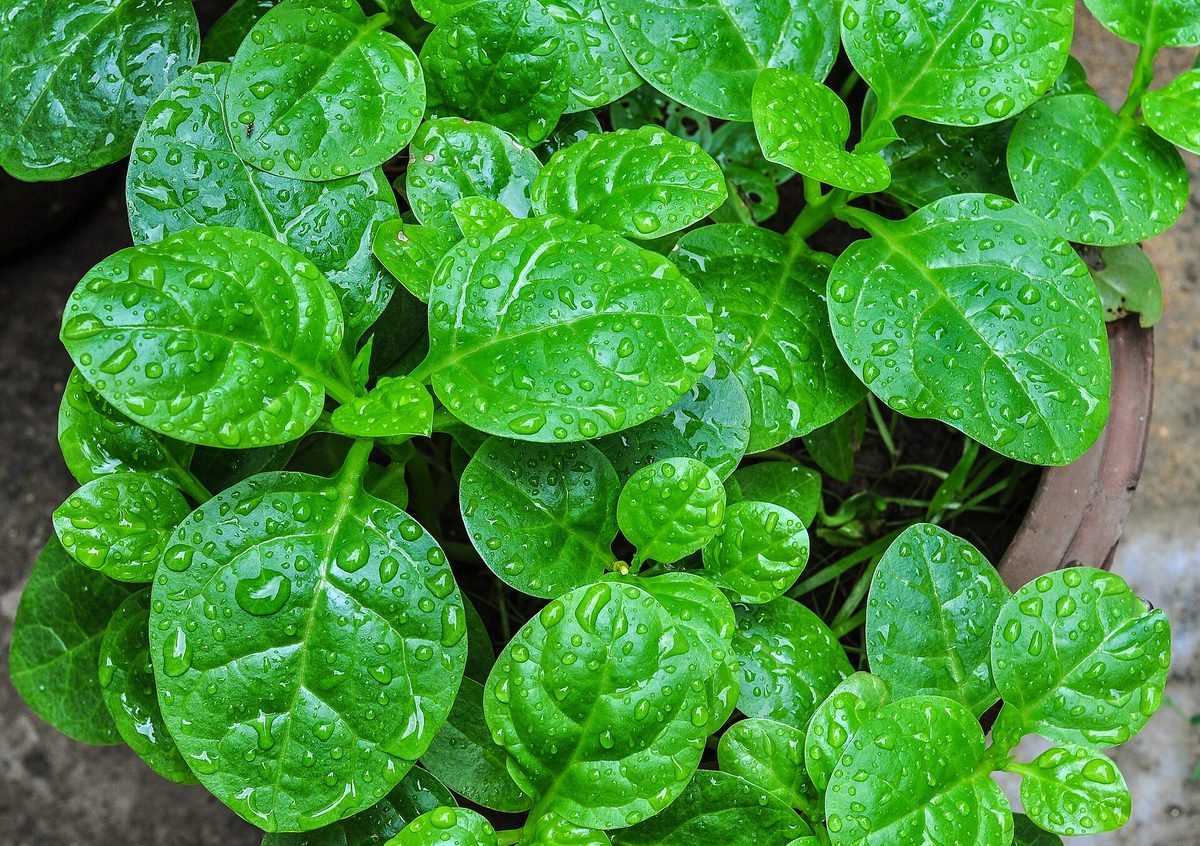
Photo: Joydeep, CC BY-SA 3.0 via Wikimedia Commons

Quick facts
| Water: | Medium to wet12 |
|---|---|
| Soil: | Well drained and moist; pH 4.3–7.5134 |
| Minimum temperature: | 60.8 °F (16 °C)41 source |
| Size: | 10 ft (3.05 m) × 2–3 ft (0.61–0.91 m)311 source |
| Growth rate: | Rapid14 |
| Bloom: | Purple, white and pink13 |
| Cats: | Not documented by major sources |
| Dogs: | Not documented by major sources |
| Native range: | BAN, BOR, CBD, IND, JAW, LAO, LSI, MLY, MOL, MYA, NWG, PHI, SRL, SUL, SUM, THA, VIE5 |
| Family: | Basellaceae |
How often to water a Ceylon Spinach
This plant's soil moisture needs range from medium to wet. The soil must stay moist, since continuous moisture from regular irrigation keeps it growing well. You can let the soil get fully wet without causing trouble, since this plant can tolerate consistently wet soil too. At the same time, the soil it grows in should be well drained and fertile. It also grows at a rapid pace once conditions suit it.
Best soil for a Ceylon Spinach
This plant grows best in soil that is fertile, moist, and well drained. Good drainage is one of the conditions it needs to thrive. At the same time, the soil should not dry out, since it needs to stay moist. Its pH tolerance is wide, spanning from 4.3 up to 7.5, so it grows in soil from fairly acidic to just above neutral. Soil moisture should stay between medium and wet rather than drying out between waterings. Give each plant roughly 2 to 3 ft (0.6 to 0.9 m) of space to grow into.
Temperature and humidity
This plant stops growing well once temperatures drop below 60°F (16°C). Keep it somewhere warmer than that for steady growth. Outdoors, it survives year-round only in USDA zones 9a through 11b. In the wild, it grows naturally across tropical Asia, including India, Sri Lanka, and areas near New Guinea and the Philippines. This plant grows at a rapid pace when conditions suit it. That rapid growth often brings it to maturity in about 70 days when conditions are right. Humidity needs for this plant are not documented on this page.
- Minimum temperature: 60.8 °F (16 °C)4
Pruning a Ceylon Spinach
This plant needs periodic pruning, which means cutting off the fleshy leaves and any overlong vines. This kind of light shaping keeps the plant tidy and within bounds. Its vines can reach about 10 ft (3.05 m) long as an annual. The plant also grows at a rapid pace once conditions are right. Stem cuttings from this plant also root readily when placed in water, giving you another way to propagate it.
- Pruning: Light shaping2
How to propagate a Ceylon Spinach
Three methods work for starting new plants: seed, stem cuttings, and layering. Stem cuttings are an easy route, since tip cuttings root readily when placed in water. Once a cutting or seedling is established, give it soil that stays medium to wet, since this plant does not tolerate dry conditions. Space new plants about 2 to 3 ft (0.6 to 0.9 m) apart, matching its mature spread.
Common problems
NC State Extension lists no known pests or diseases for this plant. No other cited source for this page names a specific pest or disease either. This plant also grows at a rapid pace, reaching maturity in about 70 days under good conditions. Good drainage is still part of the soil it needs.
Is Ceylon Spinach toxic to cats and dogs?
Recommended supplies
- Soil: a free-draining mix, and a pot with a drainage hole.
Questions and answers
- How often should I water Ceylon spinach?
- Keep the soil medium to wet, and never let it dry out completely. It also needs soil that drains well even while staying moist.
- Is Ceylon spinach toxic to cats or dogs?
- No cited source on this page records a toxicity position for cats or dogs for this species, so that status is not documented. Separately, no source cited here lists pests or diseases for this plant either.
- What USDA zones can I grow Ceylon spinach in outdoors?
- Outdoors, it survives year-round only in USDA zones 9a through 11b. In cooler zones, it is often grown as an annual, since its vines can still reach about 10 ft (3.05 m) long in a single season. It also grows at a rapid pace once conditions are right.
Sources
- NC State Extension. https://plants.ces.ncsu.edu/plants/basella-alba/. Accessed 14 October 2026.
- University of Florida IFAS Extension (EDIS). https://ask.ifas.ufl.edu/hs1371. Accessed 14 October 2026.
- Wisconsin Horticulture, University of Wisconsin-Madison Division of Extension. https://hort.extension.wisc.edu/articles/malabar-spinach-basella-alba/. Accessed 14 October 2026.
- University of Florida IFAS Extension (EDIS). https://ask.ifas.ufl.edu/publication/HS1371. Accessed 14 October 2026.
- Royal Botanic Gardens, Kew (World Checklist of Vascular Plants). https://sftp.kew.org/pub/data-repositories/WCVP/wcvp.zip. Accessed 4 June 2026.
How this page was made
- Written with AI assistance from the sources listed on this page. AI is never the source of a fact.