Quaking Aspen (Populus tremuloides)
Formerly Populus benzoifera, Populus aurea, Populus graeca
Quaking aspen is a fast-growing tree. It grows best outdoors in full sun. The tree also tolerates part shade and full shade. It thrives in soil that stays moist to wet. This species is native from Alaska across many US states. Toxicity to cats and dogs is not documented for this page. Hardiness zones 1a to 6b outline where it grows outdoors in winter.
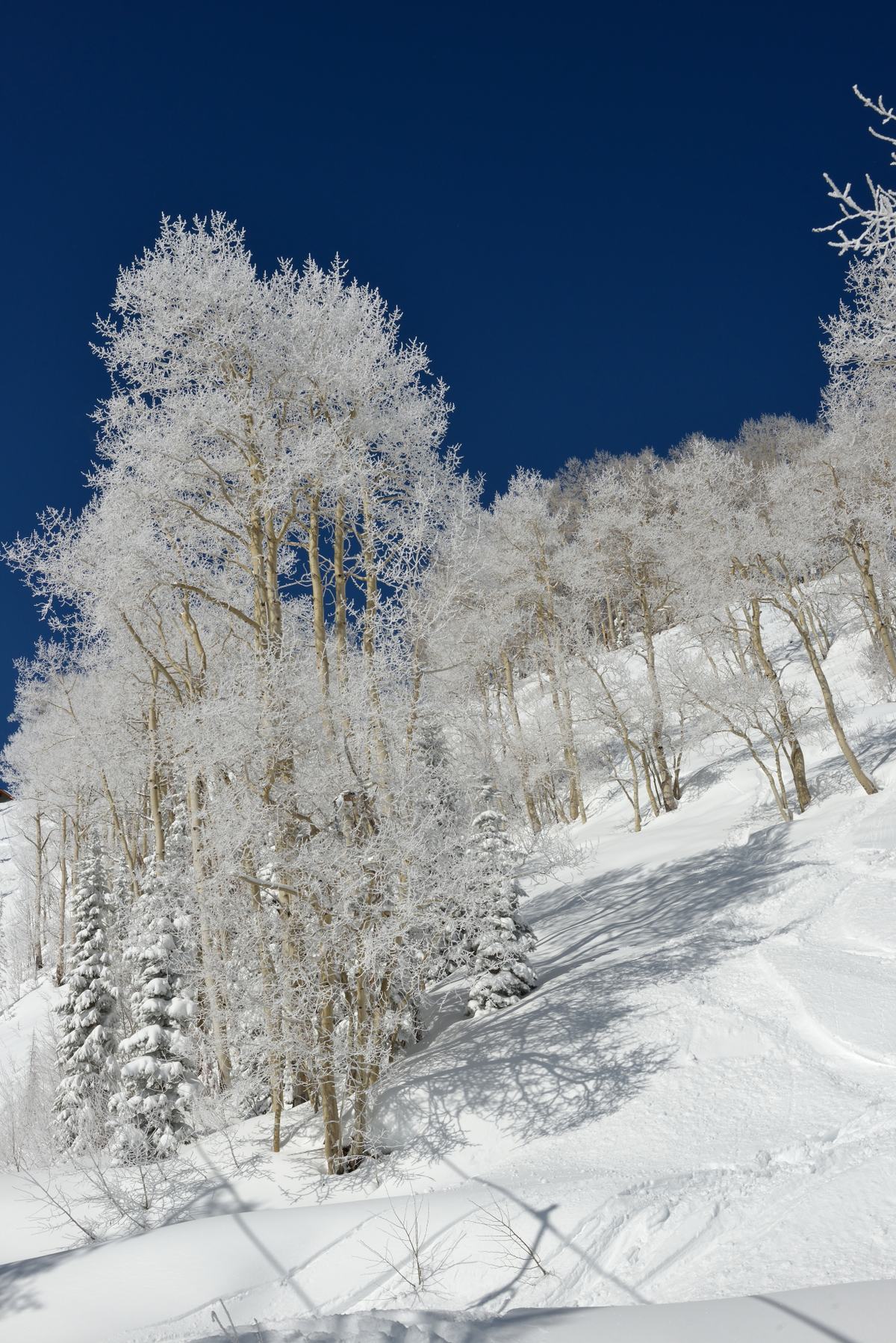
Photo: Wikimedia Commons contributor, CC BY-SA 3.0 via Wikimedia Commons

Quick facts
| Light: | Full sun, part shade and full shade (full sun preferred)11 source |
|---|---|
| Water: | Medium to wet21 source |
| Soil: | Well drained, moist and occasionally wet; pH 5–8341 source |
| Hardiness: | Zones 1a–6b51 source |
| Size: | 35–50 ft (10.67–15.24 m) × 20–30 ft (6.1–9.14 m)147 |
| Growth rate: | Rapid58 |
| Bloom: | Yellow, green and brown17 |
| Cats: | Not documented by major sources |
| Dogs: | Not documented by major sources |
| Native range: | ABT, ARI, ASK, BRC, CAL, CNT, COL, DEL, IDA, ILL, INI, IOW, LAB, MAI, MAN, MAS, MIC, MIN, MNT, MRY, MSO, MXC, MXE, MXG, MXN, MXS, NBR, NCA, NDA, NEB, NEV, NFL, NSC, NUN, NWH, NWJ, NWM, NWT, NWY, OHI, ONT, ORE, PEI, PEN, QUE, RHO, SAS, SDA, TEX, UTA, VER, VRG, WAS, WIS, WVA, WYO, YUK9 |
| Family: | Salicaceae |
How much light does a Quaking Aspen need?
Full sun brings out the strongest growth in quaking aspen outdoors. It also tolerates part shade and even full shade. This tree grows naturally across a wide range of climates in North America, from Alaska down through many US states and Canadian provinces. Its flowers bloom in shades of yellow, green, and brown. Quaking aspen is classified as a tree. It is also a fast-growing species once planted in a suitable spot. In the US, it is native both in Alaska and the lower 48 states.
- Light: Full sun, part shade and full shade (full sun preferred)1
How often to water a Quaking Aspen
Keep the soil around quaking aspen on the moist to wet side rather than letting it dry out. Soils described as rich in lime with a high mix of silt and clay suit this species well. The tree also handles soil that is well drained, consistently moist, or occasionally wet. This species also grows at a rapid pace outdoors. It also tolerates a wide soil pH range, from 5.0 up to 8.0. USDA hardiness zones 1a to 6b mark where this tree grows outdoors.
- Water: Medium to wet2
Best soil for a Quaking Aspen
Well-drained, consistently moist, or occasionally wet soil all work for quaking aspen outdoors. The tree tolerates a wide pH range, from acidic soil at 5.0 up to alkaline soil at 8.0. Soil that is rich in lime with a high mix of silt and clay also suits it well. The tree also grows at a rapid pace, spreading by basal sprouts and root sprouts. At maturity, this tree can spread 20 to 30 ft (6.1-9.1 m) wide. It also grows 35 to 50 ft (10.7-15.2 m) tall when fully mature.
Hardiness and temperature
USDA hardiness zones 1a through 6b outline the cold range where quaking aspen grows outdoors. That span starts among some of the harshest winter zones found in North America. This tree's native range reaches from Alaska down through the continental United States. It also grows at a rapid pace once established in a suitable climate. It also tolerates soil pH from 5.0 up to 8.0. Full sun outdoors suits it best, though part shade and full shade also work.
- Hardiness: Zones 1a–6b5
How to plant a Quaking Aspen
Pick a planting site in full sun for the strongest growth, though quaking aspen also tolerates part shade and full shade. This tree grows outdoors in USDA zones 1a through 6b, a range that includes some of the coldest growing zones in North America. Work in soil that drains well, stays moist, or is occasionally wet, with a pH anywhere from 5.0 to 8.0. Keep an eye out for pests such as the large aspen tortrix and forest tent caterpillar after you plant it outdoors. Once planted, quaking aspen grows at a rapid pace. It grows natively across much of Canada and the northern and western United States, as well as parts of Mexico. Choose a site that also gets consistent moisture for best results.
- Hardiness: Zones 1a–6b5
Winter care
Quaking aspen survives cold winters down into USDA zone 1a, among the coldest zones mapped in North America. Its growing range extends up through zone 6b, covering a broad band of winter climates. This species also tolerates a wide soil pH range, from 5.0 up to 8.0. It also spreads quickly from basal sprouts and root sprouts as part of its rapid growth. A full sun location suits it best throughout the year. Moist to wet soil also suits this tree well. Pests such as the forest tent caterpillar have also been recorded on this species.
- Hardiness: Zones 1a–6b5
How to propagate a Quaking Aspen
You have three ways to start new quaking aspen plants: seed, division, or root cuttings. Suckers and cuttings root easily, making them a simple way to start this tree. Fresh seed also germinates well when you can get hold of it. This species grows at a rapid pace once it takes hold outdoors. New plants, and the parent tree, do best in a full sun spot outdoors. The species grows outdoors across USDA zones 1a to 6b.
- Propagation: Seed, division and root cuttings1
Common problems
The large aspen tortrix, known scientifically as Choristoneura conflictana, is one insect pest recorded on quaking aspen. The forest tent caterpillar is another insect recorded on this species. Hypoxylon canker is a disease documented for this species. Poplar leaf rust, caused by Melampsora medusae, is also recorded on quaking aspen. Both insects have been recorded feeding on Populus trees in general.
| Problem | Kind |
|---|---|
| Large aspen tortrix | Pest |
| Forest tent caterpillar | Pest |
| Hypoxylon canker | Disease |
| Poplar leaf rust | Disease |
Is Quaking Aspen toxic to cats and dogs?
Recommended supplies
- Soil: a free-draining mix, and a pot with a drainage hole.
Questions and answers
- Does quaking aspen need full sun to grow well?
- Full sun gives quaking aspen its strongest growth outdoors, though the tree also tolerates part shade and even full shade. It is also a fast-growing species once planted outdoors. It is native across much of Canada and the northern United States.
- What kind of soil does quaking aspen need?
- This tree does best in soil that drains well but stays moist to occasionally wet, with a pH anywhere from 5.0 to 8.0. Soil that is rich in lime with plenty of silt and clay also suits it. It grows outdoors across USDA zones 1a through 6b.
- Is quaking aspen cold hardy?
- Quaking aspen grows outdoors in USDA zones as cold as 1a, up through zone 6b. That places it among the trees suited to some of the harshest winter climates mapped in North America. It is also native as far north as Alaska.
Sources
- Lady Bird Johnson Wildflower Center. https://www.wildflower.org/plants/result.php?id_plant=POTR5. Accessed 24 September 2026.
- University of Minnesota Extension. https://extension.umn.edu/managing-woodlands/managing-aspen-and-birch-forests. Accessed 24 September 2026.
- University of Minnesota Extension. https://extension.umn.edu/natural-resources/forestry-and-wildlife/forestry/managing-woodlands/managing-aspen-and-birch-forests. Accessed 24 September 2026.
- Cornell University CALS Woody Plants Database. https://woodyplants.cals.cornell.edu/plant/188. Accessed 6 October 2026.
- NC State Extension Gardener Plant Toolbox. https://plants.ces.ncsu.edu/plants/populus-tremuloides/. Accessed 24 September 2026.
- EPPO Global Database. https://gd.eppo.int/taxon/POPTM/pathwayspests. Accessed 24 September 2026.
- Chicago Botanic Garden. https://www.chicagobotanic.org/plant-information/plant-finder/populus-tremuloides-quaking-aspen. Accessed 24 September 2026.
- Utah State University Extension. https://extension.usu.edu/rangeplants/shrubs-and-trees/aspen-quaking. Accessed 24 September 2026.
- Royal Botanic Gardens, Kew (World Checklist of Vascular Plants). https://sftp.kew.org/pub/data-repositories/WCVP/wcvp.zip. Accessed 4 June 2026.
How this page was made
- Written with AI assistance from the sources listed on this page. AI is never the source of a fact.