English Yew (Taxus baccata)
Formerly Taxus adpressa, Taxus aurea, Taxus expansa
English yew grows best outdoors in full sun to part shade, with steady, medium moisture and soil that drains well. It also tolerates part shade well, so some direct afternoon sun is not required. Keep cats and dogs away from this tree, since every part of it is toxic to both.
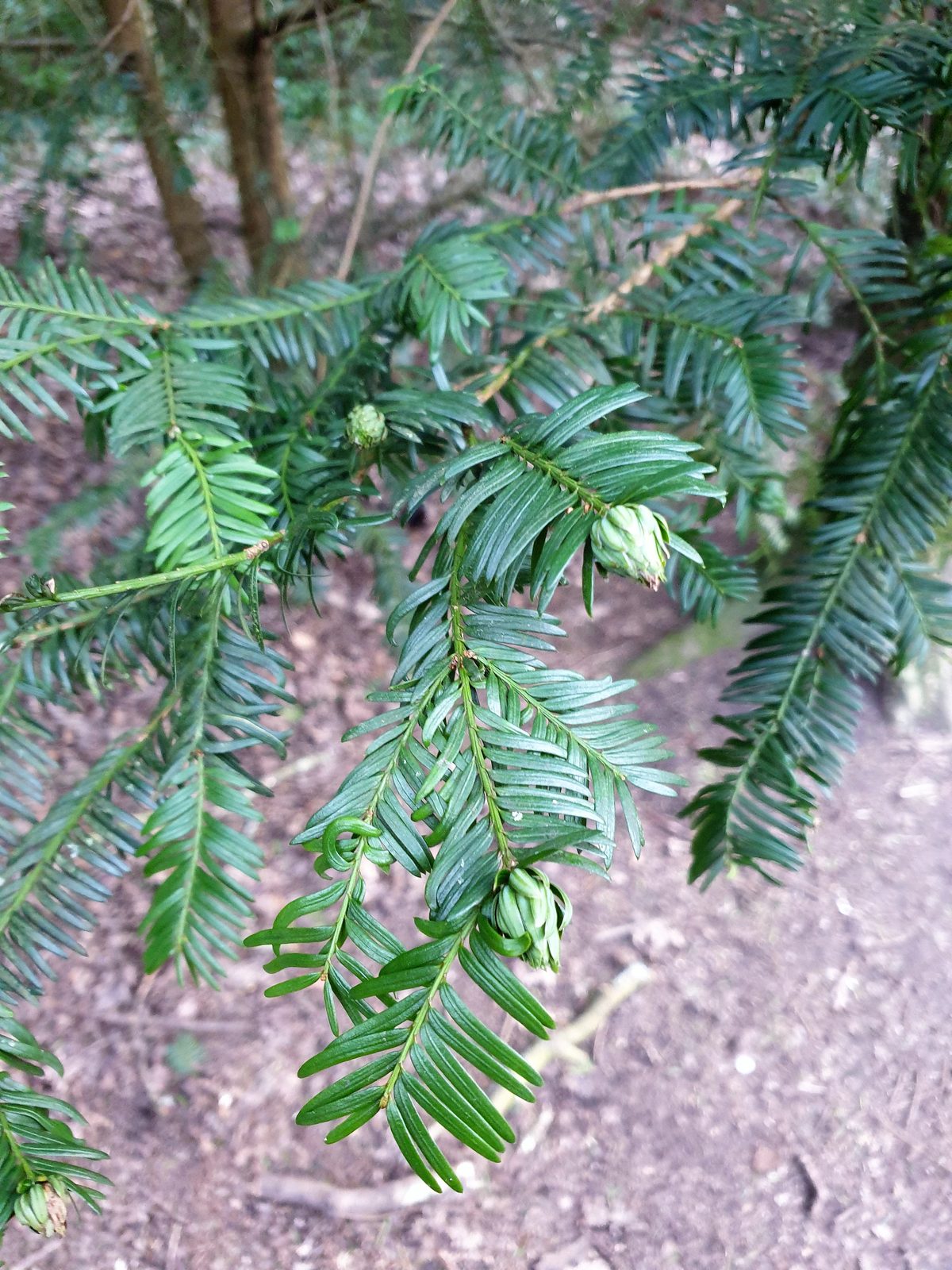
Photo: Emőke Dénes, CC BY-SA 2.5 via Wikimedia Commons

Quick facts
| Light: | Full sun and part shade (full sun preferred)111 source |
|---|---|
| Water: | Medium11 source |
| Soil: | Well drained and moist; pH 6–811 source |
| Hardiness: | Zones 6a–7b12 |
| Size: | 30–60 ft (9.14–18.29 m) × 15–25 ft (4.57–7.62 m)16 |
| Bloom: | , Yellow and red11 source |
| Cats: | Toxic to cats Severity reported: Potentially fatal 45 |
| Dogs: | Toxic to dogs 45 |
| Native range: | ALB, ALG, AUT, AZO, BAL, BGM, BLR, BLT, BUL, COR, CZE, DEN, FIN, FRA, GER, GRB, GRC, HUN, IRE, IRN, ITA, KRI, KRY, MOR, NCS, NET, NOR, POL, POR, ROM, RUC, RUE, RUN, RUS, RUW, SAR, SIC, SPA, SWE, SWI, TCS, TUE, TUR, UKR, YUG7 |
| Family: | Taxaceae |
How much light does an English Yew need?
Full sun to part shade both work well for English yew growing outdoors, with full sun as the best fit. Give it a spot that gets strong, direct sun for a good part of the day if you can. Part shade is also fine, so a site under high, open tree cover or next to a building that blocks some afternoon sun still supports healthy growth. You do not need to match the sun exposure to one fixed number of hours, since the species accepts a range. Choose full sun over part shade when you have a choice, since that is the preferred condition for this tree.
How often to water an English Yew
A medium, steady level of moisture suits English yew best, neither soaked nor bone dry for long stretches. Check the soil a few inches down, and water once that layer starts to feel dry instead of watering on a set number of days. This medium level works for most planting sites, from open ground to large containers, as long as drainage is good. Too little water for long stretches stresses the tree, and too much for long stretches can leave roots sitting wet, so aim for the middle ground.
- Water: Medium1
Best soil for an English Yew
Soil that drains well but holds a little moisture is what this tree prefers most. It also adapts to a pH between 6 and 8, spanning slightly acidic to slightly alkaline ground. Avoid heavy clay or low spots where water pools after rain, since roots that stay wet invite problems. Most garden soils already fall inside that pH range, so a soil test only matters if you suspect yours sits well outside it.
Hardiness and temperature
USDA hardiness zones 6a to 7b mark the outdoor range for this tree. That span covers cold winters at the 6a edge and milder winters at the 7b edge. Outside that range, the tree needs extra shelter to make it through winter outdoors. No cited source in this entry records an exact minimum temperature for the species. Treat the zone rating as the main guide for whether your climate suits this tree. Gardeners at the zone 6a edge should expect the coldest winters typical of that zone. Gardeners at the zone 7b edge sit at the documented warm limit for this species.
Pruning an English Yew
You can prune English yew two ways: light shaping to keep a neat outline, or hard renewal cuts that go back into old wood to reset an overgrown tree. Light shaping works well for most yearly upkeep and suits hedges or formal shapes. Hard renewal pruning is the better choice for a tree that has outgrown its space or thinned out, since this species regrows readily from old wood.
- Pruning: Hard renewal pruning and Light shaping3
How to plant an English Yew
Plant English yew outdoors if you garden in USDA zones 6a to 7b, since that is the range it is rated for. Mature trees reach about 30-60 ft (9.1-18.3 m) tall and 15-25 ft (4.6-7.6 m) wide, so give it plenty of room away from paths, structures, and other plantings. Choose a planting site that offers full sun to part shade and soil that drains well, since both support steady, healthy growth. Space multiple trees or hedge plants far enough apart to fit their mature width without crowding once they fill in.
Winter care
Winter care here starts with your hardiness zone rating. This species is rated for USDA zones 6a to 7b outdoors. The facts collected for this page do not include a specific cold-tolerance temperature. Use the zone rating as your main guide instead of a single degree number. At the cold edge, zone 6a, expect typical winter lows for that zone to fall within its range. At the mild edge, zone 7b, winters run milder and stay well within the documented range. Outside 6a to 7b, favor a sheltered spot or a container over open, exposed ground.
How to propagate an English Yew
Two methods work for propagating English yew outdoors: growing from seed or rooting a stem cutting. Stem cuttings taken from healthy growth are one accepted way to propagate this species without waiting for seed to mature. Seed propagation is also documented for this species, though it is generally a slower path to a usable plant than a cutting. Pick the method that matches the materials you have on hand, since both are recognized ways to grow new plants of this species.
Common problems
Pests reported on this species include mealybugs, scale insects, pine needle scale, and black vine weevil. Diseases reported include root rot, twig blight, needle blight, bleeding canker, dieback, and edema. Root rot and edema are both tied to soil or air that stays too wet for this tree.
| Problem | Kind |
|---|---|
| Mealybugs | Pest |
| Scale insects | Pest |
| Pine needle scale | Pest |
| Black vine weevil | Pest |
| Root rot | Disease |
| Twig blight | Disease |
| Needle blight | Disease |
| Bleeding canker | Disease |
| Dieback | Disease |
| Edema | Disease |
Is English Yew toxic to cats and dogs?
This plant is toxic to cats, and every part of it carries that risk. It is also toxic to dogs, so keep both pets away from fallen needles, berries, and trimmed branches. If your cat or dog chews on or swallows any part of this tree, contact your vet or a pet poison line right away. Treat any contact as a reason to act quickly, since this plant's toxicity to both cats and dogs is well documented.
Pet-safe alternatives
Recommended supplies
- Soil: a free-draining mix, and a pot with a drainage hole.
Questions and answers
- Is English yew poisonous to cats and dogs?
- Yes, English yew is toxic to both cats and dogs, and every part of the plant carries that risk. If a cat or dog eats any part of it, contact your vet or a pet poison line right away.
- What hardiness zones can English yew grow in outdoors?
- English yew is rated for USDA zones 6a to 7b outdoors. Outside that range, it needs a sheltered site or a container to survive winter.
- How much light and water does English yew need outdoors?
- Give it full sun to part shade, with full sun as the best option. It needs a medium, steady level of soil moisture rather than extremes of dry or wet.
Sources
- NC State Extension Gardener Plant Toolbox. https://plants.ces.ncsu.edu/plants/taxus-baccata/. Accessed 24 September 2026.
- Chicago Botanic Garden. https://www.chicagobotanic.org/plant-information/plant-finder/taxus-baccata-english-yew. Accessed 24 September 2026.
- Penn State Extension. https://extension.psu.edu/pruning-needled-evergreens. Accessed 12 October 2026.
- ASPCA Animal Poison Control Center. https://www.aspca.org/pet-care/aspca-poison-control/toxic-and-non-toxic-plants/yew. Accessed 24 September 2026.
- Pet Poison Helpline. https://www.petpoisonhelpline.com/poison/japanese-yew/. Accessed 24 September 2026.
- Cornell University CALS Woody Plants Database. https://woodyplants.cals.cornell.edu/plant/252. Accessed 12 October 2026.
- Royal Botanic Gardens, Kew (World Checklist of Vascular Plants). https://sftp.kew.org/pub/data-repositories/WCVP/wcvp.zip. Accessed 4 June 2026.
How this page was made
- Written with AI assistance from the sources listed on this page. AI is never the source of a fact.