Norway Spruce (Picea abies)
Formerly Picea excelsa, Abies excelsa, Picea vulgaris
Norway spruce, Picea abies, grows in full sun or part shade, with medium water and well drained, moist soil. This evergreen tree is hardy in zones 2a–7b, and its toxicity to cats and dogs is not documented here. At maturity it reaches 60–100 ft (18.29–30.48 m) tall.
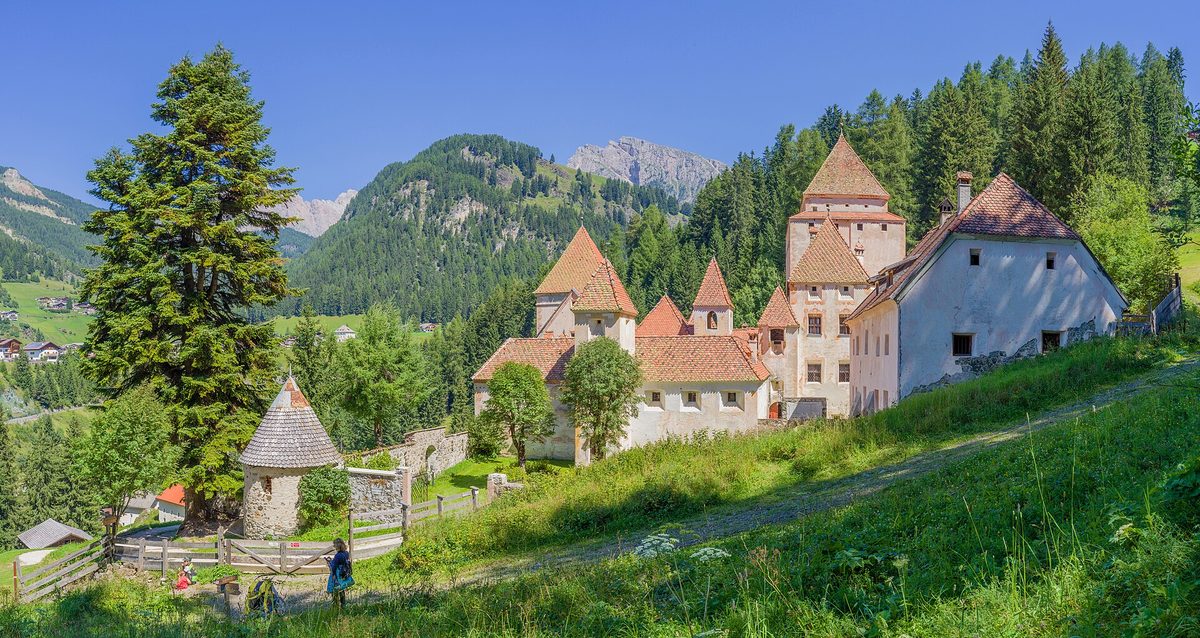
Photo: Wikimedia Commons contributor, CC BY-SA 3.0 via Wikimedia Commons

Quick facts
| Light: | Full sun and part shade (full sun preferred)12 |
|---|---|
| Water: | Medium11 source |
| Soil: | Well drained and moist; pH 5–812 |
| Hardiness: | Zones 2a–7b11 source |
| Size: | 60–100 ft (18.29–30.48 m) × 25–30 ft (7.62–9.14 m)211 source |
| Growth rate: | Rapid16 |
| Bloom: | Brown, yellow, green and purple11 source |
| Cats: | Not documented by major sources |
| Dogs: | Not documented by major sources |
| Native range: | ALB, AUT, BLR, BLT, BUL, CZE, FIN, FRA, GER, GRC, HUN, ITA, NOR, POL, ROM, RUC, RUE, RUN, RUW, SWE, SWI, TUE, UKR, YUG7 |
| Family: | Pinaceae |
How much light does a Norway Spruce need?
Norway spruce prefers full sun, which NC State Extension describes as 6 or more hours of direct sunlight a day. Part shade is also listed as acceptable by the Cornell University woody plants database. Both full sun and part shade fall inside the listed range, with full sun marked as the preferred choice.
How often to water a Norway Spruce
Medium is the water level recorded for Norway spruce. NC State Extension says the tree dislikes heat, wet feet, and hot, dry summers. Its soil is listed as well drained and moist. Cornell describes consistently moist, well-drained soil, and NC State lists good drainage.
- Water: Medium1
Best soil for a Norway Spruce
Plan on well drained, moist soil for Norway spruce. Cornell University describes consistently moist, well-drained soil, and NC State Extension lists good drainage. Cornell also says the tree can tolerate acid to alkaline soil, with a pH from 5.0 to 8.0. NC State adds that the tree dislikes wet feet. Soil that drains well and stays moist is the combination the listed facts describe.
Hardiness and temperature
Norway spruce is listed for hardiness zones 2a through 7b. NC State Extension names every half-zone from 2a to 7b. The same source says the tree dislikes heat and hot, dry summers. The zone range is the only cold figure on file, since no cited source records a minimum temperature. It is a needled evergreen.
- Hardiness: Zones 2a–7b1
Pruning a Norway Spruce
Pruning Norway spruce is light work, with two approaches listed: removing dead growth only and light shaping. Clemson Extension describes removing about one-half of the new shoots while the new growth is in the candle stage. Removing dead growth only is the more limited of the two approaches.
- Pruning: Remove dead growth only and Light shaping3
How to plant a Norway Spruce
Expect a large tree: Norway spruce reaches 60–100 ft (18.29–30.48 m) tall and 25–30 ft (7.62–9.14 m) wide. Choose a site within zones 2a–7b, the range listed for it. Give it full sun or part shade, with well drained, moist soil. In the lower 48 US states it is an introduced species. NC State rates its growth as rapid, while Utah State University Extension says medium.
- Hardiness: Zones 2a–7b1
Winter care
A needled evergreen, Norway spruce carries its foliage through winter, as the USDA Forest Service describes an evergreen tree. The listed range is zones 2a–7b, and no cited source records a minimum temperature or winter protection. Compare your own zone with that range before planting.
- Hardiness: Zones 2a–7b1
How to propagate a Norway Spruce
Norway spruce can be propagated by seed, stem cuttings and grafting. NC State Extension's advice is simply to propagate it by seed. The USDA Forest Service notes that Norway spruce roots can be used as grafting stock for white spruce. That is a use of this tree's roots in grafting, rather than a way to start a new Norway spruce.
Common problems
Insects recorded on Norway spruce include aphids, bagworms, spruce budworm, borers, spruce spider mites and eastern spruce gall adelgid. Diseases listed are cytospora canker, wood decay, needle cast and rust. NC State Extension says the tree is susceptible to all four of these diseases.
| Problem | Kind |
|---|---|
| Aphids | Pest |
| Bagworms | Pest |
| Spruce budworm | Pest |
| Borers | Pest |
| Spruce spider mites | Pest |
| Eastern spruce gall adelgid | Pest |
| Cytospora canker | Disease |
| Wood decay | Disease |
| Needle cast | Disease |
| Rust | Disease |
Is Norway Spruce toxic to cats and dogs?
Recommended supplies
- Soil: a free-draining mix, and a pot with a drainage hole.
Questions and answers
- How much sun does Norway spruce need?
- It prefers full sun, which NC State Extension describes as 6 or more hours of direct sunlight a day. Cornell University also lists part shade as acceptable for this tree.
- How big does Norway spruce get?
- Cornell gives its mature height as 60–100 ft (18.29–30.48 m). NC State Extension gives the width as 25–30 ft (7.62–9.14 m). Leave room for a large evergreen tree.
- Which hardiness zones suit Norway spruce?
- It is listed for zones 2a through 7b, according to NC State Extension. The same source says the tree dislikes heat and hot, dry summers. It prefers well drained, moist soil.
Sources
- NC State Extension Gardener Plant Toolbox. https://plants.ces.ncsu.edu/plants/picea-abies/. Accessed 21 October 2026.
- Cornell University CALS Woody Plants Database. https://woodyplants.cals.cornell.edu/plant/170. Accessed 21 October 2026.
- Clemson Cooperative Extension Home & Garden Information Center. https://hgic.clemson.edu/factsheet/pruning-trees/. Accessed 24 October 2026.
- USDA Forest Service Fire Effects Information System. https://www.fs.usda.gov/database/feis/plants/tree/picabi/all.html. Accessed 21 October 2026.
- Penn State Extension. https://extension.psu.edu/eastern-spruce-gall-adelgid. Accessed 21 October 2026.
- Utah State University Extension. https://extension.usu.edu/treebrowser/catalog/spruce-norway. Accessed 30 October 2026.
- Royal Botanic Gardens, Kew (World Checklist of Vascular Plants). https://sftp.kew.org/pub/data-repositories/WCVP/wcvp.zip. Accessed 4 June 2026.
How this page was made
- Written with AI assistance from the sources listed on this page. AI is never the source of a fact.