Guiana-chestnut (Pachira aquatica)
Formerly Sophia carolina, Bombax aquaticum, Pachira villosula
Guiana-chestnut (Pachira aquatica) prefers bright, indirect light indoors. It tolerates medium light. The soil should be well drained and moist. Outdoors it grows in USDA zones 10a to 12b. It prefers part shade outdoors. In colder climates, bring it indoors before temperatures drop to 44.6 °F (7 °C). Watering and pet toxicity for cats and dogs are not documented here.
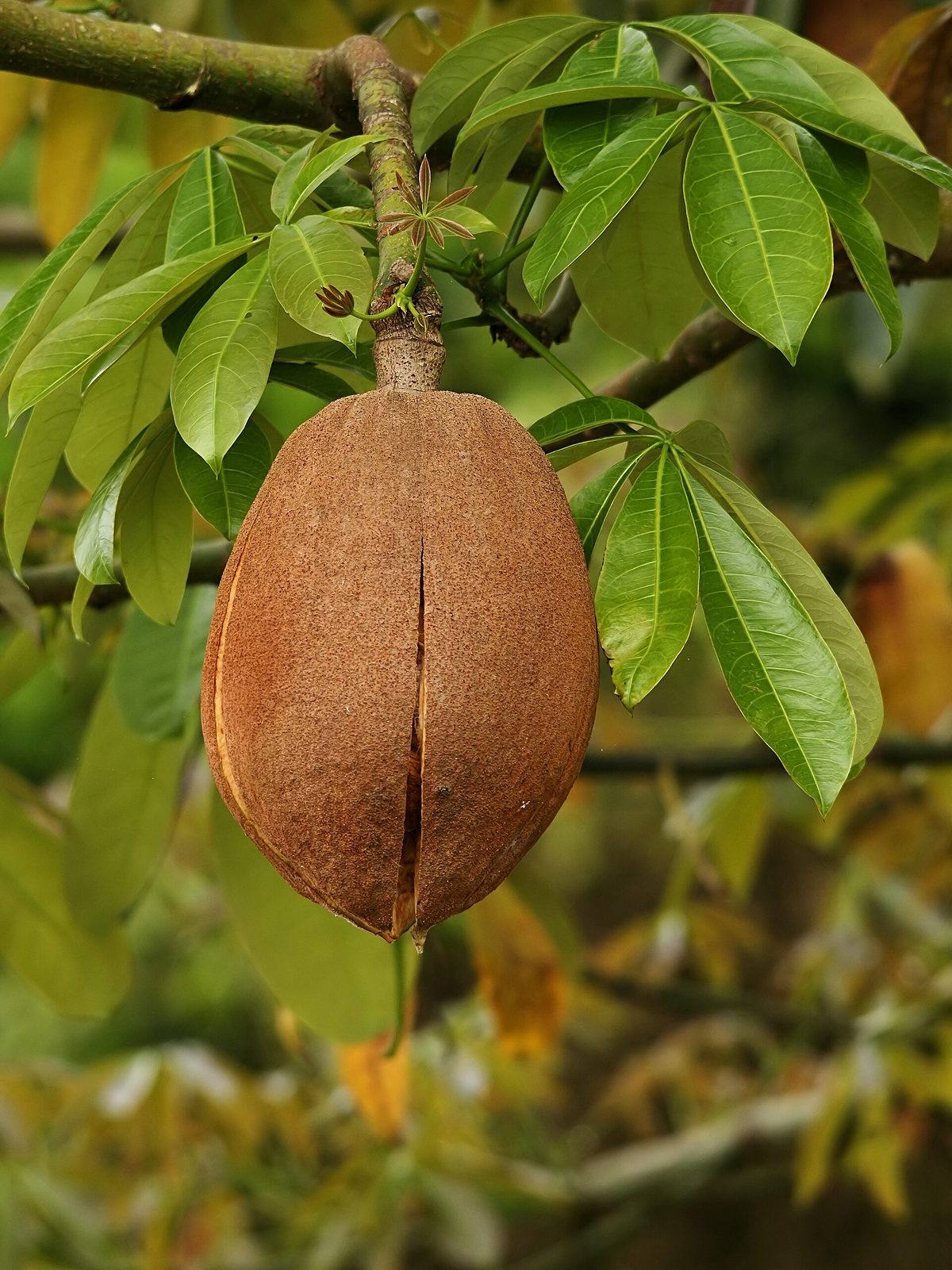
Photo: Hans Hillewaert, CC BY-SA 3.0 via Wikimedia Commons

Quick facts
| Light: | Bright, indirect light; tolerates medium light11 source |
|---|---|
| Soil: | Well drained and moist11 source |
| Minimum temperature: | 44.6 °F (7 °C)11 source |
| Size: | 6–30 ft (1.83–9.14 m) × 6–30 ft (1.83–9.14 m)11 source |
| Growth rate: | Rapid11 source |
| Cats: | Not documented by major sources |
| Dogs: | Not documented by major sources |
| Native range: | BLZ, BOL, BZE, BZN, CLM, COS, ECU, ELS, FRG, GUA, GUY, HON, MXC, MXG, MXN, MXS, MXT, NIC, PAN, PER, SUR, VEN3 |
| Family: | Malvaceae |
How much light does a Guiana-chestnut need?
Indoors, Guiana-chestnut prefers bright, indirect light. It also tolerates medium light. The money tree prefers indirect sunlight or a mix of sun and shade. Outdoors, the preferred exposure is part shade. Part shade means direct sunlight for only part of the day, about 2 to 6 hours.
- Light: Bright, indirect light; tolerates medium light1
Best soil for a Guiana-chestnut
The soil drainage listed for this plant is well drained and moist. Good drainage is the condition to provide. Mature height ranges from 6 to 30 ft (1.83 to 9.14 m). Mature spread covers the same range, 6 to 30 ft (1.83 to 9.14 m). Allow for that spread when you choose a planting spot. Botanists classify this species as a tree. No cited source records a soil pH range for this plant.
- Soil drainage: Well drained and moist1
Temperature and humidity
In colder climates, the tree should come indoors before temperatures fall to 44.6 °F (7 °C). It is hardy in USDA zones 10a to 12b. It is a broadleaf evergreen. Its growth rate is rapid. In Puerto Rico (US-PR), its native status is introduced. Outdoors, it takes part shade. No cited source records a humidity preference.
- Minimum temperature: 44.6 °F (7 °C)1
Common problems
The pests recorded for Guiana-chestnut (Pachira aquatica) are Eutetranychus banksi, Fiorinia phantasma, Megaplatypus mutatus and Opogona sacchari. The record names four pests. Each is listed by its scientific name. The evergreen tree grows at a rapid rate and reaches up to 30 ft (9.14 m).
- Common pests: eutetranychus banksi, fiorinia phantasma, megaplatypus mutatus and opogona sacchari2
| Problem | Kind |
|---|---|
| Eutetranychus banksi | Pest |
| Fiorinia phantasma | Pest |
| Megaplatypus mutatus | Pest |
| Opogona sacchari | Pest |
Is Guiana-chestnut toxic to cats and dogs?
Recommended supplies
- Light: bright, indirect light, such as near an east window; a full-spectrum grow light substitutes where no window does.
- Soil: a free-draining mix, and a pot with a drainage hole.
Questions and answers
- What light does Guiana-chestnut need indoors?
- It prefers bright, indirect light indoors and tolerates medium light. Outdoors, part shade is the preferred exposure, meaning direct sunlight for only part of the day. The money tree also prefers a mix of sun and shade.
- Can I grow Guiana-chestnut outdoors?
- It is hardy in USDA zones 10a to 12b. In colder climates, bring it indoors before temperatures drop to 44.6 °F (7 °C). Outdoors it takes part shade, with direct sun for only part of the day.
- How big does Guiana-chestnut get?
- Mature height ranges from 6 to 30 ft (1.83 to 9.14 m). Its mature spread covers the same range, 6 to 30 ft (1.83 to 9.14 m). The growth rate is rapid, and the tree is evergreen.
Sources
- NC State Extension Gardener Plant Toolbox. https://plants.ces.ncsu.edu/plants/pachira-aquatica/. Accessed 14 October 2026.
- EPPO Global Database. https://gd.eppo.int/taxon/PCJAQ/pests. Accessed 14 October 2026.
- Royal Botanic Gardens, Kew (World Checklist of Vascular Plants). https://sftp.kew.org/pub/data-repositories/WCVP/wcvp.zip. Accessed 4 June 2026.
How this page was made
- Written with AI assistance from the sources listed on this page. AI is never the source of a fact.